🐠 Southeast Asia
🧾 Quick Facts
Southeast Asia is home to an incredible diversity of aquarium fish, ranging from colorful freshwater species to vibrant reef dwellers. This guide provides an overview of the variety of fish originating from this region, known for its rich aquatic life and biodiversity.
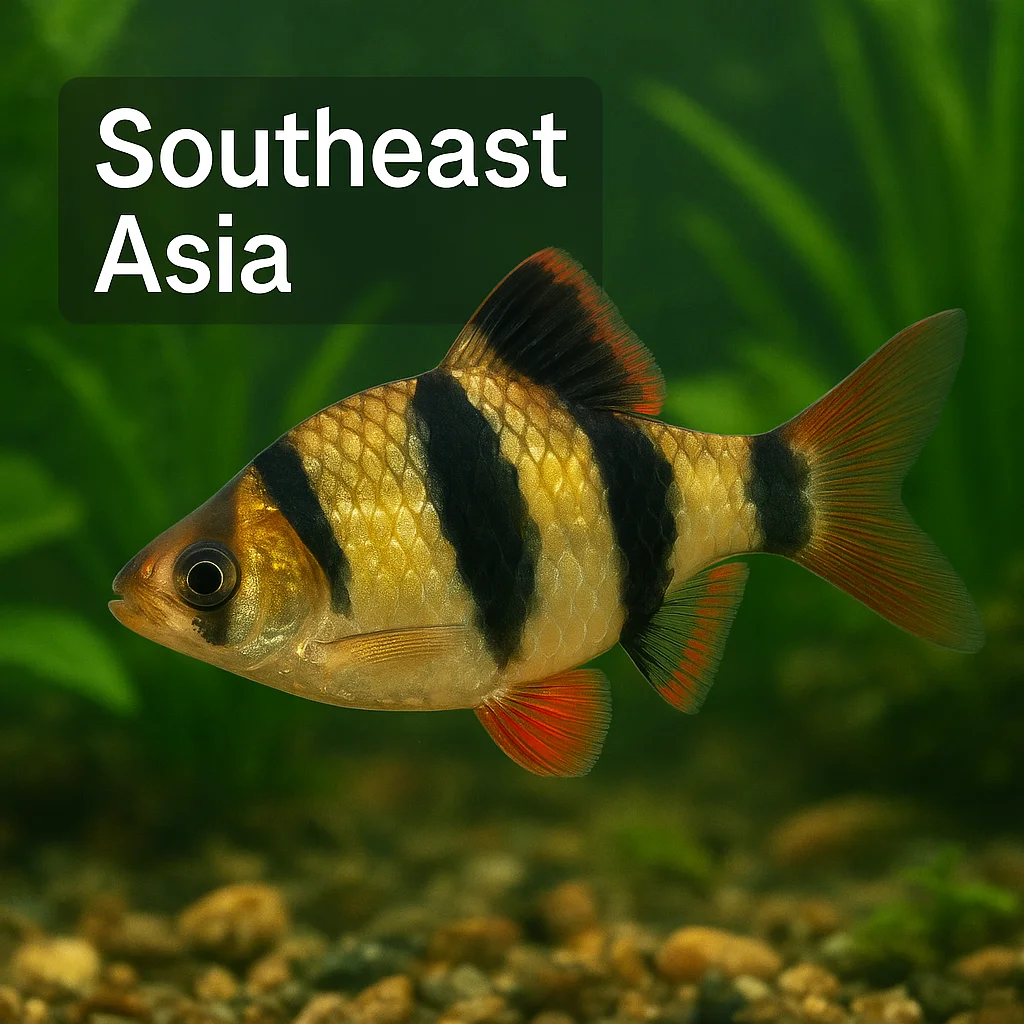
- Common names: Various, including Betta, Gourami, Rasbora
- Scientific name: Varies
- Freshwater / Marine / Brackish: Primarily freshwater, some marine and brackish
- Origin: Rivers, lakes, wetlands, and coral reefs of Southeast Asia
- Typical adult size range: 1 to 12 inches, varies by species
- Lifespan: Typically 3 to 15 years, varies by species
- Temperament: Ranges from peaceful to aggressive
- Recommended tank size: Minimum 10 gallons, larger for community tanks
- Water temperature range: 74°F to 82°F (23°C to 28°C)
- pH / hardness or salinity guidance: pH 6.0 to 8.0, varies by species
- Diet type: Omnivore to carnivore, varies by species
- Activity zone: Ranges across top, mid, bottom zones
- Social needs: Schooling, pair or solitary depending on species
- Beginner suitability: Easy to advanced, species-dependent
🔍 Identification
Fish from Southeast Asia can be recognized by their diverse body shapes, from the elongated bodies of loaches to the rounded forms of gouramis. They display a range of colors and patterns such as stripes, spots, and vibrant hues that can change with mood or age. Finnage varies significantly, with some species like the Betta having lavish displays, while others have more subdued fins.
- Body shape and silhouette vary widely across species
- Colors and patterns can include vibrant reds, blues, and stripes
- Fin shapes range from long and flowing to short and compact
- Male and female differences are often subtle or vary greatly
- Similar species often differ in habitat preference and fin shape
- Top ID Tips:
- Observe body shape and size
- Note fin design and color
- Look for common color patterns
- Consider habitat origin for correct ID
- Pay attention to typical aquascape conditions
🌍 Origin & Natural Habitat
Southeast Asian fish primarily inhabit freshwater rivers, streams, and floodplains, with some species adapted to marine reefs and brackish environments. The regions feature lush vegetation, diverse substrates, and varying water flows influenced by seasonal rains. Understanding these natural habitats promotes better aquarium setups, ensuring fish exhibit natural behaviors and thrive.
🧪 Tank Setup & Water Parameters
Creating a suitable tank environment for Southeast Asian fish involves replicating their natural habitats. This often means ample swimming space in wide tanks, moderate filtration, and heating to maintain tropical temperatures. Depending on the species, you may need plants, rocks, driftwood, or coral structures as decor, ensuring plenty of hiding spots.
- Setup Checklist:
- Adequate tank size for swim space
- Stable water temperature maintenance
- Appropriate filtration system
- Natural substrate matching origin
- Including live plants and decor
- Lighting that mimics natural conditions
🤝 Temperament & Compatibility
The temperament of Southeast Asian fish can range from peaceful community members to aggressive, territorial species. Many are schooling fish, requiring groups to feel secure, while others may form pairs or prefer solitary lives. Food and breeding behavior varies, impacting compatibility with tankmates ranging from other peaceful fish to more aggressive varieties.
- Compatibility Notes:
- Consider natural behavior for mixing
- Avoid housing with known aggressors
- Research specific shoaling or territorial needs
- Evaluate breeding behaviors for aggression
- Introduce fish slowly and observe interactions
🍽️ Diet & Feeding
The diet of Southeast Asian fish typically includes a variety of omnivorous or carnivorous options. In-home tanks, they thrive on a mix of high-quality flake or pellet foods, supplemented with frozen or live foods like brine shrimp and bloodworms. Feeding should be balanced, focusing on variety and moderation to prevent overfeeding and maintain health.
- Feeding Tips:
- Provide a varied diet for complete nutrition
- Observe fish behavior during feeding
- Feed smaller portions multiple times a day
- Include vegetable matter if species requires
- Monitor for selective eating habits
🧬 Growth, Color Changes & Lifespan
As Southeast Asian fish mature, they may display changes in color and size. Juvenile fish often don't show the full vibrancy seen in adults, and stress can lead to dullness or clamped fins. Lifespan varies widely based on species, influenced by factors like diet, space, and water quality. Providing proper care supports vibrant growth and longevity.
🪺 Breeding & Reproduction
Breeding habits differ significantly among Southeast Asian fish. Many are egg layers, with some species building elaborate nests or preparing specific sites. Factors like water temperature and quality may trigger spawning. While breeding in home aquariums can be uncommon for certain species, understanding their reproductive needs increases the chance of success.
🩺 Common Health Issues & Prevention
Common health issues in Southeast Asian fish include diseases like ich and fin damage, often resulting from inadequate conditions. Preventive care involves maintaining stable water quality, regular monitoring, and quarantining new additions. Ensuring proper nutrition and avoiding overcrowding also help reduce the chance of illness.
- Prevention Basics:
- Avoid sudden changes in water conditions
- Provide a balanced diet
- Use quarantine tanks for new fish
- Maintain clean, well-filtered water
- Keep stress levels low by managing tank mates
🌱 Role in the Aquarium
Southeast Asian fish significantly contribute to a dynamic aquarium setup. They help maintain balance by controlling algae, providing visual interest, and sometimes showing schooling behavior that adds liveliness. It's essential to select fish from reputable, possibly captive-bred sources to minimize negative ecological impacts and ensure healthier specimens.
📉 Conservation & Responsible Keeping
When keeping Southeast Asian fish, opt for captive-bred when possible to reduce the impact on wild populations. Never release them into local environments to prevent ecological disruptions. If a fish outgrows its tank, rehoming is a responsible choice. Emphasizing ethical sourcing and responsible ownership is vital for sustainable aquarium keeping.
- Responsible Keeping Tips:
- Prioritize captive-bred fish for sustainability
- Never release fish into the wild
- Research the origin of your fish
- Plan for fish growth and potential tank needs
- Consider ethical practices in fish trading
📌 Summary
- Southeast Asia is rich in diverse aquarium fish species.
- Fish native to this area exhibit varied sizes and temperaments.
- A proper tank setup mimics natural habitats for optimal health.
- Diet varies, but a staple of pellets or flakes is common.
- Compatibility depends on individual species' behavior.
- Breeding might occur infrequently in tanks; varies by species.
- Ethical considerations emphasize captive breeding.
- Responsibly sourced fish contribute to biodiversity preservation.
- Avoid introducing aquarium fish to local ecosystems.
- Maintaining good water quality is crucial for health.