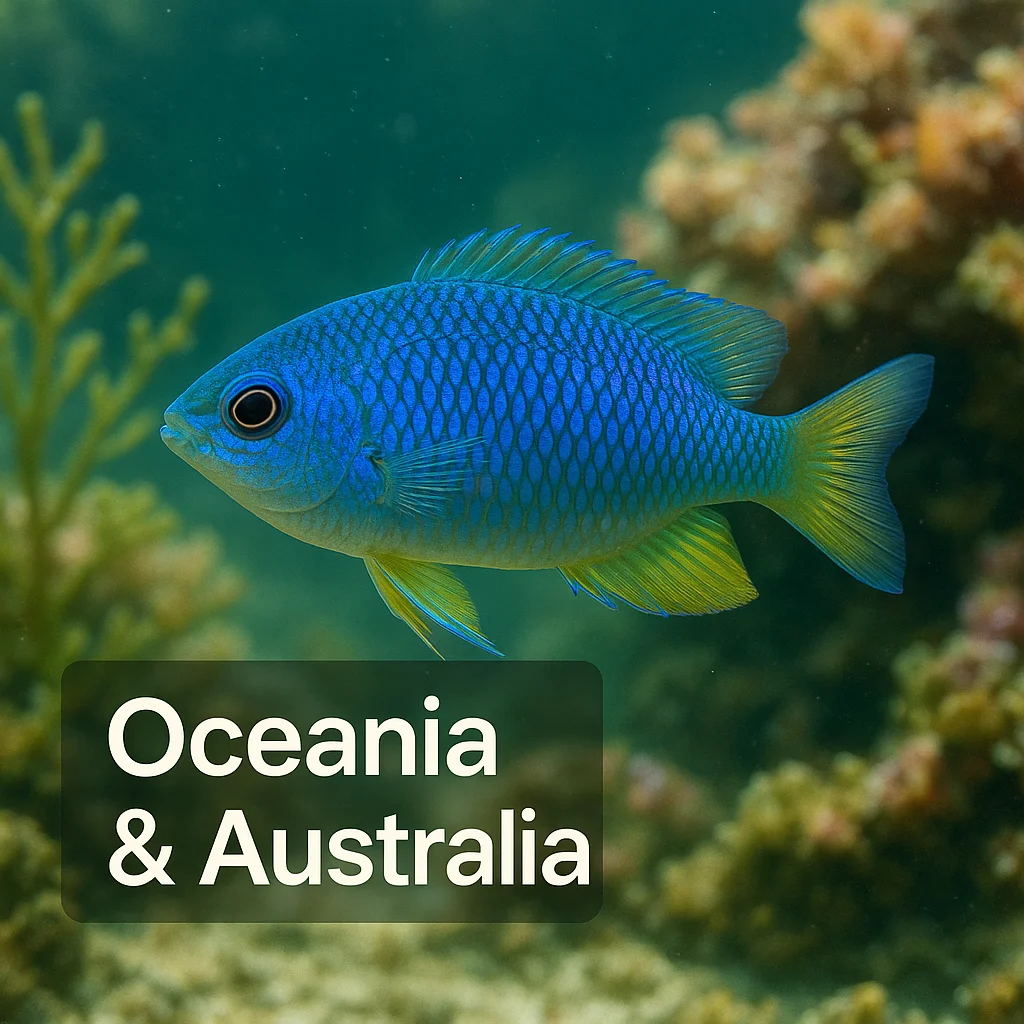
🐠 Oceania & Australia
The diverse aquatic ecosystems of Oceania and Australia offer a fascinating array of fish that are highly prized in the aquarium hobby. This field guide profile covers a variety of fish species found in freshwater, marine, and brackish environments across this vast region. Known for their vibrant colors, unique behaviors, and diverse habitat requirements, these fish add dynamic beauty to home aquariums. Due to the wide range of species and habitats, it's essential to understand the specific needs of each group for successful aquarium keeping.
🧾 Quick Facts
Oceania and Australia boast a wide array of fish species suited to both novice and experienced aquarists. Below are key quick facts to consider when keeping fish from this region.
- Common names: Varies widely; includes Rainbowfish, Clownfish, and more.
- Scientific name: Varies
- Freshwater / Marine / Brackish
- Origin: Rivers, lakes, reefs, lagoons of Oceania and Australia
- Typical adult size range: 2-18 inches
- Lifespan: Varies (typically 3-10 years)
- Temperament: Varies (peaceful to aggressive)
- Recommended tank size: Minimum varies (20 gallons and up)
- Water temperature range: 72-82°F
- pH / hardness or salinity guidance: Varies widely; freshwater species thrive in 6.5-8.0 pH, while marine species prefer saline conditions
- Diet type: Omnivore, herbivore, carnivore
- Activity zone: Varies (top/mid/bottom; reef zone if marine)
- Social needs: Varies (schooling, pair, solitary)
- Beginner suitability: Easy to advanced
🔍 Identification
Fish from Oceania and Australia come in diverse shapes and colors, with identification traits varying widely. Understanding these key features enhances accurate species recognition and appropriate care.
- Body shape and silhouette: Diverse, ranging from slender Rainbowfish to robust Angelfish.
- Key colors/patterns: Brightly colored, with shimmering scales and varied patterns that can change with mood or age.
- Fin shapes and notable traits: Fins vary dramatically, often brightly colored with unique textures and fringes.
- Male vs female cues: Subtle, often varies across species.
- Common look-alikes: Species such as Tetras and Barbs may look similar; detailed patterns usually help to differentiate.
- Top ID Tips:
- Observe the overall body shape and size.
- Note the color pattern and how it may shift under different conditions.
- Check fin shapes and the presence of unique markings.
- Look at behavior traits for species differentiation.
- Identify any distinctive dorsal or tail fin shapes.
- Assess the habitat environment for clues on species identity.
- Observe group behavior (schooling, solitary).
- Examine subtle size differences in the same species, often gender-based.
- Identify key color highlights or stripes unique to the species.
🌍 Origin & Natural Habitat
Oceania and Australia are home to rich aquatic environments including rivers, streams, lakes, reefs, and lagoons. These habitats are defined by water flow, substrate type, and seasonal variations.
Freshwater species thrive in clear streams and large rivers with varied plant cover and rocky substrates. In marine environments, fish are often found in complex coral reefs or lagoons with rich bio-diversity. Seasonal changes, like monsoons, may affect water parameters and food availability.
Understanding the natural habitat of these fish helps recreate a similar environment in the aquarium, ensuring better health and coloration.
🧪 Tank Setup & Water Parameters
Setting up a tank for species from Oceania and Australia requires careful consideration of size, parameters, and habitat preferences.
For freshwater species, a spacious tank with modest flow, adequate filtration, and plenty of horizontal swimming spaces is advisable. Incorporating rock structures and live plants can mimic natural environments.
Marine species often need stable, saline conditions with live rock and coral structures to support their natural behaviors.
- Setup Checklist:
- Ensure appropriate tank size and swimming space.
- Maintain effective filtration for clean water.
- Establish the correct water temperature zone.
- Adjust pH/salinity as necessary.
- Include natural decor items like rocks, driftwood, and plants.
- Provide dim to moderate lighting settings based on species needs.
- Create hiding spaces to reduce stress.
- Monitor and adjust water flow according to species.
🤝 Temperament & Compatibility
Varied temperaments across species influence tank dynamics. Behavioral traits dictate social needs, aggression levels, and compatibility with tank mates.
Schooling species thrive in groups, while territorial ones require defined spaces. Certain fish display notable changes during feeding and breeding seasons.
Ideally, pair with similarly tempered tank mates and avoid mixing aggressive types with peaceful ones to prevent stress.
- Compatibility Notes:
- For calm community tanks, opt for peaceful species.
- Observe seasonal or breeding changes in behavior.
- Territorial fish may need larger, divided spaces.
- Be cautious mixing size-disparate species.
- Some species might be naturally predatory.
- Consider species with similar environmental requirements.
🍽️ Diet & Feeding
Fish from this region can have varying dietary requirements, influenced by their natural diets and ecological niches.
Feed freshwater species well-balanced diets of flakes, pellets, and occasional live treats. Marine species often require specialized marine foods, including frozen or live feeds to mirror wild diets.
Frequent small feedings ensure proper nutrition and stability.
- Feeding Tips:
- Vary the diet for nutritional balance.
- Observe feeding behavior to adjust portions.
- Use high-quality commercially available food.
- Offer live foods or alternatives to mimic natural feeding.
- Feed multiple times in smaller portions.
- Be mindful of overfeeding to maintain water quality.
- Provide algae supplementation for herbivores.
🧬 Growth, Color Changes & Lifespan
Oceania and Australia fish exhibit interesting growth patterns and color transformations, often influenced by environmental conditions.
Juveniles may exhibit different colors compared to adults. Seasonal mood changes can initiate color variations, sometimes related to mating displays.
Fish demonstrate stress subtly through behaviors like hiding or faded colors, indicating issues in tank conditions.
Ensuring healthy growth and optimal color requires a balanced diet and adequate space for natural behavior.
🪺 Breeding & Reproduction
Breeding fish from this region can range from simple to challenging, with varying reproductive styles noted.
Egg-laying species often require specific conditions for spawning, while livebearers might breed readily under suitable circumstances.
Juvenile care varies—some parents may provide care, while others may not—understanding these variations aids successful breeding attempts.
Breeding in home aquariums often requires replicating natural triggers like water temperature shifts or dietary changes.
🩺 Common Health Issues & Prevention
Fish health can be affected by common issues such as ich, fin damage, and parasites. Prevention through sound practices reduces risk.
Stable water conditions, quarantine for new arrivals, and good diet play key roles in maintaining healthy fish.
- Prevention Basics:
- Quarantine new fish before introducing them to the main tank.
- Maintain stable water conditions and parameters.
- Avoid overfeeding to reduce waste and water pollution.
- Implement effective filtration for water clarity.
- Conduct regular tank inspections to spot early signs of illness.
- Schedule consistent, partial water changes.
- Limit stress through environmental enrichment.
🌱 Role in the Aquarium
The varied species from Oceania and Australia can add distinct contributions to a tank environment. From providing dynamic visual highlights as centerpieces to maintaining balance through algae eating or symbiotic behaviors, they play essential roles.
Many are reef-safe for marine setups or plant-safe for freshwater aquariums, although specific behaviors should enhance or complement the tank's design.
Fish should be ethically sourced, and wild-caught options need careful evaluation, as over-collecting can harm wild populations.
📉 Conservation & Responsible Keeping
When keeping these fish, consider the conservation impact of captive versus wild sourcing.
Rehome responsibly if a fish outgrows its tank, and never introduce them to wild habitats. Educated choices about sources benefit both hobbyists and ecosystems.
- Responsible Keeping Tips:
- Select captive-bred whenever possible to reduce wild impact.
- Never release aquarium fish into local waters.
- Plan for the full growth potential of your fish.
- Understand long-term care commitments before acquiring.
- Support sustainable fishkeeping practices and sources.
- Join fish-keeping communities for shared guidance.
- Consider alternative housing for large or aggressive fish needing rehoming.
📌 Summary
- Diverse species encompass varied habitats and needs.
- Origin spans freshwater rivers, marine reefs, and more.
- Creative tank design and setup reflect natural habitats.
- Understanding compatibility ensures peaceful community tanks.
- Varied diets require flexible feeding practices.
- Suitability ranges from beginner to advanced keeping.
- Breeding conditions often need precise simulation.
- Healthy tanks rely on prevention and early intervention.
- Fish can enhance both aesthetics and ecological balance.
- Ethical sourcing and conservation focus are vital.
- Never release aquarium fish into the wild to protect ecosystems.