🐠 Indo-Pacific (Marine)
🧾 Quick Facts
The Indo-Pacific marine region is home to a vast array of fish species that are popular in marine aquariums. This diverse group features many stunning and colorful species suitable for enthusiasts of all experience levels.
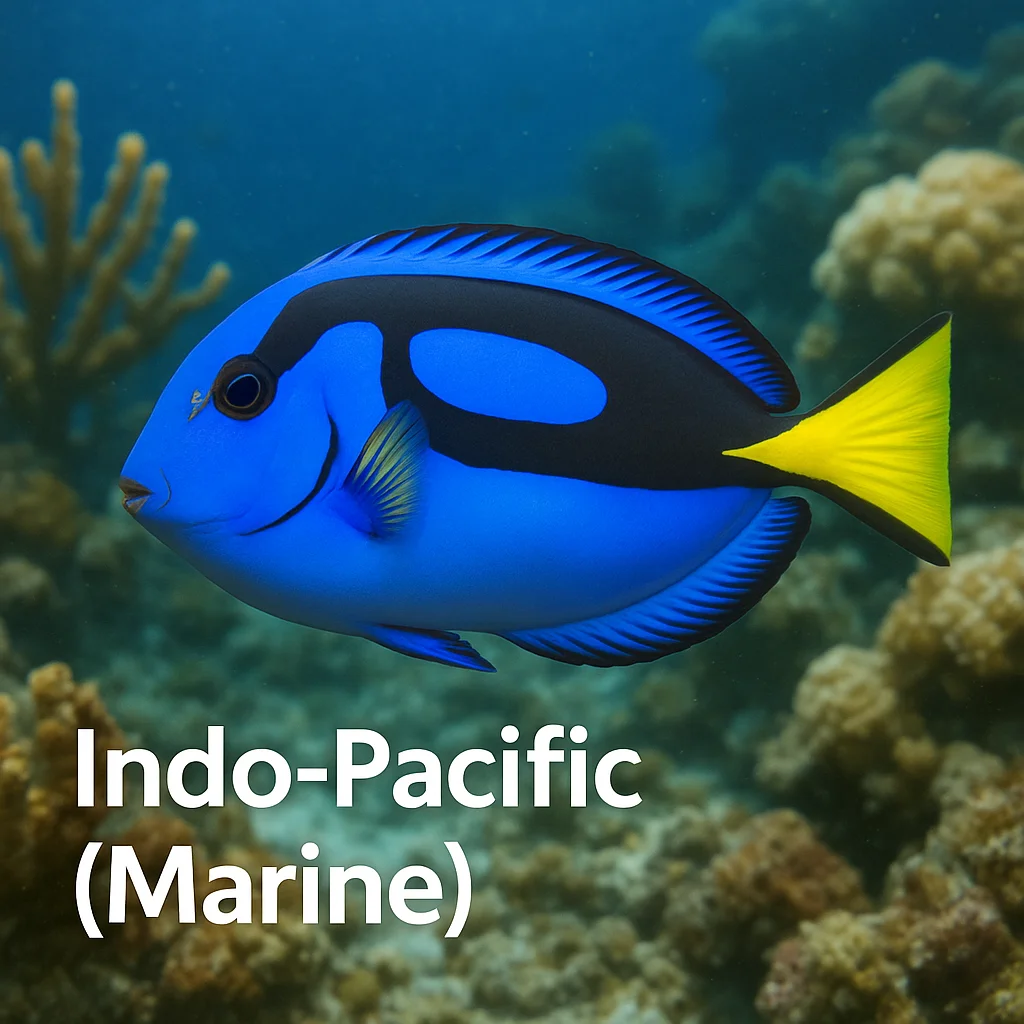
- Common names: Varies (often includes Tangs, Wrasses, and Clownfish)
- Scientific name: Varies
- Water type: Marine (Saltwater)
- Origin: Indo-Pacific region, including coral reefs and lagoons
- Typical adult size range: 2-18 inches, depending on species
- Lifespan: Typically 5-20 years, varies
- Temperament: Peaceful to semi-aggressive
- Recommended tank size: Minimum 30 gallons for smaller species
- Water temperature range: 75-80°F (24-27°C)
- pH / Salinity guidance: pH 8.1-8.4, salinity 1.020-1.025
- Diet type: Omnivore, Herbivore, Carnivore (species-specific)
- Activity zone: Generally mid to top zones; varies by species
- Social needs: Varies (schooling, solitary, small groups)
- Beginner suitability: Medium to advanced
🔍 Identification
Indo-Pacific marine fish can often be characterized by vivid colors and unique body shapes that are a delight to observe in aquariums.
- Body shape is highly variable, with some species having streamlined bodies while others are more oval.
- Color and patterns are distinctive and can change with age or mood; some have stripes, others are solid colors.
- Fins range from large and flowing to compact and streamlined, depending on the species.
- Gender differences are subtle and may vary by species, often requiring expert examination to differentiate.
- Common look-alikes include other reef fish, discernible by specific fin shapes or markings.
- Top ID Tips
- Look for whole fish in frame to see all characteristic features.
- Identify by unique coloration and fin shapes.
- Examine side profile for overall body silhouette.
- Observe behavior and swimming style for additional clues.
- Check for distinctive markings unique to species.
- Note any color changes during feeding or stress.
🌍 Origin & Natural Habitat
Indo-Pacific marine fish are predominantly found in the vibrant coral reefs of the Indo-Pacific region, where biodiversity is at its peak.
- They thrive in complex ecosystems where they utilize coral cover for shelter and foraging.
- Habitats range from sheltered lagoons to outer reef slopes.
- Water conditions are stable, but temperatures and tides can affect seasonal behaviors.
Understanding their natural habitat aids in mimicking these conditions in aquariums for increased success.
🧪 Tank Setup & Water Parameters
For Indo-Pacific marine fish, establishing a stable, well-decorated marine tank environment is crucial to their well-being.
- A minimum of 30 gallons is recommended, with more space preferred for larger species.
- Employ a powerful filtration system and maintain strong water flow within the tank.
- Consistent heating to keep water between 75 and 80°F (24-27°C) is crucial.
- Include live rock, coral structures, and sand substrates for a natural setting.
- Provide adequate lighting to simulate natural conditions and encourage coral growth.
- Setup Checklist
- Ensure stable salinity between 1.020-1.025.
- Maintain pH levels between 8.1-8.4.
- Utilize a robust protein skimmer for water clarity.
- Arrange plenty of hiding places using corals and rocks.
- Select species-compatible marine plants if desired.
- Regular water testing to monitor conditions.
🤝 Temperament & Compatibility
These fish vary greatly in temperament, from peaceful community members to more aggressive species requiring care in tankmate selection.
- Many Indo-Pacific species are schooling fish, thriving in groups for natural behavior displays.
- Feeding time can be competitive; providing ample food reduces stress.
- Good tankmates include fish with similar size and temperament, such as blennies, gobies, and particular angelfish.
- Beware of mixing with particularly aggressive or territorial species.
- Compatibility Notes
- Review specific species compatibility guides carefully.
- Monitor fish interactions closely, especially after introductions.
- Provide adequate space to reduce territorial disputes.
- Ensure hiding spots are ample for stressed fish.
- Observe feeding behavior to gauge group dynamics.
- Be prepared to rehome or separate aggressive individuals.
🍽️ Diet & Feeding
Diet needs vary across Indo-Pacific marine species, with some thriving on a mix of plant and animal matter while others have more specialized diets.
- These fish profit from a varied diet that includes high-quality flakes, pellets, and frozen foods.
- Some are algae grazers, requiring extra plant matter for optimal health.
- Others may need live foods such as brine shrimp and copepods to mimic their natural hunting behavior.
- Feed small portions multiple times a day to simulate natural foraging habits.
- Feeding Tips
- Offer a diverse range of foods to meet dietary needs.
- Introduce algae wafers or sheets for herbivorous varieties.
- Alternate different food types to prevent boredom and dietary gaps.
- Adjust feeding amounts based on fish size and tank dynamics.
- Monitor water quality after feeding, especially with high protein diets.
- Avoid consistent overfeeding by providing measured portions.
- Observe fish behavior during feeding to ensure all eat adequately.
🧬 Growth, Color Changes & Lifespan
Indo-Pacific marine fish exhibit fascinating transformations as they mature and under various environmental stimuli.
- Juveniles often display different coloration or patterns than adults.
- Mood, social hierarchy, and breeding readiness can influence color changes.
- Signs of stress include clamped fins and fading coloration, indicating potential improvements needed in water quality or social environment.
- Lifespan varies; optimal conditions extend longevity significantly.
🪺 Breeding & Reproduction
Breeding Indo-Pacific marine fish in captivity is challenging due to specific requirements that are hard to replicate.
- Most are egg layers, requiring particular conditions to trigger spawning.
- Some species lay eggs on substrates, while others release them into the water column.
- Parental care varies, with many species offering none.
- The early feeding of fry necessitates specially sized foods, often live.
- Few species breed readily in home aquariums outside of controlled, professional setups.
🩺 Common Health Issues & Prevention
Maintaining good health among Indo-Pacific aquatic dwellers involves consistent care and preventive measures.
- Ich or white spot is common; quarantine new arrivals to prevent outbreaks.
- Prevent parasitic infections by ensuring superior water quality and observing any lethargy or unusual behavior.
- Stress from poor water conditions or incompatible tank mates can lead to fin damage.
- Regularly clean tanks and ensure proper filtration to ward off infections.
- Prevention Basics
- Quarantine all new fish introductions.
- Monitor water parameters regularly.
- Maintain a steady feeding schedule to avoid overeating.
- Ensure high-quality diet supplemented with vitamins when necessary.
- Observe fish closely for early signs of distress.
🌱 Role in the Aquarium
Indo-Pacific marine fish offer not only aesthetic charm but also functional benefits within a well-designed aquarium.
- Their vibrant colors serve as an attractive focal point.
- Some species aid in controlling algae, contributing to clean tank environments.
- Responsible sourcing and ethical choices can help conservation efforts.
- Consideration should be given to whether species are reef-safe, as some may harm corals.
📉 Conservation & Responsible Keeping
Ensuring ethical and sustainable practices in keeping Indo-Pacific fish is vital for long-term conservation.
- Prefer captive-bred specimens when possible to reduce the pressure on wild populations.
- Strictly avoid releasing aquarium fish into the wild to prevent ecosystem disruption.
- Rehoming practices should be followed if fish outgrow their environments.
- Always research and choose suppliers who prioritize sustainable practices.
- Responsible Keeping Tips
- Keep track of specific species requirements.
- Invest in adequate tank equipment to ensure ideal environments.
- Check for local regulations regarding marine species ownership.
- Educate yourself about proper acclimation techniques.
- Encourage community sharing of excess or grown-out species.
📌 Summary
- Indo-Pacific marine fish offer a wide range of appearances and behaviors.
- Native to dynamic coral reefs and vibrant lagoon environments.
- Require complex tank setups mimicking natural conditions for success.
- Temperament involves both peaceful and occasionally aggressive interactions.
- Diet varies but generally includes marine-based foods with diversity encouraged.
- Breeding in captivity is complex, with success more common in professional settings.
- Health issues are preventable through conscientious care and stable parameters.
- Focus on captive-bred individuals to support global conservation efforts.
- Avoid introducing new pets into non-native environments to protect local ecosystems.