🐠 Caribbean (Marine)
🧾 Quick Facts
The Caribbean marine environment hosts a rich diversity of fish species, ranging from vibrant reef inhabitants to sturdy coastal dwellers. These fish vary significantly in terms of habitat requirements and tank compatibility, making them a fascinating group for aquarium enthusiasts.
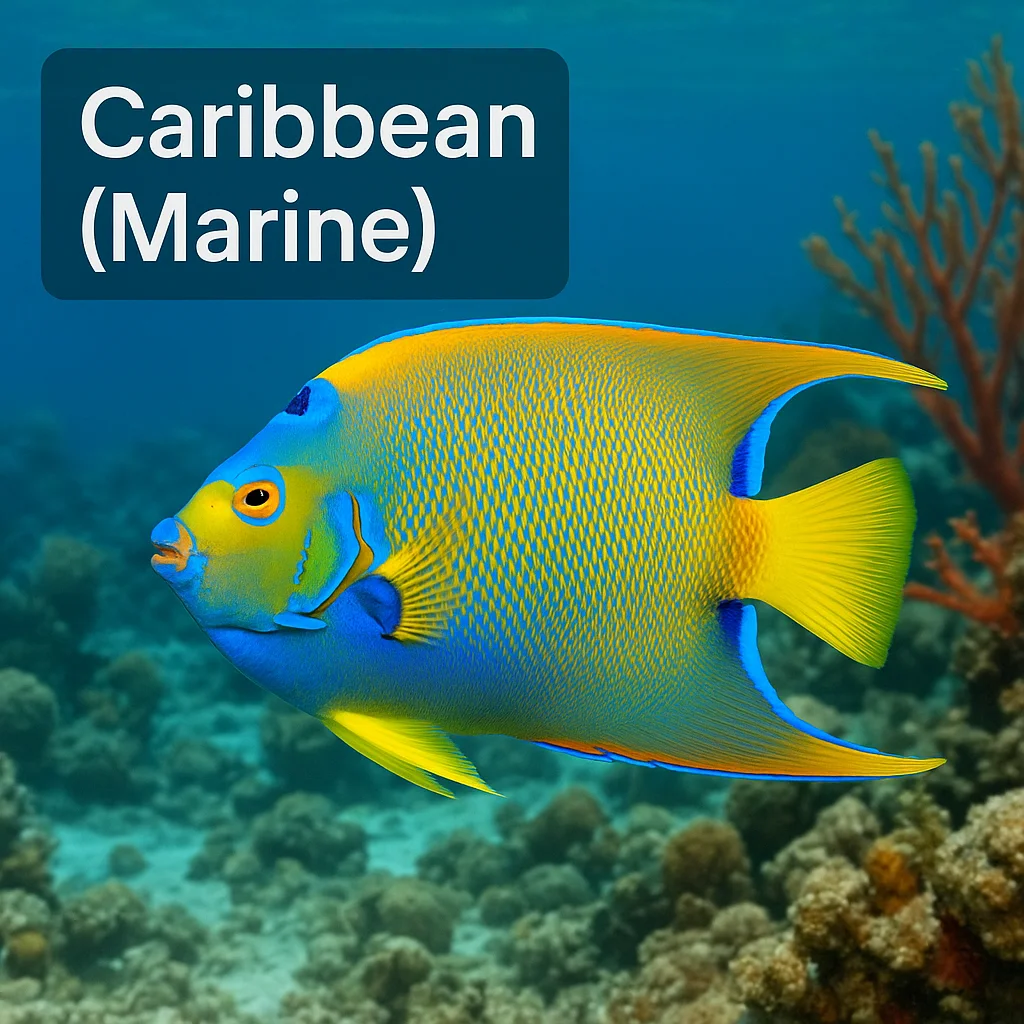
- Common names: Caribbean reef fish, Angelfish, Butterflyfish, Parrotfish
- Scientific name: Varies
- Freshwater / Marine / Brackish: Marine
- Origin: Caribbean Sea, parts of the Atlantic Ocean
- Typical adult size range: 2 inches to over 3 feet
- Lifespan: Varies, commonly 5 to 15 years
- Temperament: Peaceful to aggressive, species-dependent
- Recommended tank size: 30 gallons minimum; larger setups preferred
- Water temperature range: 72–78°F (22–26°C)
- pH / hardness or salinity guidance: Salinity around 1.020–1.026, pH 7.8–8.4
- Diet type: Omnivore, Herbivore, Carnivore (varies)
- Activity zone: Top to bottom, reef associated
- Social needs: Schooling, solitary, or pair-living, depending on species
- Beginner suitability: Medium to advanced
🔍 Identification
The Caribbean marine fish group includes a variety of species, each with distinct identification markers. Typically, these fish display a wide array of colors and patterns that can change with age or mood. Fins vary from long and flowing to short and stiff. Gender differences can be subtle or pronounced depending on the species, and many possess mimicry patterns to blend with their environments.
- Top ID Tips:
- Look for vibrant color patterns, often vivid blues, yellows, and greens.
- Check for structured, often elaborate fin designs.
- Note body shape; some are disc-like while others are elongated.
- Observe for banding, stripes, or spots that are common markers.
- Color may intensify or fade under stress or during mating.
- Mimic species may appear similar—consult detailed guides for differentiation.
🌍 Origin & Natural Habitat
Caribbean marine fish are found in the Atlantic Ocean's warm Caribbean Sea, often in vibrant coral reefs, lagoons, and coastal areas. These waters have moderate to strong currents, variable salinity around reefs, and diverse structural features like coral formations, rocky overhangs, and sandy substrates. Seasonal changes such as rainfall can slightly affect the environmental conditions. Understanding these habitat traits helps in replicating ideal tank setups, ensuring the fish thrive.
🧪 Tank Setup & Water Parameters
Setting up a tank for Caribbean marine fish involves replicating their natural environments as closely as possible. A moderate to high tank volume is recommended for swimming space. Proper filtration is crucial to maintain pristine water quality, and moderate water flow is ideal to mimic ocean currents. Lighting can be full spectrum to support any reef organisms present, and a variety of substrates and decor can be used to offer hiding spots and mimic coral reef structures.
- Setup Checklist:
- Minimum tank size: 30 gallons and up
- Appropriate filtration to manage bioload
- Stable warm water temperatures (72–78°F)
- Live rock and reef-safe decor
- Moderate water flow mimicking ocean currents
- Supplemented lighting if housing reef species
🤝 Temperament & Compatibility
Temperament varies widely in Caribbean marine fish. Some are peaceful and do well in community tanks, while others may be territorial. They can form schools, pairs, or live solitarily. During feeding, activity typically increases, and territorial species may defend their feeding grounds. Potential tankmates should be chosen carefully to avoid aggression and overcrowding.
- Compatibility Notes:
- Peaceful species can cohabit with other non-aggressive fish.
- Mixing sizes and species may lead to aggression.
- Observe for territorial behaviors, especially when introducing new fish.
- Consider compatibility with invertebrates and reef setups.
- Individual variance in behavior may challenge predictable community dynamics.
🍽️ Diet & Feeding
In the wild, Caribbean marine fish adopt diverse diets, including algae, plankton, crustaceans, and detritus. In aquariums, their diet can consist of high-quality flake food, pellets, and supplements of frozen or live food. Feeding should be adjusted based on the species and balanced between quantity and variety, with some species having specialized dietary needs.
- Feeding Tips:
- Offer a varied diet for optimal health.
- Feed small amounts multiple times a day.
- Include algae-based foods for herbivores.
- Shrimp and mysis enhance their nutritional intake.
- Monitor feeding to reduce waste and maintain water quality.
- Tailor feeding to species-specific nutritional preferences.
🧬 Growth, Color Changes & Lifespan
Caribbean marine fish show significant growth and coloration changes from juvenile stages to adulthood. While young, many display brighter colors to deter predators or blend with vibrant reef environments. Stress, inadequate space, and water quality issues can lead to faded colors, clamped fins, and reclusive behavior in these fish. Lifespan is affected by diet and the quality of care, often spanning from 5 to 15 years in well-maintained tanks.
🪺 Breeding & Reproduction
Caribbean marine fish breeding behaviors can vary by species. Some are egg layers, while others might exhibit brood care. Commonly, breeding in home aquaria is challenging due to specific environmental and hormonal triggers unlikely to occur in captivity. Owners interested in breeding should research species-specific requirements extensively.
🩺 Common Health Issues & Prevention
Common health concerns include parasites like ich, bacterial infections, and fin damage often caused by aggressive tank mates. Prevention through rigorous quarantine procedures, monitoring for stable water parameters, and maintaining clean filtered water can reduce risks. Avoid overfeeding and ensure that nutritional needs are met to prevent health issues.
- Prevention Basics:
- Quarantine new arrivals before introducing them to the main tank.
- Regular water changes to maintain quality.
- Use a UV sterilizer to minimize pathogens.
- Avoid overcrowding to reduce stress and disease spread.
- Keep water parameters stable to prevent stress-related diseases.
🌱 Role in the Aquarium
Caribbean marine fish add vibrant color and activity to a marine aquarium. While some species contribute to algae control, others provide education on reef ecosystems. Ensuring fish are sourced ethically, favoring captive-bred options to minimize habitat disruption, is crucial to responsible ownership.
📉 Conservation & Responsible Keeping
Choosing captive-bred over wild-caught fish mitigates the impact on natural populations and ecosystems. Releasing aquarium fish into wild habitats is irresponsible and can have negative ecological impacts. If a fish outgrows its tank, explore rehoming options with trusted aquarists or local fish communities.
- Responsible Keeping Tips:
- Choose captive-bred fish whenever possible.
- Never release aquarium fish into local waters.
- Ensure responsible rehoming if necessary.
- Support sustainable and ethical fish suppliers.
- Educate others on responsible fishkeeping practices.
📌 Summary
- Variety of species with unique patterns and colors found in the Caribbean.
- Marine fish require saltwater conditions (salinity 1.020–1.026).
- Aquariums should mimic natural reef habitats with appropriate decor and flow.
- Diet needs vary by species but should be diverse and balanced.
- Compatibility depends on temperament; research individual species well.
- Breeding rarely occurs in home aquariums due to specific requirements.
- Responsible sourcing and ethical keeping are vital.
- Monitor for common ailments like parasites and maintain good water quality.