🐠 Amazon & South America
🧾 Quick Facts
The aquarium fish hailing from the Amazon and South America comprise a diverse range, including numerous popular species known for their vibrant colors and engaging behaviors. These fish thrive in freshwater environments, offering exciting opportunities for aquarists of all experience levels.
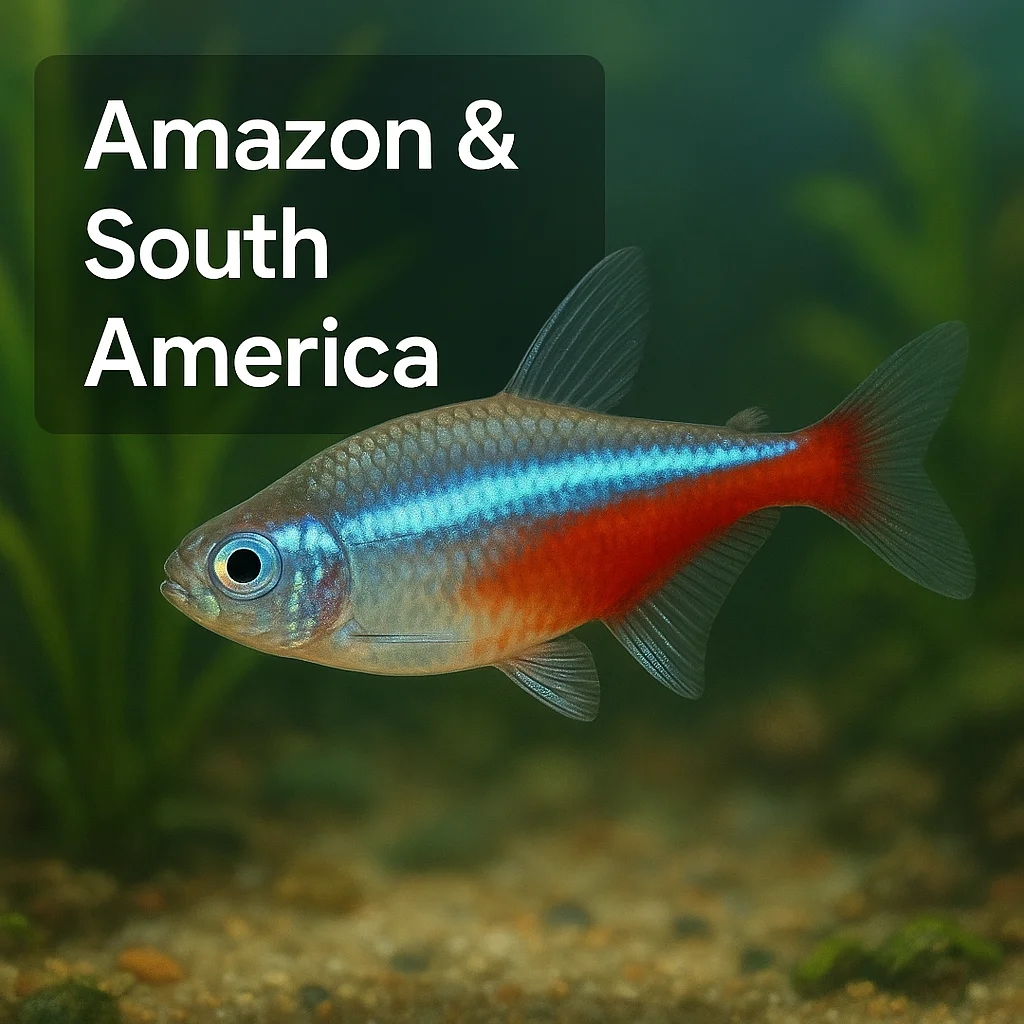
- Common names: Tetras, Cichlids, Catfish
- Scientific name: Varies by species
- Freshwater
- Origin: Amazon River Basin, South American rivers and floodplains
- Typical adult size range: 1 to 12 inches depending on species
- Lifespan: 2 to 15 years, varies
- Temperament: Peaceful to semi-aggressive, varies by species
- Recommended tank size: Minimum 10 gallons; larger for bigger species
- Water temperature range: 72-82°F (22-28°C)
- pH range: 6.0 to 7.5
- Diet type: Omnivore, some lean towards herbivore or carnivore
- Activity zone: Mid to bottom
- Social needs: Schooling, pair, or solitary depending on species
- Beginner suitability: Moderate to easy
🔍 Identification
Aquarium fish from the Amazon and South America are identifiable by their varied body shapes—from slender tetras to robust cichlids. Colors range from the bright hues of neon tetras to the more subdued tones of catfish. Males of some species exhibit more vivid colors during breeding seasons, whereas females may be larger or have rounder bellies. Common look-alikes include other tropical freshwater species, but a focus on fin shapes and coloration helps in correct identification.
- Top ID Tips:
- Look for diamond-shaped or elongated bodies among tetras.
- Cichlids often have bold patterns or stripes.
- Catfish generally have barbels around the mouth area.
- Bright, iridescent colors are a cue for tetras.
- Males are often more vibrantly colored during breeding.
- Check fin shape: extended dorsal fins in some tetras.
- Body patterns: spots in some cichlid species.
- Comparison with known regional species assists in identification.
- Juvenile vs. adult coloration may vary widely; confirm at different ages.
🌍 Origin & Natural Habitat
The rich biodiversity of the Amazon Basin provides the natural habitats for these species. Found in streams, rivers, and floodplains, they experience environments characterized by abundant vegetation, variable substrates, and occasional rapid water flows. Seasonal changes include flood and dry periods, influencing their breeding and feeding behaviors. Understanding these natural settings aids aquarists in recreating ideal captive conditions, fostering healthier fish.
🧪 Tank Setup & Water Parameters
An aquarium mimicking the Amazon's dynamic features benefits these fish, ensuring well-being. A spacious tank provides ample horizontal swimming space, supplemented by gentle filtration mimicking natural water flow. Heating maintains tropical warmth, while soft substrates and dense planting offer vital cover. Adjustable lighting helps simulate their native environment.
- Setup Checklist:
- Tank size: Minimum 10 gallons; prefer larger for cichlids and other bigger species.
- Soft, sandy substrate to mimic riverbeds.
- Dense plant coverage for hiding and foraging.
- Aquascape with driftwood and rock formations.
- Low to moderate lighting suits most plant and fish needs.
- Regular water changes to maintain softness and purity.
- Cover the tank to prevent fish from jumping.
- Ensure hardware supports gentle water flow.
- Incorporate caves for cichlids to establish territories.
🤝 Temperament & Compatibility
The peaceful nature of most tetras and catfish contrasts with the semi-aggressive tendencies of some cichlid species. Schooling or shoaling behavior is common among many tetras, necessitating group environments. Observe territorial behaviors, particularly in cichlids, during feeding and breeding. Suitable tankmates include other peaceful community fish, avoiding aggressive or much larger species.
- Compatibility Notes:
- Pair or school tetras for ideal social interaction.
- Watch for cichlid territorial displays; provide sufficient space.
- Avoid housing with fin-nippers or overly aggressive species.
- Match tankmates with similar water parameter needs.
- Consider regionally similar species for harmonious communities.
- Monitor interactions to adjust tank mates as needed.
- Ensure feeding does not incite aggression.
🍽️ Diet & Feeding
Wild diets are diverse, including insects, plant matter, and small aquatic organisms. In tanks, they accept flake, pellet, and frozen foods, supplemented by live offerings when feasible. Feeding routines adapt to species-specific needs, focusing on portion control and frequency to maintain health.
- Feeding Tips:
- Use high-quality, varied foods to prevent nutrient deficiencies.
- Incorporate live or frozen foods for enrichment.
- Adjust feeding quantities to avoid waste and water quality issues.
- Offer small portions, multiple times a day rather than one large meal.
- Monitor for picky eaters and adjust diet accordingly.
- Soak dry foods if the species is prone to bloating or digestive issues.
- Include plant-based foods for herbivorous inclinations.
- Observe feeding behaviors to adjust pairing/group dynamics.
🧬 Growth, Color Changes & Lifespan
Juveniles often exhibit altered coloration, maturing into the vivid hues seen in adults. Environmental changes or stress can result in faded colors or clamped fins. A typical lifespan tank factor includes quality diet, water cleanliness, and space. Stress management helps maintain optimal coloration and activity levels.
🪺 Breeding & Reproduction
Breeding styles vary, with some species laying eggs while others care little for offspring. Natural triggers include temperature shifts and ample food. Developing fry benefit from micro food sources. Availability and success rates for breeding in-home tanks differ widely among species, requiring species-specific approaches for successful propagation.
🩺 Common Health Issues & Prevention
Common ailments include fungal and parasitic infections, often linked to poor water quality. Prevention emphasizes ideal tank conditions, quarantine procedures, and careful feeding. Maintaining a stable environment deters most health problems.
- Prevention Basics:
- Quarantine new fish before adding to an existing tank.
- Regularly monitor water parameters to maintain stability.
- Do not overfeed to prevent waste buildup.
- Utilize adequate filtration systems.
- Watch for signs of stress or disease for early identification.
- Keep consistent tank maintenance schedules.
- Encourage plant growth to promote a healthy ecosystem.
🌱 Role in the Aquarium
The diverse fish from this region enhance community tanks with lively displays and varied ecological roles, from algae control to adding aesthetic appeal. Selecting captive-bred fish helps minimize ecological impacts and supports sustainable aquarium practices.
📉 Conservation & Responsible Keeping
Opt for responsibly sourced fish where feasible—captive-bred options benefit both ecosystems and hobbyists. Avoid releasing any species into non-native environments due to potential ecological harm. Consider rehoming as a viable alternative if space or compatibility becomes an issue.
- Responsible Keeping Tips:
- Purchase from reputable breeders or suppliers.
- Research potential growth size to avoid future space issues.
- Learn specific care requirements before acquiring new species.
- Commit to long-term care when bringing fish home.
- Engage with local aquarium communities for shared knowledge and support.
- Use certified fish-safe treatments when necessary.
- Understand the ecological role and sustainability status of each species.
📌 Summary
- Amazon & South America fish include tetras, cichlids, and catfish.
- Diverse range of body shapes and vivid colors.
- Suitable for freshwater tanks with adjustable conditions.
- Community-friendly, though some species are territorial.
- Omnivorous diet easily managed with commercial foods.
- Beginner to moderate care difficulty based on species.
- Maintain species-specific water parameters and environmental needs.
- Focus on stress reduction for optimal fish health.
- Support sustainable practices by choosing captive-bred organisms.
- The environment influences reproduction and behavior.