🐠 Africa (Malawi / Tanganyika)
🧾 Quick Facts
The cichlids of the African Great Lakes, specifically Malawi and Tanganyika, are renowned for their diversity and vibrant colors. These freshwater fish are popular among aquarists due to their fascinating behaviors and striking appearances.
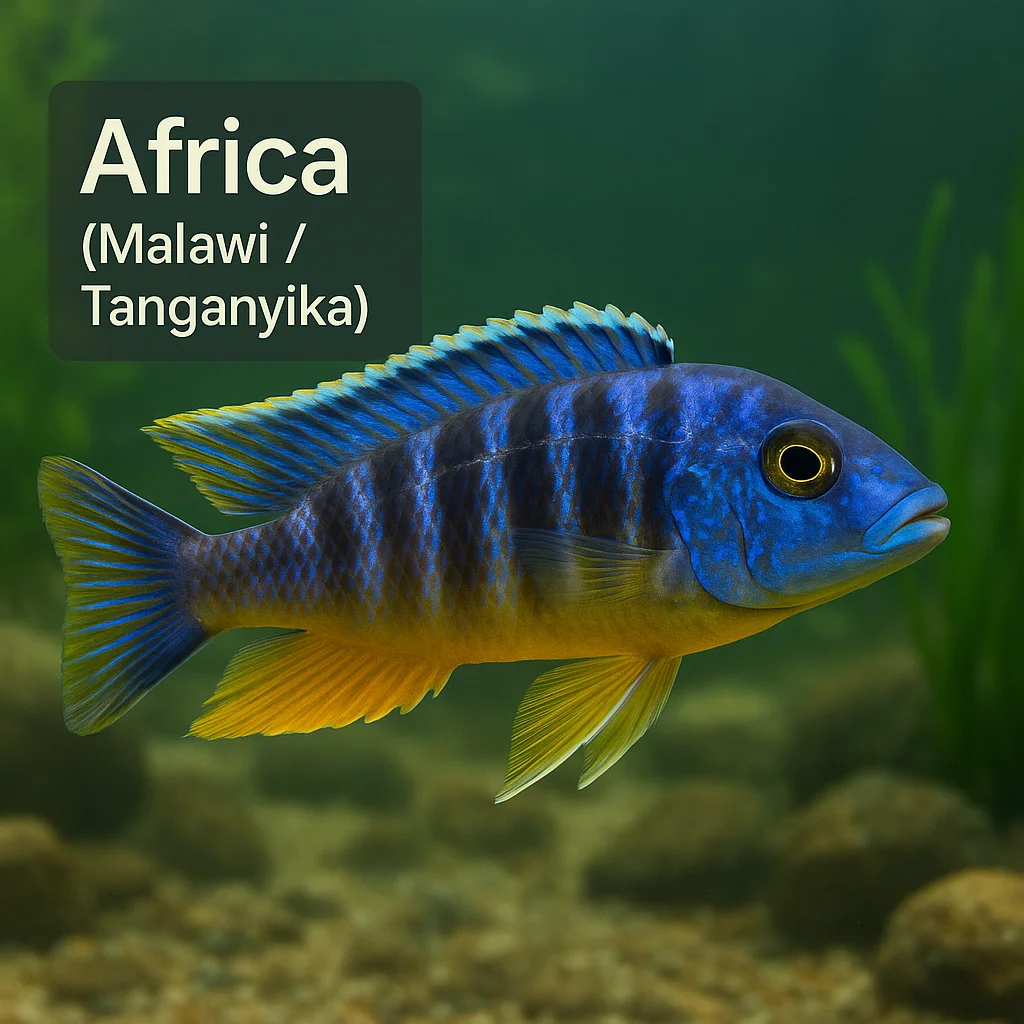
- Common Names: African cichlids, Lake Malawi cichlids, Tanganyika cichlids
- Scientific Name: Varies (e.g., Aulonocara, Tropheus)
- Freshwater/Marine/Brackish: Freshwater
- Origin: Great Rift Valley lakes in East Africa
- Typical Adult Size Range: 4 to 12 inches
- Lifespan: 5 to 10 years
- Temperament: Semi-aggressive
- Recommended Tank Size: Minimum 55 gallons
- Water Temperature Range: 74-82°F (23-28°C)
- pH/Hardness Guidance: pH 7.8–8.6; hard water preferred
- Diet Type: Omnivore
- Activity Zone: Mid to bottom
- Social Needs: Group of 6+ preferred
- Beginner Suitability: Medium
🔍 Identification
African cichlids are recognized by their robust body shapes and diverse color patterns that include vivid blues, reds, yellows, and greens. Typically, they display distinct bands, spots, or color gradients. The dorsal fins often have sharp spines and are elongated. Sexual dimorphism varies; males may be more colorful or larger than females in many species.
- Top ID Tips:
- Robust body with a sloped forehead
- Vibrant color patterns that can change with mood
- Elongated dorsal and anal fins
- Males often exhibit more vivid colors
- Distinctive mouth shape for feeding adaptations
- Check for popular michetion you can confuse them with other cichlids from different regions
🌍 Origin & Natural Habitat
These cichlids hail from the rift lakes of East Africa, primarily Lake Malawi and Lake Tanganyika, where they inhabit rocky shorelines and sandy bottoms. The water is generally clear, alkaline, and hard, with temperatures that fluctuate slightly due to seasonal rains. Understanding their natural habitat aids in replicating conditions conducive to their health and behavior in aquariums.
🧪 Tank Setup & Water Parameters
A spacious tank is essential to accommodate their size and active nature. A 55-gallon tank is the practical minimum, with lots of horizontal swimming space. Equip the tank with efficient filtration systems to maintain high water quality and moderate current. Use sandy substrates and rocky caves for hiding and mimicking natural territory. Moderate lighting is preferred, with areas for shelter.
- Setup Checklist:
- Minimum 55-gallon tank
- Efficient filtration to handle waste
- Moderate water flow
- Sandy substrate
- Plenty of rock structures for hiding
- Maintain temperatures around 74-82°F (23-28°C)
- pH between 7.8 and 8.6
🤝 Temperament & Compatibility
African cichlids exhibit semi-aggressive behavior, especially during feeding or breeding. While they do well in groups to distribute aggression, they can become territorial. Suitable tankmates are other robust cichlids that can tolerate similar water conditions and behaviors. Avoid slow-moving or smaller fish that might be bullied.
- Compatibility Notes:
- Suggest keeping with other African cichlids
- Avoid mixing with delicate fish
- Observe for any excessive aggression
- Introduce all fish at the same time to reduce territorial disputes
- Provide ample hiding places
🍽️ Diet & Feeding
In the wild, they consume a varied diet of algae, plant matter, and small invertebrates. In aquariums, a balanced diet of high-quality flakes, pellets, and occasional live or frozen foods like brine shrimp or bloodworms is recommended. Feed two to three times daily in amounts that can be consumed rapidly.
- Feeding Tips:
- Include both plant-based and protein-rich foods
- Avoid overfeeding; provide only what they can eat in 2-3 minutes
- Feed a varied diet to prevent nutritional deficiencies
- Use sinking pellets to accommodate bottom feeders
- Monitor for overeating or uneaten food that may decompose
🧬 Growth, Color Changes & Lifespan
Young specimens are typically less vibrant, gaining coloration as they mature. Mood and stress can alter their color intensity; healthy, unstressed fish show the brightest hues. Stress signs include faded colors and clamped fins. With proper care, most can live between 5 to 10 years, depending on tank conditions and diet.
🪺 Breeding & Reproduction
Most African cichlids are maternal mouthbrooders. Spawning is often triggered by optimal water conditions and suitable temperature. Females incubate eggs in their mouth until hatching. In home aquariums, replicating natural conditions is challenging; therefore, successful breeding is more common among experienced aquarists.
🩺 Common Health Issues & Prevention
Common issues include ich, fin damage, and parasites, often arising from poor water quality or stress. Prevent issues by maintaining stable tank parameters, regular water changes, and avoiding overcrowding. New additions should undergo quarantine to reduce disease transmission risk.
- Prevention Basics:
- Consistent water changes
- Regular tank maintenance
- Quarantine new arrivals
- Avoid overstocking the tank
- Monitor for signs of stress or illness
🌱 Role in the Aquarium
African cichlids add diverse colors and dynamic behavior to aquariums, becoming a focal point due to their appearance and active nature. They contribute to algae control by grazing, though not as effectively as dedicated algae eaters. Always source from reputable dealers who practice sustainable and ethical fishkeeping.
📉 Conservation & Responsible Keeping
Responsible keeping involves selecting captive-bred specimens to protect wild populations. Never release aquarium fish into local water bodies. If rehoming is necessary due to tank size or compatibility changes, seek responsible alternatives such as local aquarist groups or aquarium societies.
- Responsible Keeping Tips:
- Purchase captive-bred when available
- Do not release into the wild
- Consider rehoming options if needed
- Support sustainable trade practices
- Engage with conservation education programs
📌 Summary
- African cichlids are vibrant, semi-aggressive fish from the Great Rift Valley lakes.
- They require spacious tanks with hard, alkaline water.
- Provide rocky habitats to mimic their natural environment.
- Feed a balanced diet of high-quality varied foods.
- Compatible with other cichlids, but avoid delicate or smaller species.
- Exhibit visual changes influenced by mood and tank conditions.
- Mouthbrooders, best bred by experienced aquarists.
- Stress-free living conditions extend lifespan and enhance colors.
- Focus on responsible sourcing and maintaining tank stability.
- Respect their natural habitat by avoiding wild release and supporting conservation.