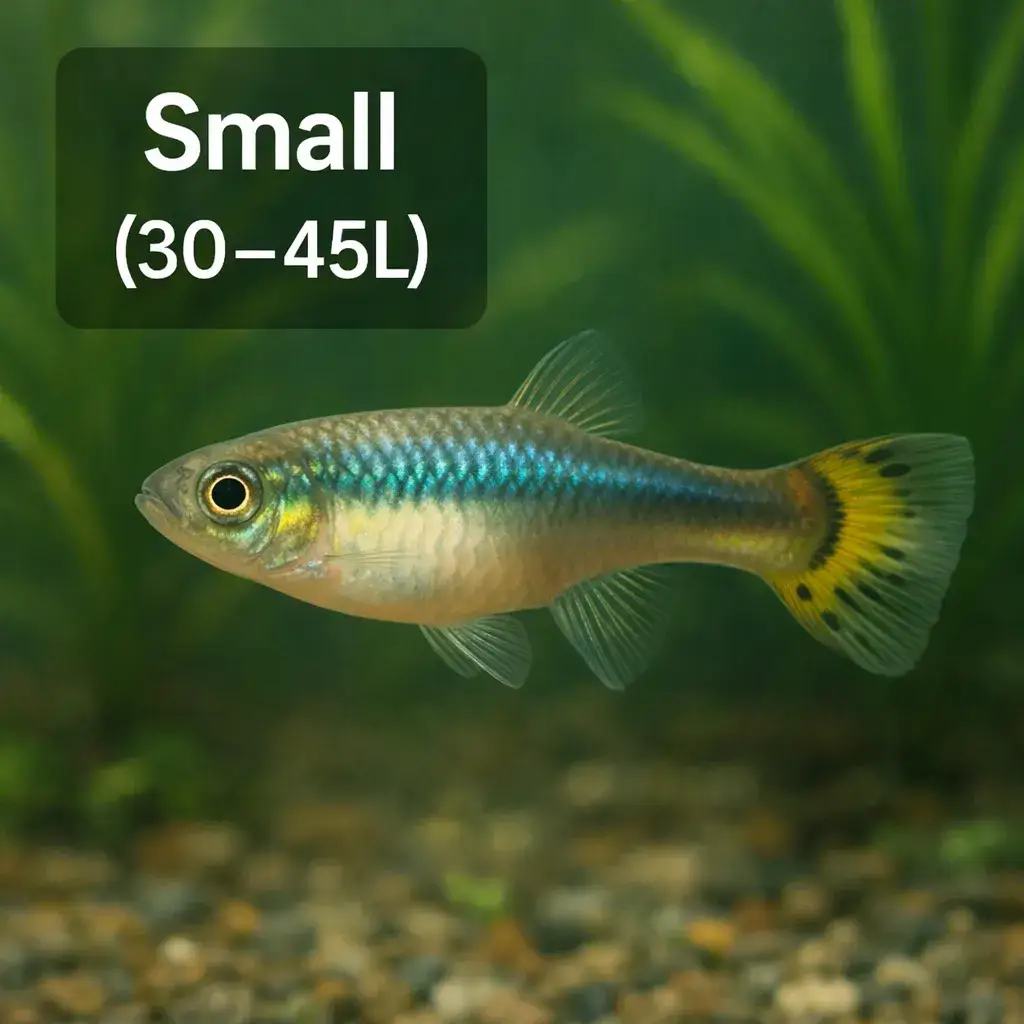
🐠 Small (30–45L)
🧾 Quick Facts
The "Small (30–45L)" aquarium setup refers to a tank that holds between 30 to 45 liters of water. This size is suitable for various smaller fish species, especially those that are peaceful and not aggressive. It offers a compact and manageable environment for beginners and provides a cozy home for small community fish or a moderate number of solitary fish.
- Common names: Often depends on the species chosen, such as Guppies, Tetras, or Betta
- Scientific name: Varies
- Freshwater
- Origin: Varies by species; often found in rivers and streams in South America, Southeast Asia, or Africa
- Typical adult size range: 2.5 to 7.5 cm
- Lifespan: 1 to 5 years (varies by species)
- Temperament: Peaceful to semi-aggressive (varies by fish choice)
- Recommended tank size: Minimum 30L (bigger is often better for more fish or larger species)
- Water temperature range: 22–28°C
- pH guidance: 6.0–8.0 (depends on species)
- Diet type: Omnivore/herbivore/carnivore (depends on species)
- Activity zone: Top, mid, or bottom (varies)
- Social needs: Schooling, pair, or solitary (depends on species)
- Beginner suitability: Easy to medium (depends on species)
🔍 Identification
Identifying fish suitable for a 30–45L aquarium involves understanding the characteristics of some popular species:
- Body shape and silhouette: Slender or rounded bodies common; Betta fish have elongated bodies with flowing fins, while tetras are smaller and more streamlined.
- Key colors/patterns: Bright colors are often seen, especially in species like guppies and tetras, with patterns ranging from solid, spotted, or striped. Color can change with age or mood.
- Fin shapes and notable traits: Diverse, with species like Bettas having long, flowing fins, and guppies having fan-shaped tails.
- Male vs female cues: Often subtle; males may have more vibrant colors or larger fins.
- Common look-alikes: Certain tetras or livebearers; identify by size, shape, and specific patterns.
- Top ID Tips
- Check body size and shape.
- Observe color patterns and intensity.
- Look at the fin shape and size.
- Note the activity level and swimming zone.
- Consider known species if unsure.
- Male fish might be more colorful.
🌍 Origin & Natural Habitat
Fish suitable for small aquariums widely vary in their natural habitats:
- Many come from tropical regions: South American rivers (e.g., tetras), Southeast Asian streams (e.g., Bettas), and African lakes.
- Natural waters often have moderate currents, with densely vegetated banks or substrate with gravel and sand.
- These regions typically engage in seasonal changes that may affect water levels and temperature but usually maintain warm conditions year-round.
Understanding an aquarium fish's origin helps in mimicking natural conditions, supporting health and reducing stress.
🧪 Tank Setup & Water Parameters
Proper setup ensures well-being in small aquariums:
- Include horizontal swimming space for active species.
- Adequate filtration with moderate flow mimics natural conditions.
- Heating is usually necessary to maintain tropical water temperatures.
- Substrate choice from sand to finer gravel, depending on fish preference.
- Include plants for shelter and oxygenation; caves or driftwood provide hiding spaces.
- Lighting should be suitable for plants and enhance fish colors.
- Setup Checklist
- Sufficient swimming space.
- Moderate flow filtration.
- Consistent water temperature.
- Safe substrate for all species.
- Plant and shelter options.
- Adjustable lighting.
- Regular water changes.
🤝 Temperament & Compatibility
Fish chosen for small aquariums exhibit varied behaviors:
- Species like guppies or tetras are schooling fish, offering vibrant displays when grouped.
- Bettas are known for territorial behavior; males should not be kept together.
- Feeding can cause excitement but should be calm to prevent stress.
Careful planning of community composition is essential to avoid aggressive encounters.
- Compatibility Notes
- Avoid mixing aggressive and peaceful species in limited spaces.
- Observe for any signs of stress or territorial aggression.
- Guide assortments by same species for greater harmony.
- Feed at different levels to accommodate all species' preferences.
Keep in mind that fish behavior can be unpredictable, and monitoring is vital to catching subtle changes.
🍽️ Diet & Feeding
The dietary needs of fish species vary widely:
- Diet consists of flakes, pellets, or live/frozen foods like bloodworms, depending on species requirements.
- Provide variety to ensure balanced nutrition, often with a base diet bolstered by supplemental treats.
- Feed once to twice daily in amounts they can consume within a few minutes to prevent water pollution from excess food.
The understanding of dietary differences ensures fish receive proper nutrients and sustain health.
- Feeding Tips
- Mix food types for balanced nutrition.
- Incorporate fasting days weekly for digestion.
- Provide vegetable matter for herbivores.
- Monitor fish response to food variety.
- Place food at varying water levels.
🧬 Growth, Color Changes & Lifespan
Observation in fish from small (30–45L) tanks shows:
- Juvenile features are less distinct, with coloration and fin development prominent in mature specimens.
- Vibrant colors may dull when stressed or during illness, highlighted by inactive behaviors like hiding or fin clamping.
- A typical lifespan of one to five years can be impacted by improper diet, lack of space, or inconsistent water quality.
🪺 Breeding & Reproduction
Breeding varies dramatically:
- Some, like guppies, are livebearers, birthing live fry directly into the tank, while others like tetras are egg layers, laying eggs that hatch subsequently.
- Spawning might necessitate specific triggers like water changes or temperature shifts.
- Fry often require special feeding, like infusoria or specific fry foods, though such breeding in home tanks can be uncommon and challenging for novices over lack of resources or varied conditions needed.
🩺 Common Health Issues & Prevention
Proper care strategies minimize problems like:
- Ich (white spot disease) is a common ailment treated by maintaining stable temperatures and using pre-treatment quarantine setups.
- Avoid injury-related fin damage by managing habitat space to prevent collisions or aggressive encounters.
- Parasites can be managed through a quarantine process and limiting exposure through new introductions.
- Prevention Basics
- Keep consistent and clean water conditions.
- Implement a reliable filtration system.
- Quarantine new arrivals effectively.
- Refrain from overfeeding; ensure a balanced diet.
- Monitor fish behavior for early illness signs.
🌱 Role in the Aquarium
Small tanks with fish offer significant contributions:
- Engage in effective algae control when herbs are adequately selected.
- Provide community balance when set up with varied compatible species operating in different water levels.
- Seek species offered by reputable breeders to prevent ecosystem damage from wild capture.
📉 Conservation & Responsible Keeping
Conservation-aware practices should guide care choices:
- Prefer captive-bred fish to reduce pressure on wild populations and ecosystems.
- Never release fish into non-native waters where they can become invasive.
- Rehome carefully if fish outgrow their space, using dedicated rehoming programs or local aquarium organizations.
- Responsible Keeping Tips
- Select captive-bred fish.
- Ensure water conditions mimic natural environments.
- Sustain regular tank cleaning routines.
- Hand over fish responsibly if downsizing.
- Engage in breeding practices with ethical regards.
📌 Summary
- ID highlights: Observe body sizes, notable colors, and fin shapes.
- Origin: Diverse, across tropical and warm water regions.
- Tank setup: Complete with plants and medium flow filtration.
- Compatibility: Varied; harmony depends on selective pairing.
- Diet: Varieties of staple and fresh foods.
- Difficulty: Ranges from easy to medium across different species.
- Key cautions: Monitor aggression and environment changes.