🐠 Nano (20–30L)
🧾 Quick Facts
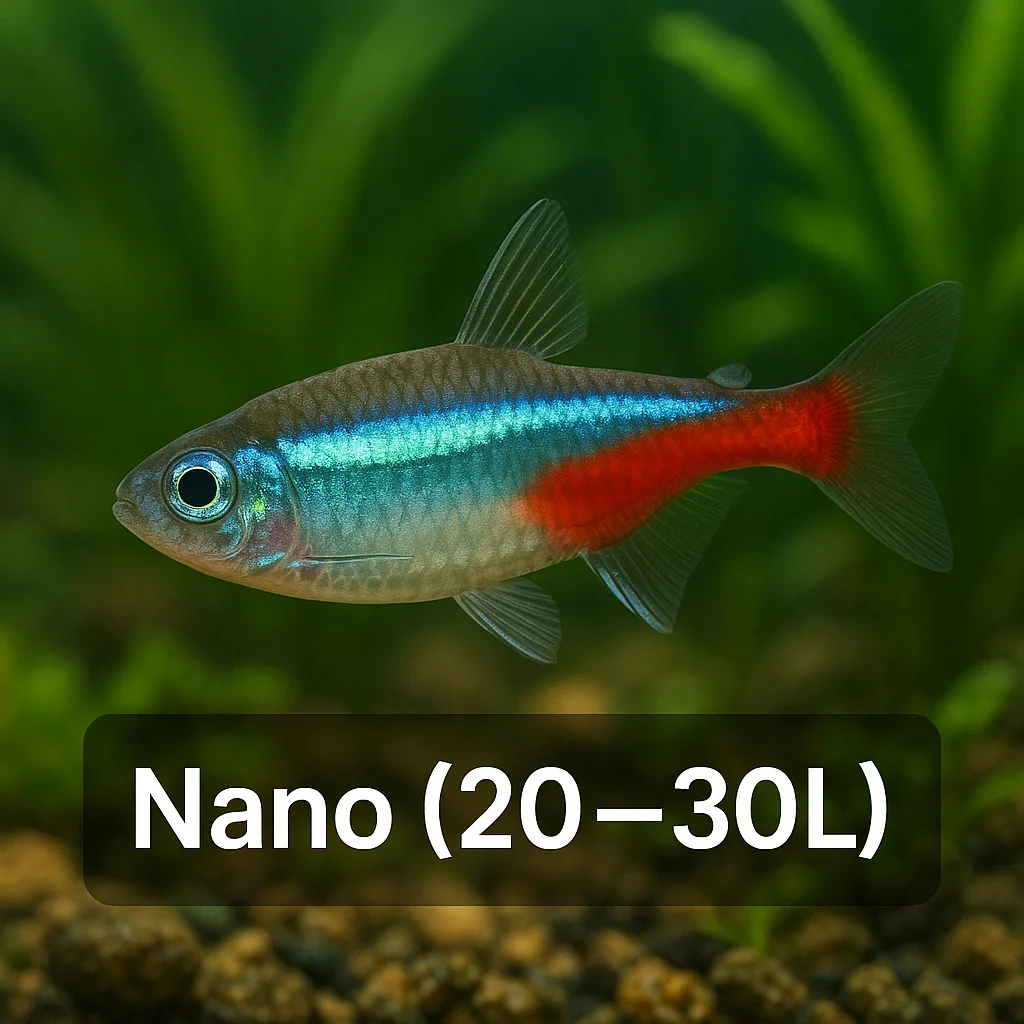
In the realm of aquariums, "Nano" refers to small species or groups of fish suitable for tanks with a volume of 20 to 30 liters. This category encapsulates various small freshwater fish that are ideal for beginners due to their manageable size and mostly peaceful nature.
- Common names: Nano fish, Aquarium mini species
- Scientific name: Varies
- Freshwater / Marine / Brackish: Freshwater
- Origin: Various regions including South America, Asia, and Africa
- Typical adult size range: 2–5 cm
- Lifespan: Varies, typically 2–5 years
- Temperament: Peaceful
- Recommended tank size: 20–30 liters minimum
- Water temperature range: 22–28°C
- pH / hardness guidance: pH 6.0–7.5; soft to moderately hard water
- Diet type: Omnivore
- Activity zone: Mid to top
- Social needs: Schooling
- Beginner suitability: Easy to medium
🔍 Identification
Nano fish come in a variety of shapes, colors, and patterns attributable to the multitude of species in this category. Generally, these fish are small-bodied with variations in body shape such as torpedo-like or rounded silhouettes.
- Colors can range from vivid reds and blues to subtle greens and silvers, often intensifying during courtship or in optimal conditions.
- Fins can be long and flowing or short and functional, with tail types varying from fan shapes to forked tails.
- Males are often more brightly colored than females, although specifics vary between species.
- Common look-alikes include other species of tetras and rasboras.
- Top ID Tips:
- Look for small, streamlined bodies
- Check for vibrant coloration but remember it can depend on mood
- Note fin shapes - long versus stumpy
- Male and female nuances can be subtle
- Position in the tank: mid to top swimming areas
- Similar appearance with other small, colorful freshwater fish
- Color brightness indicates good health
- Schooling behavior is common
🌍 Origin & Natural Habitat
Nano fish commonly originate from tropical and subtropical regions, including the shallow and densely vegetated waters of South America, Asia, and Africa. These regions often feature slow-moving streams, small rivers, and floodplain lakes.
Understanding their natural habitat helps in setting up aquariums that mimic these environments, promoting fish health and natural behaviors. Seasonal changes like rainy and dry periods can influence their breeding but are typically of less importance in regulated tank environments.
🧪 Tank Setup & Water Parameters
The key to a successful nano fish tank is creating a balanced microenvironment. Considerations include plenty of horizontal swimming space, gentle water filtration, and stable temperatures.
- A small tanksize of 20–30 liters is sufficient for shoals of small fish.
- Filtration should provide gentle water flow; strong currents can stress these small fish.
- Heating is usually required to maintain tropical water temperatures of 22–28°C.
- Substrate can be fine gravel or sand; include live plants or decor for hiding spots and natural scenery.
- Provide moderate lighting to encourage plant growth and simulate daylight cycles.
- Setup Checklist:
- Choose a 20–30 liter aquarium
- Install a gentle aquarium filter
- Maintain temperature between 22–28°C
- Use fine gravel or sand as substrate
- Add live plants for cover and oxygenation
- Ensure moderate, consistent lighting
- Include hiding spots with rocks or decor
- Regular water changes (10–20% weekly)
🤝 Temperament & Compatibility
Nano fish typically exhibit peaceful behaviors and are often seen swimming in schools. They are generally non-aggressive and can be seen feeding together in harmony.
Good tankmates include other small, peaceful species like neon tetras, small rasboras, and certain small catfish. Avoid housing with large or aggressive fish, as these could pose a threat.
- Compatibility Notes:
- Peaceful, schooling behavior is common
- Suitable tankmates include other nano species
- Avoid large or aggressive fish
- Monitor feeding time fairness and behavior
- Provide ample space to reduce stress
- Individually variable, monitor new arrivals closely
🍽️ Diet & Feeding
Nano fish are omnivorous, thriving on a varied diet that includes high-quality micro pellets, flakes, and occasionally frozen or live foods such as daphnia or brine shrimp. Feeding twice daily in small, manageable portions is typically sufficient.
In the wild, many nano fish feed on tiny invertebrates, algae, and plant material. Augmenting their diet with algae wafers or vegetable matter assists with nutritional balance.
- Feeding Tips:
- Offer a varied, balanced diet
- Use high-quality flakes or micro pellets as a staple
- Supplement with frozen or live foods for variety
- Feed twice daily in small portions
- Avoid overfeeding to maintain water quality
- Consider occasional vegetable supplements
- Remove uneaten food promptly
🧬 Growth, Color Changes & Lifespan
Nano fish exhibit slight changes as they grow, with juveniles usually paler than adults. Adults can display vivid colors, often as an indication of health and mood. Stressful conditions like poor water quality or unsuitable tank mates may cause colors to fade and fins to clamp.
On average, the lifespan of nano fish ranges between 2 to 5 years, heavily influenced by diet, tank conditions, and water quality.
🪺 Breeding & Reproduction
Many nano fish are egg layers, engaging in group spawning. For optimal breeding conditions, a slight increase in water temperature mimicking their natural breeding triggers may encourage spawning.
Eggs are often scattered among fine-leaved plants without subsequent parental care. Once hatched, fry will thrive on commercially available fry foods and infusoria.
Breeding nano fish in home aquariums is achievable with dedication but may require a separate breeding tank to protect eggs and reduce stress on adults.
🩺 Common Health Issues & Prevention
Awareness of common health issues like ich/white spot, fin rot, and parasites can support timely interventions. Maintaining clean water, stable parameters, and regular maintenance such as tank cleaning and quarantine for new tankmates can largely prevent these issues.
- Prevention Basics:
- Implement a quarantine protocol for new arrivals
- Maintain stable water parameters
- Regularly clean the substrate and decor
- Avoid overfeeding; remove excess food
- Use a reliable water test kit frequently
- Provide a stress-free environment
🌱 Role in the Aquarium
Nano fish contribute significantly to a balanced aquarium through community interaction, active swimming, and occasional algae grazing. Their small size makes them safe for most planted tanks, where they often enhance the tank's visual appeal with their vibrant colors and playful behavior.
Select fish from reputable sources to ensure ethical practices and discourage wild capture that could harm natural ecosystems.
📉 Conservation & Responsible Keeping
When acquiring nano fish, consider captive-bred options, which tend to adapt better to home aquariums and support conservation efforts. Never release aquarium fish into local waterways, as they may disrupt local ecosystems.
- Responsible Keeping Tips:
- Opt for captive-bred fish when available
- Avoid releasing fish into the wild
- Consult local aquarist forums for rehoming advice
- Research sustainable species choices
- Promote awareness of conservation issues
- Discard tank water responsibly
📌 Summary
- Belong to a category of small, peaceful freshwater fish
- Hailing from diverse regions like South America, Asia, and Africa
- Require a 20–30 liter tank with gentle filtration
- Best kept with other small, non-aggressive species
- Primarily omnivorous with flexible dietary options
- Easy to medium care level, great for beginners
- Breeding in home tanks requires planning
- Prioritize captive-bred fish for ecological reasons