🐠 Medium (45–80L)
🧾 Quick Facts
The "Medium (45–80L)" aquarium category does not represent a single species of fish but rather a volume range of aquariums suitable for a variety of fish species. This range often includes species well-suited for beginner to intermediate hobbyists. Here’s what you need to know about this aquarium size profile.
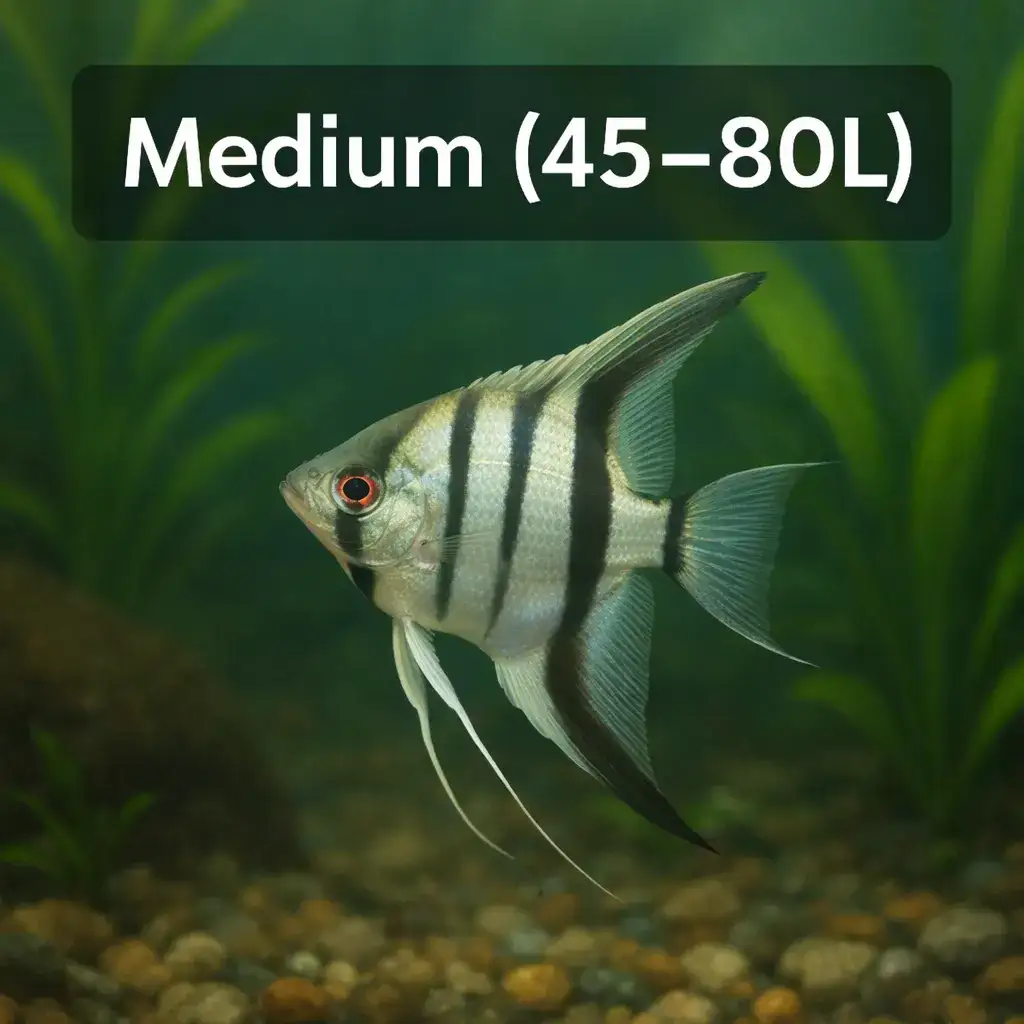
- Common names: Medium tank community, small groups
- Scientific name: Varies
- Freshwater
- Origin: Varies; tanks typically house species from rivers, lakes, or floodplains
- Typical adult size range: 2 – 10 cm
- Lifespan: Ranges from 2 to 10 years, depending on species
- Temperament: Peaceful to semi-aggressive, varies by species
- Recommended tank size: 45 to 80 liters minimum
- Water temperature range: 22°C – 28°C (72°F – 82°F)
- pH / hardness: Tends to prefer pH 6.0 – 7.5; general hardness varies
- Diet type: Omnivore to herbivore, species-dependent
- Activity zone: Top to bottom, varies by individual fish species
- Social needs: Often schooling or small groups
- Beginner suitability: Medium (easy with the right species)
🔍 Identification
The medium aquarium holds a variety of fish species with distinctive identification features. Each species has different body shapes and colors, offering unique identification cues. Here’s some guidance on spotting common inhabitants:
- Body shape and silhouette: Slender and streamlined; some might be more elongated or rounded.
- Key colors/patterns: Solid to mottled colors, stripes, or spots, some show vibrant coloration under stress.
- Fin shapes: Varies greatly—from long flowing fins to short stubby ones.
- Male vs female cues: Typically subtle or varies between species.
- Common look-alikes: Many species resemble others, identification may be mistaken; research individual species.
- Top ID Tips:
- Research specific species as appearances can be misleading.
- Be aware of common markings and patterns specific to species.
- Observe body shape, as some leisure swimmers have distinctive physiques.
- Check fins—different species possess unique fin shapes.
- Notice color changes; mood or age can alter color intensity.
- Ensure correct ID to avoid compatibility issues.
🌍 Origin & Natural Habitat
Medium-sized aquarium species typically originate from freshwater habitats such as rivers, streams, and lakes across many continents, mainly in South America, Africa, and Southeast Asia. These environments often provide essential clues for setting up an effective tank.
Species thriving in these tanks may come from fast-flowing streams with rocky substrates or calmer, plant-rich floodplains. Understanding this background aids tank design, emulating natural water flow, and choosing the correct substrate and plant types can enhance comfort and mimic their native homes.
🧪 Tank Setup & Water Parameters
Tank setup is essential for the health and happiness of the species within the 45-80L range. A focus on adequate space, proper filtration, and plenty of hiding spots and visuals can emulate a natural habitat. For fish that prefer more swimming room, prioritize horizontal space.
- Filtration is crucial: medium to low flow to mimic natural waters.
- Heating: Maintain stable, tropical temperatures.
- Substrate: Mix of sand and small gravel; consider species’ native habitat.
- Decor: Include plants, rocks, and driftwood to provide hiding spots.
- Lighting should stimulate daylight without overstressing the fish.
- Setup Checklist:
- Select species compatible with each other.
- Ensure a tight-fitting lid to prevent jumping.
- Regularly maintain a consistent temperature.
- Include sufficient hiding spots with decor not obstructing swim paths.
- Balance lighting with natural day/night cycles.
- Aim for a spacious layout focusing on horizontal swim space.
🤝 Temperament & Compatibility
This tank size supports a range of temperaments, with many species contributing to a balanced community feel. Schooling fish generally need companions to feel secure, forming small groups to mimic social structures. Aggression levels vary: some species may show territorial behavior, especially when breeding.
- Ideal for small community fish, schooling species.
- Pairs or solitary species fit well within varieties.
- Avoid placing fin-nippers with long-finned species.
- Territorial behavior may arise; allow space for hiding to lessen stress.
- Successful mélange of fish minimizes overcrowding.
- Compatibility Notes:
- Mix similar size and temperament fish.
- Expect minor territorial disputes during feeding.
- Monitor species that require companionship to prevent loneliness.
- Pair peaceful tankmates for the calmest environment.
- Understand individual behavior may vary widely.
🍽️ Diet & Feeding
Feeding practices should be adjusted to a diverse range of diets typical to each species. Offering a varied diet enhances nutritional intake and ensures health and vitality over time. Some species may require special diets.
Common foods include high-quality flakes, frozen foods, and live foods such as brine shrimp and daphnia. Feeding should be contextual: several small meals spread throughout the day, avoiding overfeeding as it degrades water quality.
- Feeding Tips:
- Vary diet utilizing flakes, frozen and live foods.
- Feed in small amounts to prevent waste accumulation.
- Observe fish eating habits to ensure all receive sufficient food.
- Supplement with vegetables and spirulina for herbivorous species.
- Pellets can be beneficial for specific omnivore species.
🧬 Growth, Color Changes & Lifespan
Growth and appearance changes depend on conditions, often improving with pristine water quality and appropriate nutrition. Juveniles might look different from adults, which is normal.
Mood and environmental changes manifest in color variation. Stressed fish may exhibit duller color, clamped fins, or remain hidden. Color and vitality flourish with stable environments.
Lifespan varies with environmental consistency; well-maintained conditions can extend longevity.
🪺 Breeding & Reproduction
Breeding possibilities vary with species kept within this tank size. Some fish breed more readily, while others are difficult in captivity.
Many species are egg layers with varying spawning habits. Courtship involves intricate displays, and specialized nesting regions may be required. Egg care or parental care might vary with each species. Fry require nutrient-rich foods scaled to size.
Many species in this range commonly breed, yet others rarely do in home setups due to space limits or specific breeding triggers.
🩺 Common Health Issues & Prevention
Fish in medium tanks may face typical health challenges, including ich and fin rot. Proactive measures include established quarantine, consistent clean water, and avoiding overstocking.
Preventative care relies on stable, quality settings, reducing the outbreak potential of common problems in managed ecosystems.
- Prevention Basics:
- Undertake regular partial water changes.
- Quarantine new arrivals to prevent infections.
- Maintain adequate filtration for water purity.
- Closely observe for early health concerns.
- Stable feeding schedules support immune health.
🌱 Role in the Aquarium
Medium-sized tank inhabitants enhance the aesthetic and dynamic of home aquariums. These species contribute to balance and activeness, building interest within community setups.
For thriving environments, select species that align with ecosystem themes, benefit from providing both surface and substrate cleaning fish. Ensure choices support ethical sourcing, avoiding unnecessary wild capture impact.
📉 Conservation & Responsible Keeping
When selecting species, consider captive-bred options as they lessen wild ecosystem strain. Responsible fish keeping assigns liability in rehoming and regulating space to prevent releasing fish into wild waters.
Knowledge of ethical sourcing ensures better sustainability, and successful keeping aligns conservation with successful fish communities.
- Responsible Keeping Tips:
- Choose reputable breeders over wild-caught.
- Ensure proper tank capacity suitable for adult fish growth.
- Research rehoming solutions when needed.
- Nurture habitats that reflect species' core requirements.
- Prevent unwanted release into local environments.
📌 Summary
- ID aids: diversity in body color and shape marks.
- Origin spans continents, thrives in naturalistic tank settings.
- Tank setups emphasize water quality, lighting, and peaceful cohabitation.
- Varied dietary needs demand multisource feeding.
- Behavior cues assist temperament evaluation; environment key to stability.
- Sustainable practice includes captive breeding focus.
- Cautions surround compatibility and responsive habitat support.