🐠 Large (90L+)
🧾 Quick Facts
Large (90L+) aquarium fish encompass a diverse group of species that are suitable for tanks of at least 90 liters. This category includes various freshwater and marine species, each offering unique challenges and aesthetic qualities for hobbyists. It's important to carefully research the specific needs of any fish within this group to ensure a thriving aquatic environment.
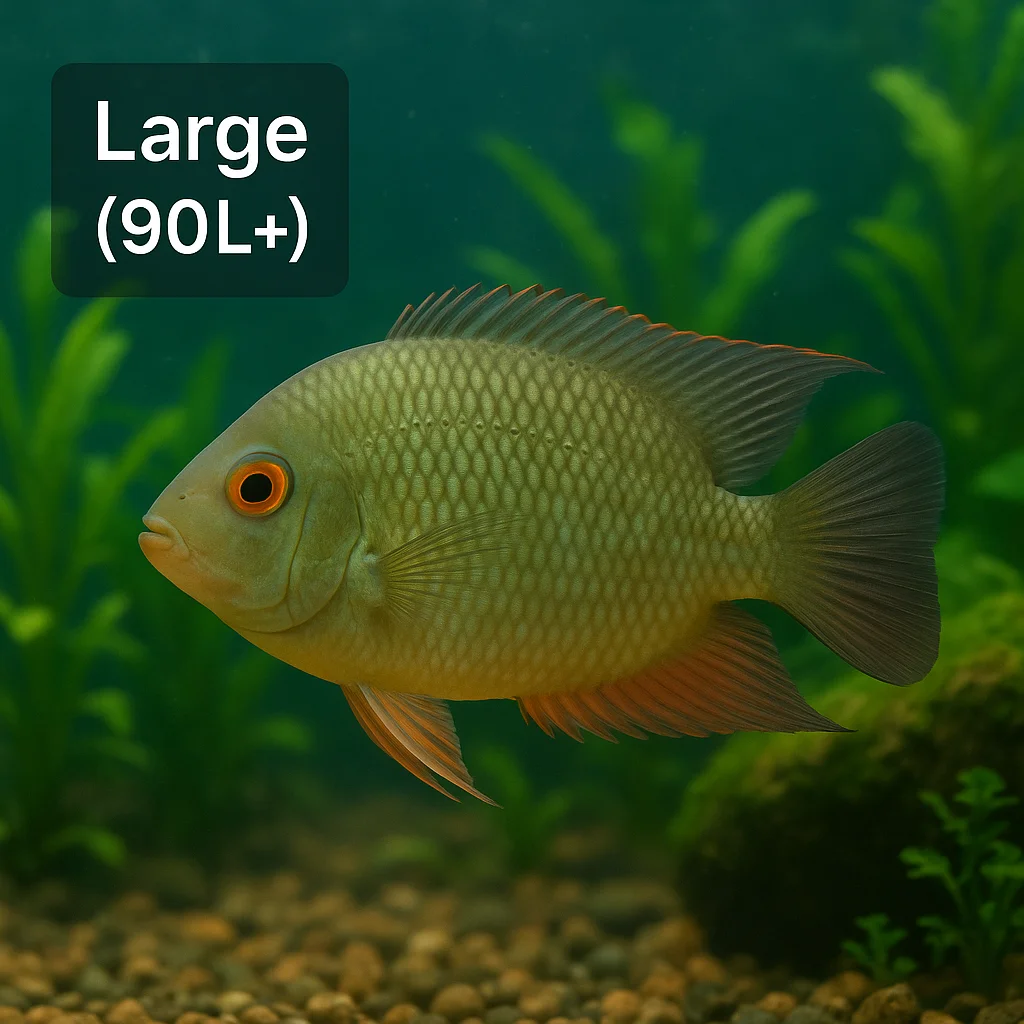
- Common names: Often referred to by broader group names like "cichlids", "goldfish", "lionfish", or "tang", depending on the specific species.
- Scientific name: Varies widely across this group.
- Freshwater / Marine: Includes both freshwater and marine species.
- Origin: Global; specific origins depend on the species.
- Typical adult size range: Generally 10 cm to over 30 cm.
- Lifespan: Varies; commonly ranges from 5 to 15 years.
- Temperament: Peaceful to aggressive; varies by species.
- Recommended tank size: Minimum 90 liters, but larger is often needed.
- Water temperature range: Generally 22-28°C (72-82°F) for freshwater, 24-26°C (75-79°F) for marine.
- pH / hardness or salinity guidance: Freshwater: 6.5-8.0 pH / Marine: specific gravity 1.020-1.025.
- Diet type: Omnivore, herbivore, or carnivore depending on species.
- Activity zone: Varies; can include top, mid, and bottom levels.
- Social needs: Schooling, pair, or solitary depending on species.
- Beginner suitability: Medium to advanced experience recommended.
🔍 Identification
Identifying large aquarium fish can be challenging due to the variety of species. However, some general identification cues can help.
- Body shape and silhouette: From elongated to rounded; varies by species.
- Key colors/patterns: Bright colors and patterns, including stripes and spots, which may change with mood or age.
- Fin shapes and notable traits: Diverse fin shapes including sail-like dorsal fins or elongated tail fins.
- Male vs female cues: Subtle differences or varies widely.
- Common look-alikes: May include other species within the same genus or family; check for distinct markings or fin shapes.
- Top ID Tips:
- Examine overall size and presence of distinct markings.
- Observe fin shapes and use bright lighting for color examination.
- Look for behavior cues, such as schooling or solitary habits.
- Check for specific patterns or scale shapes.
- Be cautious of region-specific variations.
- Watch for mood-based color changes.
🌍 Origin & Natural Habitat
Large aquarium fish originate from a variety of natural habitats, including tropical reefs, freshwater lakes, and river systems. Understanding their origins can inform optimal care.
- Continents/regions: Africa, Asia, South America, and Indo-Pacific regions.
- Typical waters: Slow-moving rivers, lakes, coral reefs.
- Water flow: Ranges from still to gently flowing waters.
- Substrate: Sand, gravel, or reef base; often includes rocks and vegetation.
- Climate/seasonal changes: May experience variations in water levels or temperatures during rainy or dry seasons.
Understanding their natural habitat helps recreate suitable conditions in home aquariums, promoting natural behavior and reducing stress.
🧪 Tank Setup & Water Parameters
Providing an appropriate tank setup is crucial for large aquarium fish. Consider both their size and natural habitat when planning your aquarium.
- Tank size considerations: Ensure ample horizontal swimming space.
- Filtration and flow: Robust filtration is necessary; water flow preferences vary by species.
- Heating needs: Maintained at species-specific thermal ranges; use heaters or chillers as needed.
- Substrate and décor: Provide caves, rocks, or coral for shelter and enrichment.
- Lighting and hiding spots: Moderate lighting; offer shaded areas.
- Setup Checklist:
- Opt for a tank minimum of 90 liters, larger is better.
- Use a powerful filtration system.
- Adjust water temperature to suit specific species needs.
- Include diverse décor elements for enrichment.
- Regularly monitor water quality and parameters.
- Ensure safe and stable tank top and lid.
- Check compatibility with any added plant species.
🤝 Temperament & Compatibility
The temperament of large aquarium fish can vary greatly, with some being peaceful community fish, while others are more territorial or aggressive.
- Schooling/shoaling needs: Certain species prefer groups, while others are best kept solitary.
- Behavior during feeding and breeding: Can range from competitive to cooperative; breeding may bring out territoriality.
- Good tankmates: Similar-sized, non-aggressive species generally work well.
- Risky tankmates: Avoid housing with smaller or very aggressive species.
- Compatibility Notes:
- Research specific species needs and compatibility.
- Consider temperament and size when choosing tankmates.
- Implement suitable feeding practices to minimize aggression.
- Provide ample space to reduce territorial disputes.
- Observe and adjust tank stock as needed.
Remember that individual behavior can vary, and careful observation is key to maintaining harmony.
🍽️ Diet & Feeding
The diet of large aquarium fish is diverse and species-specific, encompassing omnivorous, herbivorous, and carnivorous tendencies.
- Diet in the wild vs. aquariums: Typically mirrors natural diet; provide a balanced mix of foods.
- Staple foods: High-quality flakes, pellets, frozen foods, and occasional live foods.
- Feeding frequency: Generally once or twice daily, adjusted as per activity levels.
- Special needs: Some may graze on algae or require specific types of live or frozen foods.
- Feeding Tips:
- Avoid overfeeding; offer portions that the fish can consume in 2-3 minutes.
- Supplement diet with live or frozen foods periodically.
- Observe feeding dynamics to minimize competitiveness.
- Include plant-based foods if species are herbivorous.
- Feed larger meals less often for carnivorous types.
🧬 Growth, Color Changes & Lifespan
Large aquarium fish exhibit diverse patterns of growth and color change throughout their lives, often influenced by stress and environmental factors.
- Juvenile vs. adult differences: Juveniles may have different coloration and size.
- Seasonal or mood-based color changes: Colors may intensify during courtship or stress.
- Signs of stress: Clamped fins, hiding, or fading color may indicate a need for changes.
- Lifespan influences: Best supported by optimal space, diet, and water conditions.
🪺 Breeding & Reproduction
Breeding large aquarium fish can be a challenge, and it’s often not commonly achieved in home aquariums.
- Breeding style: Varies by species—includes both egg-layers and livebearers.
- Spawning triggers and courtship: Environmental conditions or seasonal cues may be needed.
- Egg/larvae care: Parental care varies; some species guard eggs while others do not.
- Fry/juvenile feeding: Require specialized, smaller foods.
Given the complexities, researching the specific requirements for breeding each species is crucial.
🩺 Common Health Issues & Prevention
Maintaining fish health is critical, and prevention of disease begins with proper tank management.
- Common problems: Ich, fin damage, and parasites may occur.
- Emphasize prevention: Quarantine new arrivals and stabilize parameters.
- Prevention Basics:
- Observe quarantine procedures for new fish.
- Maintain stable water parameters and temperature.
- Avoid overfeeding to prevent water quality issues.
- Implement regular partial water changes.
- Monitor regularly for signs of illness or stress.
🌱 Role in the Aquarium
Large aquarium fish contribute significantly to the aesthetic and ecological dynamics of their environments.
- Community balance: Adds variety and visual interest.
- Algae control: Some species assist in maintaining algae levels.
- Centerpiece value: Often serve as striking focal points.
- Reef or plant-safe considerations: Evaluate based on specific needs and behaviors.
- Ethical sources: Choose sustainably bred sources.
📉 Conservation & Responsible Keeping
Conservation and responsible practices are paramount for keeping large aquarium fish.
- Captive-bred vs wild-caught: Captive breeding helps ease wild pressures.
- Rehoming options: Consider as fish outgrow tanks.
- Avoid environmental impacts: Never release into local waters.
- Responsible Keeping Tips:
- Support conservation efforts through responsible purchases.
- Plan ahead for potential rehoming needs.
- Only possess fish for which conditions can be accurately met.
- Be mindful of the species' role in the ecosystem.
- Avoid buying fish from unsustainable sources.
📌 Summary
- Large aquarium fish range widely across freshwater and marine environments.
- Identification focuses on body shape, fin configuration, and coloration.
- Understanding natural habitats aids in creating optimal tank ecosystems.
- Appropriate tank setups include ample space, filtration, and décor.
- Diet varies significantly, depending on species requirements.
- Social temperament and compatibility require cautious management.
- Breeding is complex and may not be feasible in home tanks.
- Focus on preventative health care through managed parameters and cleanliness.
- Ethical and conservation considerations are vital for long-term sustainability.
- Contributes significantly to aesthetic diversity and ecological balance within community tanks.