🐠 Oscar
🧾 Quick Facts
The Oscar fish, a favorite among aquarium enthusiasts, is known for its vibrant appearance and distinct personality. Though not the easiest fish to keep, its beauty and interaction make it a rewarding pet. Here are some quick facts about Oscars.
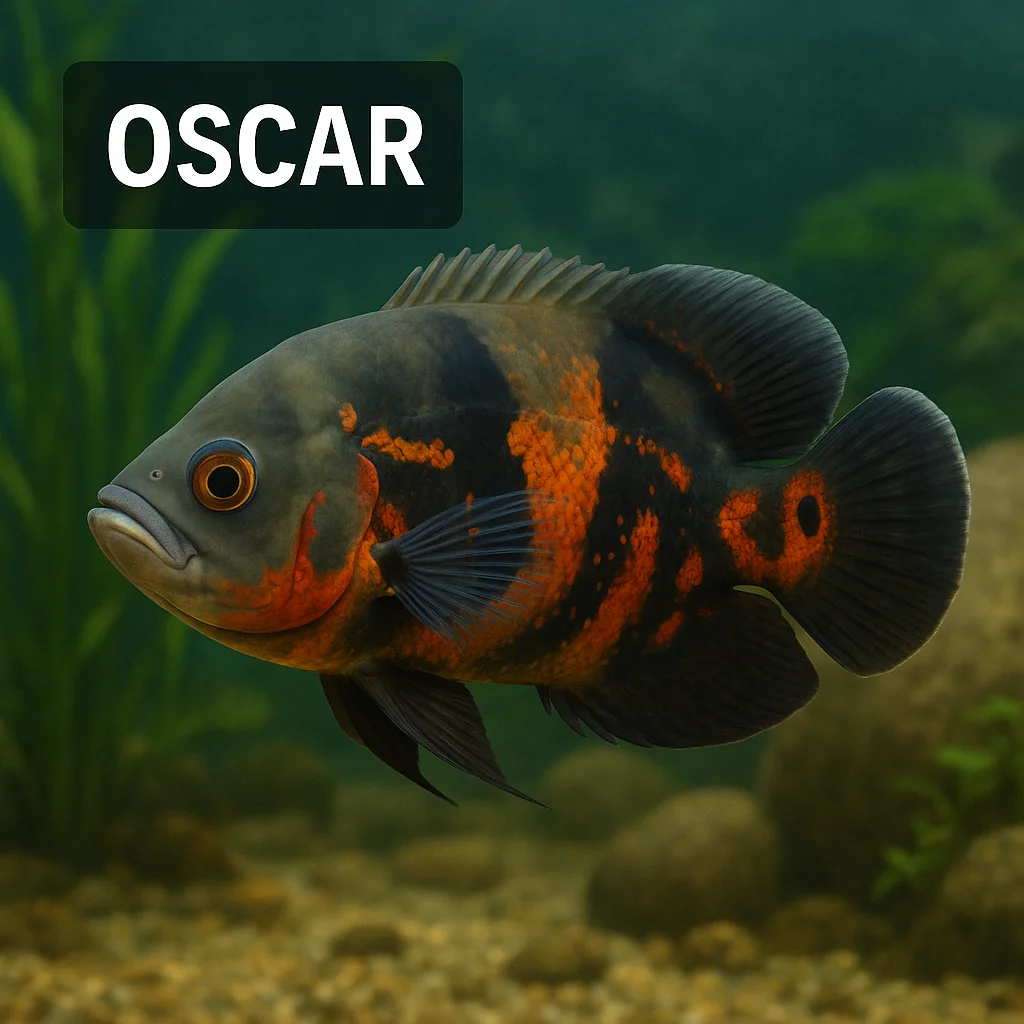
- Common names: Oscar, Velvet Cichlid, Marble Cichlid
- Scientific name: Astronotus ocellatus
- Freshwater/Marine/Brackish: Freshwater
- Origin: Amazon River Basin, South America
- Typical adult size range: 12-14 inches (30-36 cm)
- Lifespan: 10-15 years
- Temperament: Semi-aggressive
- Recommended tank size: Minimum 55 gallons (208 liters), bigger is better
- Water temperature range: 74-81°F (23-27°C)
- pH/hardness guidance: pH 6.0-7.5; soft to medium-hard water
- Diet type: Omnivore
- Activity zone: Mid to bottom
- Social needs: Often kept in pairs or small groups
- Beginner suitability: Medium to advanced
🔍 Identification
The Oscar fish is striking and easy to identify with its distinct features. Their robust, oval-shaped body and slightly prognathous jaw give them a unique silhouette. Oscar fish commonly possess a base color that can range from dark brown to black, adorned with spots and splotches of bright orange or red, especially along the sides and around the face. These colors can intensify with age or mood changes.
The fins of the Oscar are rounded, and their dorsal and anal fins extend towards the rear, complementing the rounded tail fin. Distinguishing between males and females is a subtle task, often requiring close observation, but subtle differences are typically noted during the breeding period.
Common look-alikes include other cichlid species, but the Oscar's larger size and distinct coloration often set it apart.
- Top ID Tips:
- Robust, oval-shaped body
- Distinctive orange or red patterns
- Rounded fin shapes
- Bands of color can change with mood
- Males and females are subtly different
🌍 Origin & Natural Habitat
Oscars are native to the slow-moving waters of the Amazon River Basin in South America. They are often found in areas with submerged roots and branches, providing essential cover from predators. These fish thrive in warm, tropical climates where water levels can fluctuate significantly with the seasons, and the vegetation is dense.
Understanding their natural habitat helps aquarists replicate appropriate living conditions in captivity, such as maintaining warm and clean, well-oxygenated water with plenty of hiding spots.
🧪 Tank Setup & Water Parameters
An Oscar's large size and active nature require a spacious tank to thrive. A minimum of 55 gallons is recommended, although larger tanks offer more stability and comfort. Provide your Oscar with efficient filtration to manage waste produced by these large fish and maintain stable water conditions.
A heater is usually necessary to keep the water temperature within their preferred range. Decorating the tank with a light layer of sand or fine gravel substrate, along with driftwood or rocks and sturdy plants, will mimic their natural environment.
- Setup Checklist:
- Minimum 55-gallon tank
- Powerful filtration system
- Heater for 74-81°F range
- Sand or fine gravel substrate
- Driftwood and rocks for ambiance
- Sturdy plants for cover
🤝 Temperament & Compatibility
Oscar fish are known for their semi-aggressive temperament; they establish territories and can be quite interactive with their human owners. During feeding, they may display assertive behaviors, showing their excitement. They often pair bond and can be kept with other Oscars if the tank size permits.
Compatible tankmates include other large, non-aggressive cichlids or fish like Silver Dollars and Plecos. Avoid housing them with smaller species or highly aggressive fish, as this can lead to stress and aggression.
- Compatibility Notes:
- Keep in pairs or with similar-sized fish
- Ensure tankmates are non-aggressive
- Avoid small or fin-nipping species
- Individual behavior may vary
🍽️ Diet & Feeding
In their natural habitat, Oscar fish are omnivorous, feeding on crustaceans, insects, and small fish. In aquariums, they thrive on a varied diet that includes high-quality pellets, supplemented with live or frozen foods such as bloodworms, crickets, or shrimp.
Feed them smaller portions two to three times daily, allowing them to consume all the food in a few minutes. Regular diet variety supports their health and vibrancy.
- Feeding Tips:
- Offer high-quality pellets as staple food
- Supplement with live or frozen foods
- Feed 2-3 times a day
- Prevent overfeeding by portion control
- Ensure a varied diet for optimal health
🧬 Growth, Color Changes & Lifespan
Oscars grow quickly from juveniles to their adult size, exhibiting vibrant color patterns as they mature. These patterns may vary depending on mood, health, or environmental factors. Stress is often indicated by washed-out colors and clamped fins, whereas healthy Oscars display bright colors and active behavior.
With appropriate care, Oscars live about 10 to 15 years. Factors affecting their lifespan include tank space, diet, and water quality, with ample space and optimal water conditions supporting longer lives.
🪺 Breeding & Reproduction
Oscars are egg layers and can breed in home aquariums under optimal conditions. Pairs often clean a flat surface before spawning, and the female lays hundreds of eggs. Both parents care for the eggs and larvae until they become free-swimming juveniles.
Successful breeding requires preparation and monitoring, as it's not commonly achieved without specific attention to water quality and environmental cues.
🩺 Common Health Issues & Prevention
Oscars are prone to certain health issues, including ich, hole-in-the-head disease, and parasitic infections. Prevention is key to maintaining health, which includes regular water changes, not overfeeding, and ensuring stable tank parameters. Quarantining new fish and plants before adding them to the main tank can prevent disease introduction.
- Prevention Basics:
- Regular water changes
- Avoid overfeeding
- Stable water parameters
- Quarantine new additions
- Maintain good filtration
🌱 Role in the Aquarium
The Oscar fish serves as a dynamic centerpiece in many freshwater aquariums. While they are vigorous and captivating to watch, they are not known for aiding in algae control and might disrupt delicate planted setups. Ensure ethical sourcing, preferring captive-bred specimens over wild-caught ones to preserve natural populations.
📉 Conservation & Responsible Keeping
Responsibly keeping Oscars involves choosing captive-bred individuals to avoid depleting natural habitats. Always avoid releasing them into local waterways, as their size can disrupt ecosystems. If rehoming is necessary due to size or behavioral issues, consider aquarium clubs or responsible breeders as good options.
- Responsible Keeping Tips:
- Choose captive-bred species
- Never release into the wild
- Consider rehoming through clubs
- Understand the commitment involved
📌 Summary
- Recognizable by their large size and striking colors
- Native to South America's Amazon River Basin
- Need spacious tanks with good filtration
- Compatible with other large, non-aggressive fish
- Omnivorous diet with varied feeding routine
- Medium to advanced care requirement
- Choose captive-bred, never release into wild
- Be prepared for a large, active fish with personality