🐠 Kribensis
🧾 Quick Facts
The Kribensis is a delightful and colorful addition to many freshwater aquariums, known for its lively demeanor and striking appearance. Though the name "Kribensis" might refer to a single species in casual conversation, it typically describes a group of closely related species in the genus Pelvicachromis, with Pelvicachromis pulcher being the most common. These cichlids are beloved for their vivid colors and are often introduced into community tanks for their easygoing nature and adaptability.
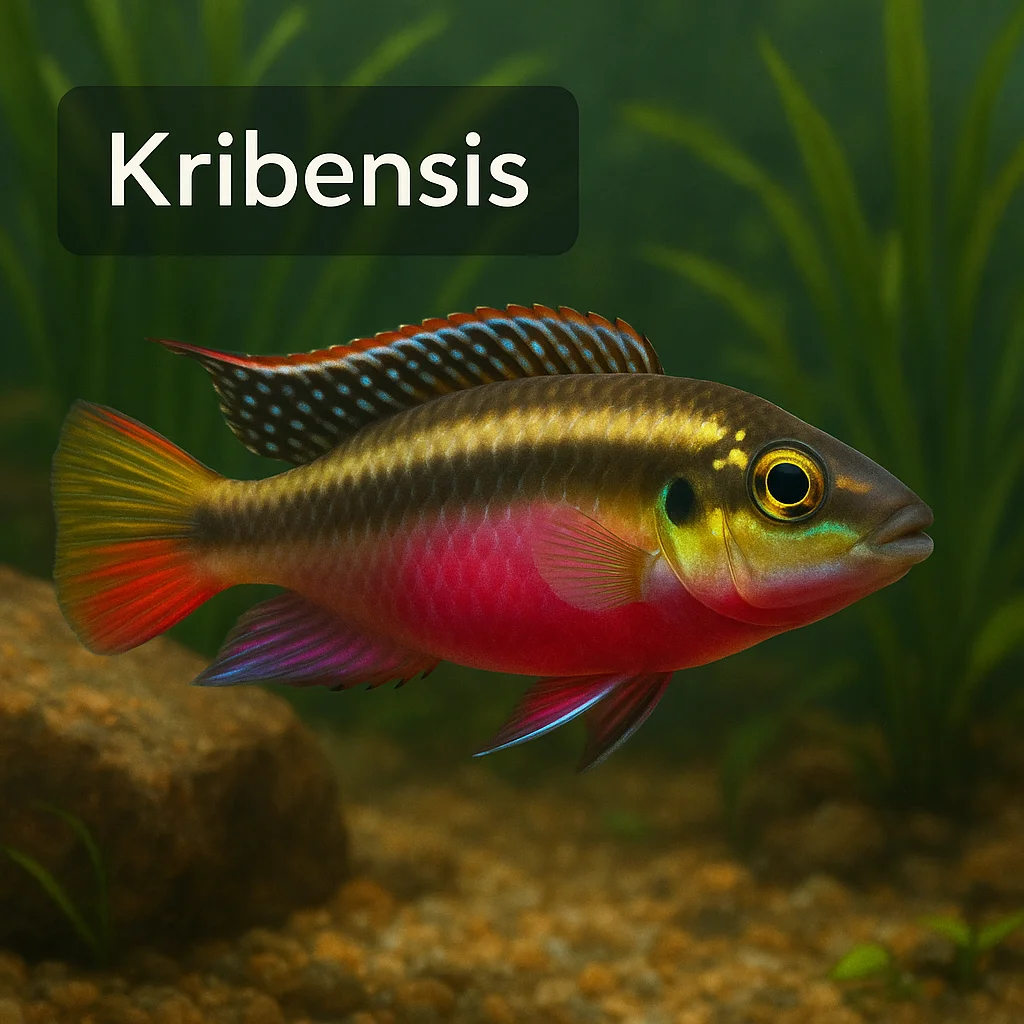
- Common names: Kribensis, Kribs, Rainbow Krib
- Scientific name: Often listed as Pelvicachromis pulcher
- Freshwater
- Origin: West Africa, primarily in the Niger Delta
- Typical adult size range: 3 to 4 inches (7.5 to 10 cm)
- Lifespan: 5 to 8 years, varies with care
- Temperament: Generally peaceful, can be semi-aggressive during breeding
- Recommended tank size: Minimum 20 gallons; larger is better for groups
- Water temperature range: 75 to 82°F (24 to 28°C)
- pH / hardness: pH 6.0-7.5; soft to moderately hard water
- Diet type: Omnivore
- Activity zone: Mostly mid and bottom
- Social needs: Best kept in pairs or small groups
- Beginner suitability: Easy to medium
🔍 Identification
Kribensis cichlids have a moderately elongated body with a slightly rounded belly and pointed snout. Their coloration is notable, featuring a mix of iridescent hues that change slightly depending on their mood and breeding conditions. Typically, the males are more colorful with a pronounced red belly, while females also display red but are more rounded in shape during breeding seasons. Their dorsal and anal fins are elongated, and both sexes have an eye-spot on the dorsal fin.
- Top ID Tips:
- Iridescent mix of colors, often showing violet, green, and blue gleams
- Sexual dimorphism: males are more slender, females are rounder
- Characteristic red belly, especially vibrant during breeding
- Elongated dorsal and anal fins with distinctive eye-spots
- Mood and breeding conditions influence color intensity
- Common look-alikes include other Pelvicachromis species; subtle differences in coloration and body shape help differentiate them
- Look for the rounded body of females as a primary gender cue
🌍 Origin & Natural Habitat
Kribensis cichlids are native to the slow-moving waters of West Africa, where they inhabit streams, rivers, and floodplain areas, particularly in the Niger Delta. These environments typically feature dense vegetation and soft substrates, like sand or fine gravel, that provide ample hiding spots and territories for breeding and foraging. Understanding their natural habitat can enhance their well-being in captivity by replicating similar conditions—soft, acidic to neutral water, shaded spots, and plenty of swimming room.
🧪 Tank Setup & Water Parameters
When setting up a tank for Kribensis cichlids, aim for a minimum of 20 gallons to ensure adequate swimming space and a balanced environment. A fine sandy substrate mimics their natural habitat and is gentle on their delicate barbels. Provide a variety of hiding places using rocks, driftwood, and sturdy live plants; this setup can help alleviate stress and encourage natural behaviors, particularly during breeding. Proper filtration and regular water changes maintain water quality, while moderate water movement suits their preference for calmer zones. Regular lighting cycles help sustain plant life and showcase their vibrant colors.
- Setup Checklist:
- Tank size at least 20 gallons
- Soft, sandy substrate
- Plenty of hiding spots with rocks and driftwood
- Hardy live plants for cover
- Moderate lighting to mimic natural conditions
- Appropriate filtration to maintain water quality
- Room for swimming and territories
- Regular water changes to manage parameters
🤝 Temperament & Compatibility
Kribensis cichlids are generally peaceful but may exhibit territorial behavior, especially during breeding. They thrive in a community setting with species of similar size and temperament. During feeding and breeding, they can become more assertive, so providing enough hiding spots and proper space distribution is crucial. They pair well with small schooling fish like tetras and rasboras but may be incompatible with overly aggressive or fin-nipping species. Individual personalities can vary, so monitoring newcomer integration is advisable.
- Compatibility Notes:
- Good with similar-sized peaceful fish
- May display territorial behaviors during breeding
- Avoid pairing with aggressive or highly active species
- Provide ample hiding spots for stress relief
- Observe individual fish behavior for best compatibility
- Sufficient space reduces aggression
- Can cohabitate with bottom dwellers like Corydoras, but watch for food competition
🍽️ Diet & Feeding
In the wild, Kribensis cichlids are opportunistic omnivores, feeding on small invertebrates, algae, and detritus. In captivity, a balanced diet of high-quality flake or pellet foods, supplemented with live or frozen options like brine shrimp or bloodworms, ensures vivid colors and robust health. Feeding 2 to 3 times daily in small amounts will prevent overeating and water quality issues. Vegetation-based foods can be included to ensure adequate nutrient balance.
- Feeding Tips:
- Offer varied diet including flakes, pellets, and live/frozen foods
- Maintain a feeding schedule of 2–3 small meals daily
- Include vegetables like spinach or zucchini occasionally
- Avoid overfeeding to prevent water quality deterioration
- Remove uneaten food promptly
- Ensure smaller tankmates get access to food
🧬 Growth, Color Changes & Lifespan
Juvenile Kribensis cichlids may show less intense coloration, which gradually intensifies with maturity and during the breeding season. Stress can manifest in dull colors, clamped fins, and excessive hiding, highlighting the importance of stable conditions. Typically, they live 5 to 8 years, with longevity influenced by diet, space, and water quality. Regular monitoring and care ensure their vibrant presence and healthy growth.
🪺 Breeding & Reproduction
Kribensis cichlids are egg layers, often breeding readily in aquariums. They prefer caves or crevices for spawning, with the female depositing eggs on a flat surface. Spawning is often triggered by optimal water conditions and seasonal changes. Both parents show strong care for eggs and fry, guiding and protecting them vocally and physically. While breeding is common, providing varied diets and high water quality ensures robust offspring.
🩺 Common Health Issues & Prevention
Common health issues include ich, fin rot, and internal parasites, generally triggered by stress or poor water quality. Emphasizing preventive care is critical: maintain stable water parameters, avoid overcrowding, and quarantine new arrivals to prevent disease introduction. Healthy diet and stress-free conditions significantly lower health risks.
- Prevention Basics:
- Maintain water quality with regular testing and changes
- Quarantine new fish before adding to the main tank
- Observe for signs of stress or illness regularly
- Ensure varied diet to support immune health
- Avoid overcrowding to reduce stress
- Provide adequate and diverse hiding spots
🌱 Role in the Aquarium
Kribensis cichlids contribute vibrant colors and engaging behaviors to community tanks. They are generally plant-safe, their peaceful nature supports community balance, and their cleansing of substrates aids in preventing algae buildup. When sourcing, prioritize captive-bred individuals to ensure ethical practices and support sustainable fishkeeping.
📉 Conservation & Responsible Keeping
While Kribensis cichlids are not currently under significant conservation threat, their popularity underscores the importance of choosing captive-bred over wild-caught individuals to avoid ecosystem disruption. Never release them into local waters, and consider rehoming through aquarist communities if they outgrow their tank. Responsible practices ensure both species preservation and enjoyment.
- Responsible Keeping Tips:
- Choose captive-bred individuals where possible
- Never release aquarium fish into the wild
- Consider size and long-term needs when purchasing
- Join aquarist communities for rehoming advice if necessary
- Promote safe and ethical fishkeeping practices
- Support sustainable and responsible sellers
📌 Summary
- Striking colors with iridescent patterns
- Native to West African floodplains and rivers
- Minimum tank size: 20 gallons with soft substrate
- Generally peaceful, good for community setups
- Omnivorous diet requires varied feeding
- Suitable for beginners with moderate fishkeeping experience
- Responsible sourcing supports conservation
- Watch for semi-aggressive breeding behavior
- Avoid overcrowding to maintain harmony
- Never release into wild; seek rehoming avenues