🐠 Jack Dempsey
🧾 Quick Facts
The Jack Dempsey is a popular freshwater cichlid admired for its striking appearance and dynamic behavior. Named after the famous boxer for its aggressive nature, this fish offers vibrant colors and a robust presence in any aquarium.
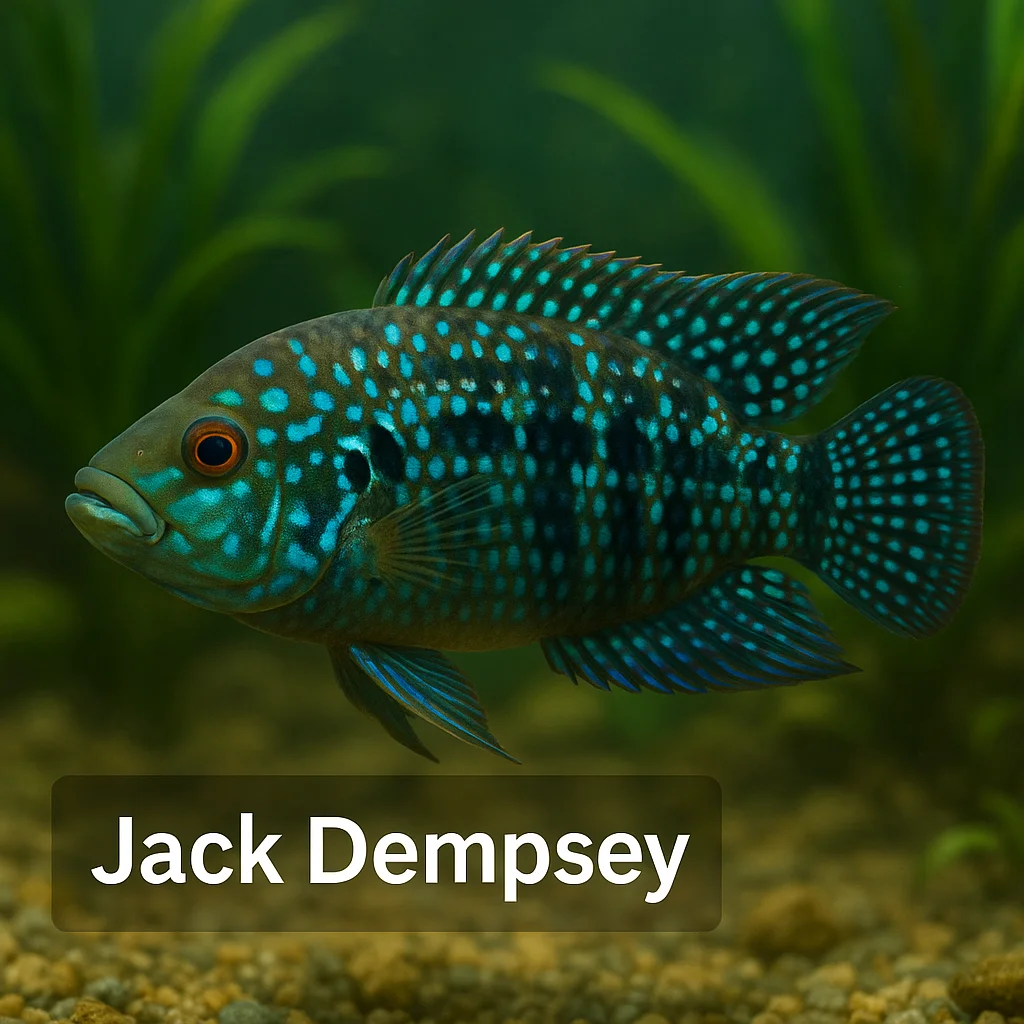
- Common names: Jack Dempsey, Electric Blue Dempsey
- Scientific name: Rocio octofasciata
- Freshwater
- Origin: Central America (rivers and lakes in Mexico, Honduras, Guatemala)
- Typical adult size range: 8–10 inches (20–25 cm)
- Lifespan: 8–10 years
- Temperament: Aggressive
- Recommended tank size: Minimum 55 gallons (210 liters), larger is better
- Water temperature range: 72–86°F (22–30°C)
- pH guidance: 6.5–8.0
- Diet type: Omnivore
- Activity zone: Middle and bottom
- Social needs: Solitary or pair
- Beginner suitability: Medium
🔍 Identification
The Jack Dempsey is characterized by a robust, oval body with a laterally compressed shape. Its color pattern is typically a dark, iridescent blue or green with varying sparkles of pink and purple. When the fish is stressed or displaying aggression, the colors may become more subdued. Males are generally larger with more vivid colors and extended dorsal and anal fins, while females tend to be smaller and less colorful. Jack Dempsey fish can be confused with other cichlids, but their distinct coloration and size help differentiate them.
- Oval, compact body shape
- Irregular iridescent colors: blue, green, pink, purple
- Males larger with long dorsal and anal fins
- Females smaller, less colorful
- Color intensity changes with mood
- Distinguishable from similar cichlids by color and size
- Whole fish visible, vibrant when healthy
🌍 Origin & Natural Habitat
Jack Dempseys originate from the warm freshwater bodies of Central America, specifically found in slow-moving rivers and lakes in Mexico, Honduras, and Guatemala. These environments are characterized by sandy or muddy substrates with patchy vegetation and plenty of hiding spots among rocks and submerged roots. Understanding their natural habitat helps aquarists create a suitable environment to promote the fish’s health, mimic their natural behaviors, and reduce stress.
🧪 Tank Setup & Water Parameters
Setting up a tank for a Jack Dempsey requires attention to space and conditions. A minimum tank size of 55 gallons is ideal to ensure sufficient horizontal swimming space. The tank should be equipped with a powerful filter to handle the bioload and create moderate water flow. Heating is necessary to maintain temperatures between 72–86°F. Substrate can be sand or fine gravel, and decor should include rocks, logs, and caves that provide hiding places.
- Minimum tank size: 55 gallons
- Efficient filtration with moderate flow
- Maintain water temperature: 72–86°F
- Sand or fine gravel substrate
- Rocks, driftwood, and caves for decor
- Avoid overcrowding
- Stable pH: 6.5–8.0
- Sufficient hiding spaces
🤝 Temperament & Compatibility
The Jack Dempsey is well-known for its territorial and aggressive behavior, sometimes not ideal in community tanks. They can be particularly aggressive during feeding and breeding. This cichlid is best housed with similarly sized, robust fish and should be provided with ample hiding spots to mitigate aggression. Tankmates should be chosen carefully, avoiding smaller or docile species that may become targets.
- Best with same-size or larger tankmates
- Aggressiveness increases during breeding
- Tends to dominate territory
- Avoid pairing with small, peaceful fish
- Sufficient space reduces territorial disputes
- Aggression varies by individual
- Ideal in a species-specific tank
🍽️ Diet & Feeding
In the wild, Jack Dempseys are omnivorous, feeding on a variety of insects, crustaceans, and plant matter. In captivity, they thrive on a varied diet that includes high-quality cichlid flakes, pellets, and occasional live or frozen foods like bloodworms and brine shrimp. Feed them once or twice daily, offering only as much food as they can consume within a few minutes.
- Balanced diet: pellets and flakes
- Include live/frozen treats occasionally
- Do not overfeed; watch portion size
- Supplement with green vegetables
- Feed 1-2 times daily
- Observe feeding; adjust diet as needed
🧬 Growth, Color Changes & Lifespan
Juvenile Jack Dempseys differ significantly from adults, appearing more muted and brown in color with distinct dark spots. As they mature, their colors become vibrant, with blues and greens emerging more prominently. Color changes can also occur based on mood and health, with stress indicated by dull coloration and hiding behavior. Proper tank conditions, space, and diet are essential for a lifespan of 8–10 years.
🪺 Breeding & Reproduction
Jack Dempseys are egg layers, with breeding occurring in caves or secluded tank areas. Spawning can be triggered by slight increases in water temperature and the availability of quality food. After laying eggs, both parents guard the eggs fiercely, ensuring they are free from debris and ready to defend against intruders. Fry can be raised on infusoria and specialized fry food. Breeding is not overly common in community tanks due to the space and conditions required.
🩺 Common Health Issues & Prevention
Jack Dempseys are susceptible to common freshwater fish diseases such as ich, fin rot, and parasitic infections. Prevention focuses on maintaining stable water parameters, providing a balanced diet, and conducting regular tank maintenance. Quarantine new tankmates before introduction to the main tank to prevent disease spread.
- Maintain clean, stable water
- Quarantine new arrivals
- Avoid overfeeding
- Regular tank checks and maintenance
- Observe for signs of stress or illness
🌱 Role in the Aquarium
The Jack Dempsey serves as an engaging centerpiece fish with its vivid colors and bold personality. Although not ideal for peaceful community tanks, they can coexist with other robust and aggressive species in larger setups. Avoid housing with delicate plants, as they may uproot them during digging. Always source fish from reputable breeders to lessen the ecological impact.
📉 Conservation & Responsible Keeping
Responsible keeping of Jack Dempseys involves opting for captive-bred specimens over wild-caught fish to promote sustainability and lessen environmental strains. Releasing them into local waters is discouraged due to the potential ecological disturbances they can cause. If space becomes an issue, explore rehoming or returning to a reputable dealer.
- Choose captive-bred individuals
- Do not release into the wild
- Consider bioload before adding to tank
- Rehome or return if space becomes inadequate
- Avoid impulsive purchases
- Seek expert advice when needed
📌 Summary
- Recognized by oval body and vibrant coloration
- Native to Central American waters
- Requires a spacious tank with rocks and caves
- Aggressive; pair with similar-sized species
- Omnivorous; varied diet needed
- Care level: Medium, suitable for dedicated aquarists
- Not suitable for peaceful community tanks
- Breeding possible with optimal conditions
- Choose captive-bred; avoid ecological impact