🐠 Green Terror
🧾 Quick Facts
The Green Terror is a popular and stunning cichlid, known for its vibrant colors and bold personality. These fish are often sought by intermediate and experienced aquarists for their unique charisma.
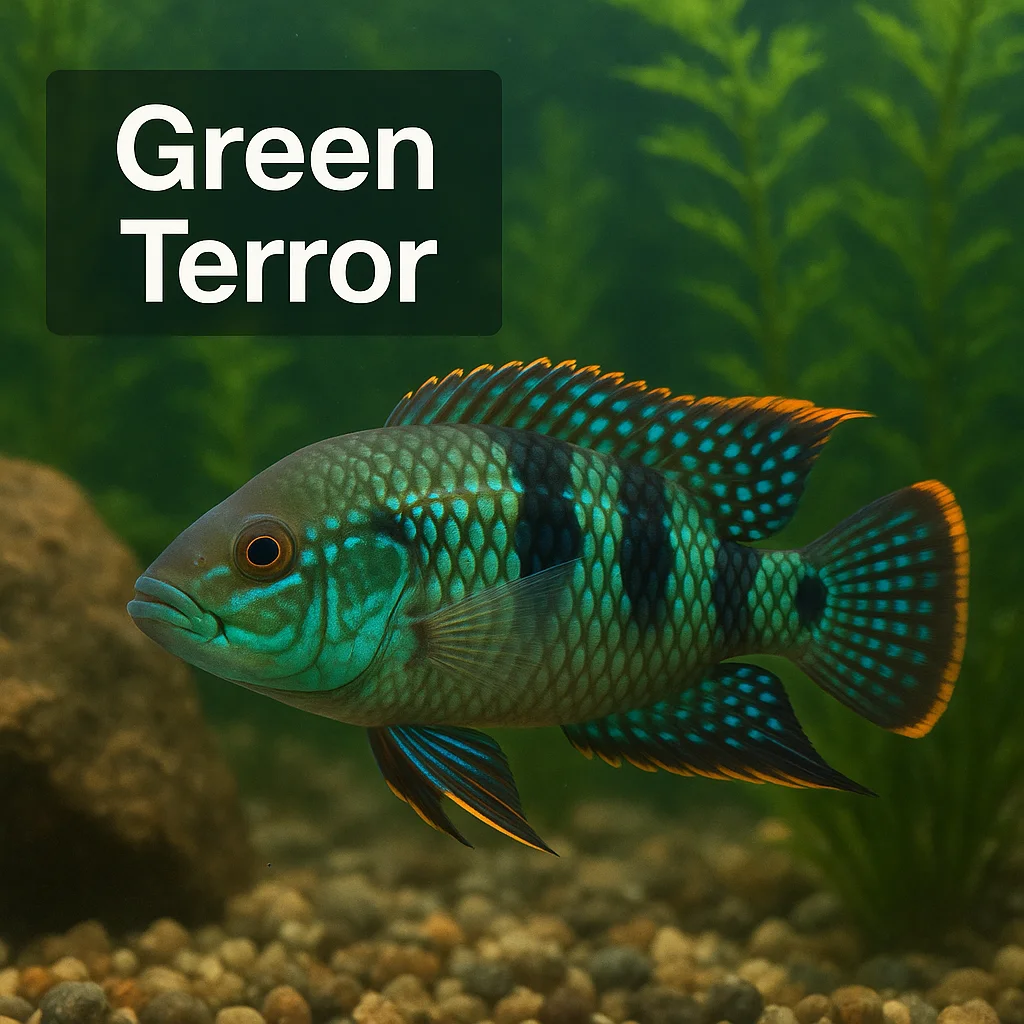
- Common names: Green Terror, Gold Saum
- Scientific name: Andinoacara rivulatus
- Freshwater
- Origin: South America, specifically Ecuador and Peru
- Typical adult size range: 12–20 cm (4.7–7.9 inches)
- Lifespan: 7–10 years
- Temperament: Semi-aggressive
- Recommended tank size: 55 gallons minimum
- Water temperature range: 22–28°C (72–82°F)
- pH guidance: 6.5–8.0
- Diet type: Omnivore
- Activity zone: Bottom to mid level
- Social needs: Solitary or bonded pairs
- Beginner suitability: Medium to advanced
🔍 Identification
The Green Terror is easily recognized by its elongated body and shimmering iridescent colors, which can vary based on mood and environment. Their distinctive appearance makes them a standout choice for aquariums.
- Body shape and silhouette: Elongated and slightly compressed
- Key colors/patterns: Brilliant green and blue hues with orange-edged fins
- Fin shapes and notable traits: Dorsal fin elongated; tail rounded
- Male vs female cues: Males typically larger with more extended fin rays
- Common look-alikes: Often confused with the Blue Acara but differs in brighter coloration
- Top ID Tips:
- Look for the bright orange edging on fins
- Males have a pronounced nuchal hump
- Check for shimmering scale pattern
- Distinguished by their robust build
- Observe the unique lateral line on body
- Consistency of coloration even during stress
🌍 Origin & Natural Habitat
Originating from the rivers of Ecuador and Peru, Green Terrors inhabit slow-moving, sediment-rich waters with plenty of hiding places provided by submerged roots and branches.
Understanding their natural habitat helps recreate a comfortable aquarium environment, promoting natural behaviors and reducing stress.
🧪 Tank Setup & Water Parameters
A properly set up tank for a Green Terror involves providing enough space and environmental enrichment to mimic their natural habitat.
- Tank size considerations: Minimum of 55 gallons with large horizontal swimming space
- Filtration and flow preferences: Moderate flow with efficient filtration
- Heating needs: Maintain a stable temperature around 72–82°F
- Substrate and decor: Sand or fine gravel, rocks, caves, driftwood
- Lighting and hiding spots: Moderate lighting with ample hiding spots
- Setup Checklist:
- Use a strong filter to manage waste
- Include floating plants for shade
- Provide stable decorations to prevent injuries
- Add caves for retreat and territory
- Regularly monitor water quality
- Ensure secure and well-fitted tank lid
🤝 Temperament & Compatibility
Green Terrors are known for their semi-aggressive nature, especially during breeding. They are territorial and require careful selection of tank mates.
- Schooling/shoaling needs: Prefer solitude or bonded pairs
- How it behaves during feeding: Assertive with its food
- Good tankmates: Larger, robust fish like Oscars, Plecos
- Risky tankmates: Smaller, timid, or slower fish like Neon Tetras
- Compatibility Notes:
- Pairs can become aggressive toward other fish
- Watch for bully behavior during feeding
- Avoid overcrowding the tank
- Provide plenty of territories to avoid conflicts
- Introduce tankmates early in their life
- Behavior varies with age and individual personality
🍽️ Diet & Feeding
Green Terrors are omnivorous and appreciate a varied diet that balances both plant and animal materials.
- What it eats in the wild vs in aquariums: Algae, insects, small crustaceans in the wild; pellets, flakes, and live worms in aquariums
- Staple foods: High-quality cichlid pellets, occasional vegetable matter
- Feeding frequency and portioning: Once or twice daily in moderate portions
- Special needs: Offer occasional live or frozen foods for enrichment
- Feeding Tips:
- Avoid overfeeding to maintain water quality
- Supplement with vegetables or spirulina
- Include live food treats like brine shrimp
- Adjust feeding during breeding for optimal health
- Observe feeding to ensure all fish are eating
🧬 Growth, Color Changes & Lifespan
Green Terrors exhibit significant transformation from juveniles to adults. Their coloration may intensify with age, while stress can cause noticeable fades in color.
- Juvenile vs adult differences: Less vibrant in juveniles
- Seasonal or mood-based color changes: Colors may peak during spawning
- How stress shows up: Clamped fins, reduced coloration
- Typical lifespan range: 7–10 years, affected by water quality and diet
🪺 Breeding & Reproduction
Green Terrors are egg layers that often exhibit complex mating rituals. Breeding is feasible in home tanks with optimal conditions.
- Egg layer vs livebearer: Egg layer
- Spawning triggers: Temperature rise and abundant food
- Egg/larvae care: Parents guard eggs fiercely
- Fry/juvenile feeding basics: Initially feed on infusoria, followed by brine shrimp nauplii
🩺 Common Health Issues & Prevention
Regular monitoring of tank conditions and preventive measures can reduce common health problems like parasitic infections and fin rot.
- Common problems: Ich, fin rot, internal parasites
- Emphasize prevention: Quarantine new fish, maintain stable water parameters, avoid overfeeding
- Prevention Basics:
- Regularly test water for ammonia and nitrates
- Perform consistent water changes
- Isolate sick individuals promptly
- Clean filters and substrates routinely
- Monitor feeding to prevent bloating
🌱 Role in the Aquarium
The Green Terror is a captivating centerpiece in large freshwater tanks, offering both visual appeal and a dynamic personality. Reputable sourcing helps protect biodiversity.
- Community balance: Can coexist with large fish
- Activity: Active and engaging behavior
- Ethical note: Opt for captive-bred to conserve wild stocks
📉 Conservation & Responsible Keeping
The responsible keeping of Green Terrors involves choosing tank-raised specimens when possible and ensuring they do not end up in unsuitable environments.
- Never release into local waters
- Rehoming options: Fish clubs or community boards for outgrown specimens
- Responsible Keeping Tips:
- Research potential size and needs before purchase
- Source from reputable breeders or stores
- Avoid impulsive purchases by considering tank capacity
- Foster awareness about the impacts of releasing
- Educate new owners on proper care and setup
📌 Summary
- ID highlights: Bright green and blue hues with orange fin edges
- Origin: Rivers in Ecuador and Peru
- Tank setup: Minimum 55 gallons with rocks and caves
- Compatibility: Semi-aggressive; careful mate selection
- Diet: Omnivorous, varied cichlid diet
- Difficulty: Medium to advanced due to temperament and size
- Key cautions: Territorial behavior and tank size needs