🐠 German Blue Ram
🧾 Quick Facts
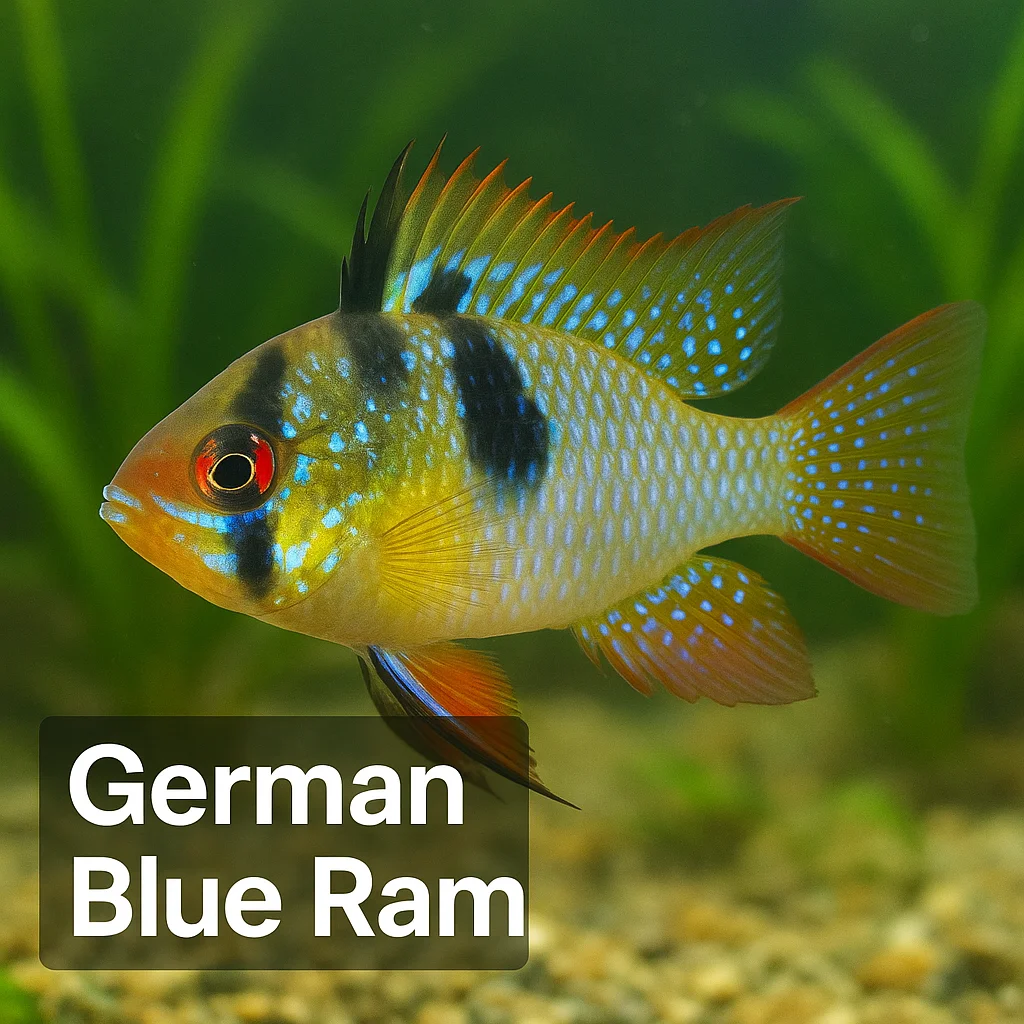
The German Blue Ram, often referred to simply as the Ram, is a vibrant and eye-catching species of freshwater fish that is highly popular among aquarists. Known for their striking coloration and relatively peaceful disposition, German Blue Rams make a beautiful addition to community tanks.
- Common names: German Blue Ram, Blue Ram, Ramirez's Dwarf Cichlid
- Scientific name: Mikrogeophagus ramirezi
- Freshwater
- Origin: South America, primarily in the Orinoco River basin, Venezuela, and Colombia
- Typical adult size range: 2 to 3 inches (5 to 7.5 cm)
- Lifespan: 2 to 4 years
- Temperament: Peaceful, though can be territorial when breeding
- Recommended tank size: Minimum 20 gallons
- Water temperature range: 78°F to 85°F (26°C to 29°C)
- pH: 5.0 to 7.0, soft to moderately hard
- Diet type: Omnivore
- Activity zone: Mid and bottom
- Social needs: Best kept in pairs or small groups
- Beginner suitability: Medium
🔍 Identification
The German Blue Ram is easily recognized by its compact, round body and colorful appearance. Its exhibit a pale blue coloration adorned with iridescent scales that shimmer under aquarium lighting. The face and forehead display a warm yellow to gold hue, often with red accents near the eye. Males tend to have extended fin rays and may grow slightly larger than females. The dorsal fin is spiked and edged with bold black markings.
Mood and environmental factors can cause slight changes in coloration, with stressed individuals appearing paler. German Blue Rams can be mistaken for similar species such as the Bolivian Ram, but can be distinguished by the more vivid coloration and smaller size.
- Top ID Tips:
- Look for iridescent blue scales covering the body
- Notice the red accents near the eyes
- Check dorsal fin for characteristic black stripes
- Males have elongated fin rays
- Smaller and rounder body compared to other Rams
- Observe mood-based color shifts
- Spot yellow and gold hues on the head
🌍 Origin & Natural Habitat
The German Blue Ram originates from the warm freshwater environments of South America, specifically the Orinoco River basin. It inhabits slow-moving waters, including flooded plains, streams, and small ponds. These environments are characterized by sandy bottoms, abundant aquatic vegetation, and scattered driftwood.
Understanding the natural habitat is crucial for replicating conditions in the aquarium, as it allows for the establishment of more natural behaviors and reduced stress levels. The water in these habitats is typically soft and acidic, which should be mirrored in the tank setup.
🧪 Tank Setup & Water Parameters
Providing the right tank setup is essential for the well-being of German Blue Rams. A tank of at least 20 gallons is recommended to accommodate their need for swimming space and territory. Filtration should be efficient but gentle, and water flow should be minimal to simulate their natural habitat.
Heaters are generally necessary to maintain a consistent temperature range between 78°F and 85°F. A soft substrate such as sand is ideal, and the inclusion of plants, caves, and driftwood provides hiding spots and enriches the environment.
- Setup Checklist:
- Tank size: minimum of 20 gallons
- Efficient, low-flow filtration
- Water temperature between 78°F and 85°F
- Substrate: soft sand
- Aquatic plants and driftwood
- Provide ample hiding places
- pH: 5.0 to 7.0
🤝 Temperament & Compatibility
German Blue Rams are generally peaceful and make excellent additions to community tanks. They exhibit mild territorial behaviors, particularly during breeding. While they can cohabit with other non-aggressive species, it's best to avoid larger or fin-nipping fish that may intimidate them.
Good tankmates include smaller tetra species, Corydoras catfish, and rasboras. Individual temperament can vary, and some Rams might show more aggression than others, especially when defending a breeding site.
- Compatibility Notes:
- Best with peaceful community fish
- Avoid large or aggressive tankmates
- Ideal for planted aquariums
- Territorial when breeding
- Consider group dynamics in community tanks
- Individual behavior can vary
🍽️ Diet & Feeding
In the wild, German Blue Rams are opportunistic feeders that consume small invertebrates, plant matter, and detritus. In captivity, they thrive on a diversified diet of high-quality flake or pellet food, supplemented with live or frozen offerings such as brine shrimp, bloodworms, and daphnia.
They should be fed small amounts two to three times per day, ensuring that uneaten food is promptly removed to maintain water quality. Ensuring a balanced diet contributes to their vibrant coloration and overall health.
- Feeding Tips:
- Offer a varied diet for best health
- Use high-quality flake or pellet food
- Supplement with live or frozen foods
- Feed small amounts 2 to 3 times daily
- Remove uneaten food quickly
- Observe feeding behaviors for health assessment
- Ensure access to food for all tank inhabitants
🧬 Growth, Color Changes & Lifespan
German Blue Rams undergo noticeable transformations as they mature. Juveniles may appear less vibrant, gradually developing the full spectrum of color that characterizes adults. Mood, stress levels, and social interactions can induce variations in color intensity.
Stress signs include clamped fins and hiding behavior or faded colors. On average, these fish live between 2 to 4 years, with longevity influenced by water quality, diet, and stress mitigation.
🪺 Breeding & Reproduction
German Blue Rams are egg-layers that form monogamous pairs for breeding. Increased temperature and enhanced food quality can act as spawning triggers. The pair will often choose a flat surface or shallow depression to lay eggs, which both parents diligently guard.
The fry need infusoria or specialized liquid fry food immediately after hatching, transitioning to finely crushed flakes as they grow. Breeding can be challenging in community tanks and may require dedicating a separate breeding environment.
🩺 Common Health Issues & Prevention
Like many aquarium fish, German Blue Rams can be susceptible to ich, parasitic infections, and fin damage. Preventing these issues requires maintaining stable water conditions, regular observation, and avoiding overcrowding.
It's vital to quarantine new additions before introducing them to the main tank to prevent disease outbreaks.
- Prevention Basics:
- Maintain water quality with regular monitoring
- Quarantine new fish before introduction
- Avoid abrupt changes in water parameters
- Ensure a balanced diet to prevent malnutrition
- Observe fish behavior for early problem signs
- Provide suitable environment to reduce stress
- Avoid overcrowding to minimize disease risk
🌱 Role in the Aquarium
German Blue Rams can serve as an attractive centerpiece fish in community aquariums. They are plant-safe and contribute to visual appeal with their vibrant colors and graceful swimming behaviors. Their peaceful demeanor helps maintain a balanced tank ecosystem, making them suitable companions for other non-aggressive species.
Ethically, it's recommended to source these fish from reputable breeders to avoid the impact of wild capturing on natural populations.
📉 Conservation & Responsible Keeping
German Blue Rams are typically bred in captivity, offering a sustainable option compared to wild-caught specimens. Always opt for captive-bred individuals to support conservation efforts. It's crucial never to release aquarium fish into local waterways as it can disrupt local ecosystems.
If the fish outgrows the home setup or requires rehoming, consult with pet stores or aquarist communities.
- Responsible Keeping Tips:
- Choose captive-bred fish to support conservation
- Never release aquarium fish into the wild
- Consider future size in tank planning
- Explore rehoming options if necessary
- Support ethical breeders and suppliers
- Stay informed about species-specific needs
📌 Summary
- ID highlights: Small, vibrant, and iridescent
- Origin: Orinoco River basin, South America
- Tank setup: 20 gallons, calm waters, planted with hiding spots
- Compatibility: Peaceful with suitable fish, beware larger/aggressive species
- Diet: Omnivorous, varied with flakes, pellets, and live foods
- Difficulty: Medium; attentive to water care needed
- Space: Ensure tank allows for territorial behavior
- Remember to quarantine new arrivals for health maintenance
- Temperature range supports tropical conditions, seek stability
- Ethically select captive-bred over wild-caught
- Never release into wild; community cooperation for any rehoming