🐠 Frontosa
🧾 Quick Facts
The Frontosa, also known as the Cyphotilapia frontosa, is a captivating cichlid kept by enthusiasts for its striking appearance and peaceful demeanor. Originating from Africa's Lake Tanganyika, this freshwater fish demands specific water conditions and an adequately sized aquarium. The following quick facts will guide anyone interested in keeping Frontosa.
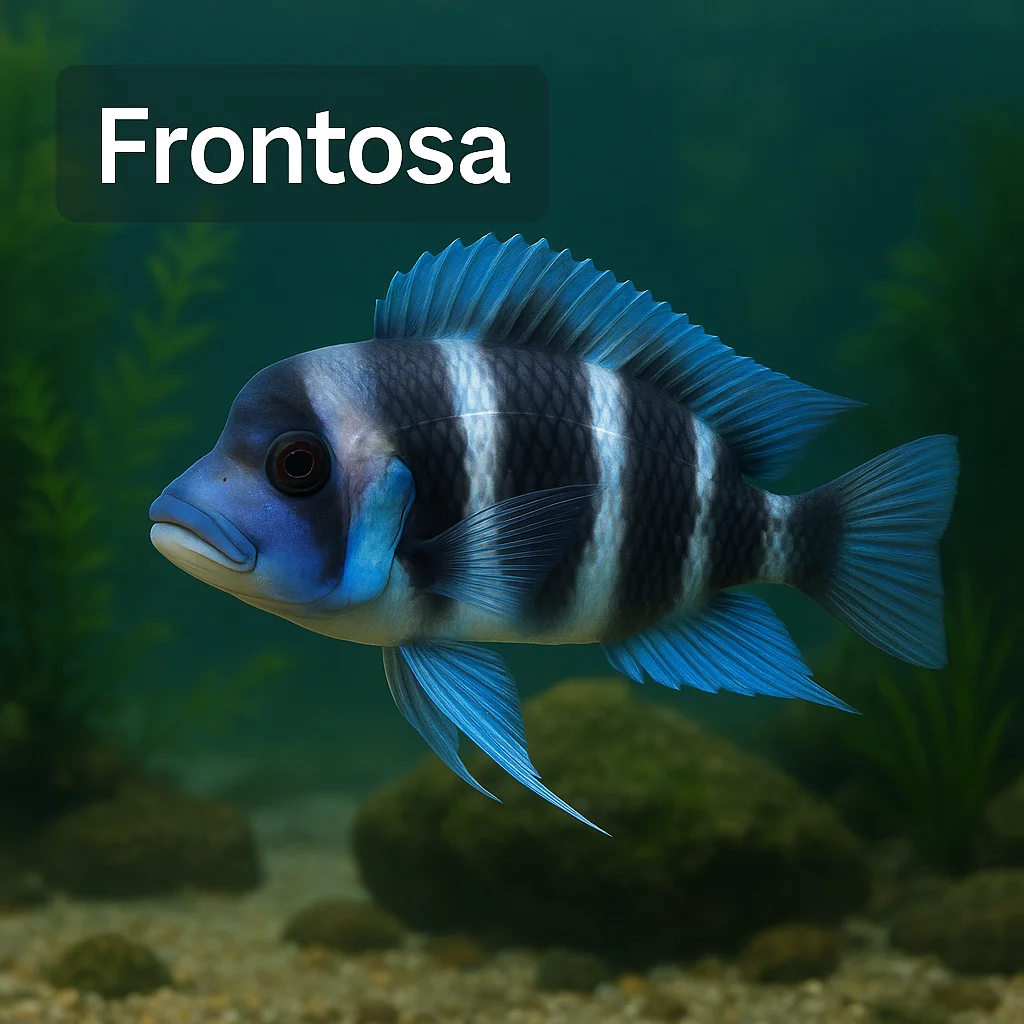
- Common names: Frontosa, Humphead Cichlid
- Scientific name: Cyphotilapia frontosa
- Freshwater / Marine / Brackish: Freshwater
- Origin: Lake Tanganyika, Africa
- Typical adult size range: 10–14 inches (25–35 cm)
- Lifespan: 15–20 years
- Temperament: Peaceful but territorial
- Recommended tank size: Minimum 75 gallons (285 liters)
- Water temperature range: 74–82°F (23–28°C)
- pH / hardness: pH 7.8–9.0; Hard water
- Diet type: Carnivore
- Activity zone: Bottom to mid-level
- Social needs: Best kept in groups
- Beginner suitability: Medium
🔍 Identification
The Frontosa is easily identifiable by its robust body and distinct nuchal hump, larger in males. Their coloration typically includes a base of white or blue with six to seven black/blue vertical bars along the flanks. The dorsal fin is long and flowing, with pointed tips. Male Frontosas often have more pronounced humps and may display brighter colors compared to females.
- Large, prominent nuchal hump
- White or blue base color with vertical bars
- Pointed, elongated dorsal fin
- Full-body vibrant appearance
- Similar species: Distinguish from others by shape and coloration pattern
- Bluish sheen increases with maturity
- Males larger and more colorful
- Observe subtle color changes with mood/stress
🌍 Origin & Natural Habitat
Frontosas are endemic to Lake Tanganyika, Africa's longest freshwater lake. This deep, clear lake has rocky substrates and minimal vegetation, providing Frontosas with ample hiding places. They thrive in hard, alkaline waters and prefer stable conditions. Seasonal changes in the lake are minor, contributing to a relatively constant habitat, which is an important aspect to replicate in aquariums for their success.
🧪 Tank Setup & Water Parameters
A spacious tank with rocky caves mimics a Frontosa's natural habitat. A tank of at least 75 gallons is essential, with a horizontal layout for adequate swimming space. Due to their preference for stable environments, efficient filtration with mild water flow is crucial. A heater maintains their preferred temperature range, and the substrate of sand or small gravel is ideal. Aquatic plants, although not abundant in their natural habitat, can provide additional hiding spots without obstructing swimming paths.
- Adequate tank size with space for free movement
- Stable filtration system
- Maintain temperature with a reliable heater
- Create cave structures with rocks
- Provide dim lighting to simulate natural conditions
- Regular water parameter checks
- Avoid sharp décor items
- Ensure secure tank covers (Frontosas can jump)
🤝 Temperament & Compatibility
Frontosas are relatively peaceful, though they display territorial behaviors, especially during feeding and breeding. They form social groups and are best kept in small harems or groups. Recommended tankmates are other peaceful Lake Tanganyika cichlids of similar size. Avoid aggressive species and those significantly smaller, as they may be bullied or considered prey.
- Social but territorial
- Ideal in single-species tanks or with compatible cichlids
- Observe carefully during feeding to ensure harmony
- Avoid pairing with aggressive species
- Monitor during breeding for increased aggression
- Individual behavior can vary based on personality
🍽️ Diet & Feeding
In the wild, Frontosas feed on smaller fish and invertebrates, making them carnivorous. In aquariums, their diet should include high-quality pellets, flakes, live foods, and frozen options like shrimp or krill. Feed them 2–3 times daily in small portions to prevent overconsumption and subsequent digestion issues. They may require fasting periods to mimic their natural feeding patterns more closely.
- Offer a varied diet for optimal health
- Small, frequent meals preferred
- Avoid feeding only dry foods
- Incorporate live/frozen foods regularly
- Watch for symptoms of overfeeding
- Consider diet supplements for color enhancement
- Avoid feeding immediately before lights out
🧬 Growth, Color Changes & Lifespan
Frontosas exhibit distinct differences between juveniles and adults, particularly in coloration and size. Juveniles are often duller than their vividly colored adult counterparts. These fish can show changes in hue depending on mood or stress but typically maintain consistent patterns. A well-maintained environment with a balanced diet supports their long lifespan of 15 to 20 years in captivity.
🪺 Breeding & Reproduction
Frontosas are mouthbrooders, with females carrying eggs and fry in their mouths until free-swimming. Breeding in captivity requires adequate space and conditioned pairs. Males perform courtship displays to entice females, and once breeding begins, stable water conditions and secluded areas are crucial. Since breeding is not commonplace in home tanks due to size requirements, patience and careful monitoring are necessary.
🩺 Common Health Issues & Prevention
Common health problems for Frontosas include ich, fin rot, and parasitic infections. Prevention through stable water conditions, proper filtration, and quarantining new arrivals is crucial. Maintaining a clean tank and avoiding overfeeding can deter many health issues, ensuring Frontosas remain active and vibrant.
- Quarantine new fish
- Monitor water conditions closely
- Regular water changes
- Watch for signs of disease
- Provide a balanced diet
- Maintain stable environmental conditions
- Reduce stress through adequate hiding places
🌱 Role in the Aquarium
Frontosas are often admired as a centerpiece fish due to their size and beauty. Their peaceful nature adds harmony to large aquariums, and they help maintain community balance with compatible species. Ethical sourcing from reputable breeders is recommended to avoid the impacts of wild collection on indigenous populations.
📉 Conservation & Responsible Keeping
Frontosas should be sourced from reputable breeders rather than wild-caught to support the conservation of native populations. Releasing these fish into non-native waters is harmful and illegal. Should rehoming become necessary, consult specialized fishkeeping groups or forums interested in cichlids.
- Buy from legitimate, ethical sources
- Avoid purchasing or supporting wild-caught stocks
- Explore community resources for rehoming
- Responsible aquarium practices protect natural populations
- Educate others on ethical fishkeeping
- Never release into local waters
📌 Summary
- Identifiable by unique hump and vertical bars
- Originates from Lake Tanganyika, requiring specific water conditions
- Setup includes a spacious tank with rocky decor
- Mostly peaceful but requires proper tankmates
- Carnivorous diet with a mix of food types
- Intermediate keeping difficulty due to size and water needs
- Conservation focused on captive-bred sourcing
- Role as a calming centerpiece in appropriate aquariums
- Emphasize stable conditions to prevent health issues
- Responsible sourcing and rehoming practices essential