🐠 Flowerhorn
🧾 Quick Facts
The Flowerhorn cichlid is a popular ornamental fish known for its vibrant colors and distinctive nuchal hump. While not a natural species, it is a hybrid fish loved by aquarists worldwide for its beauty and personality.
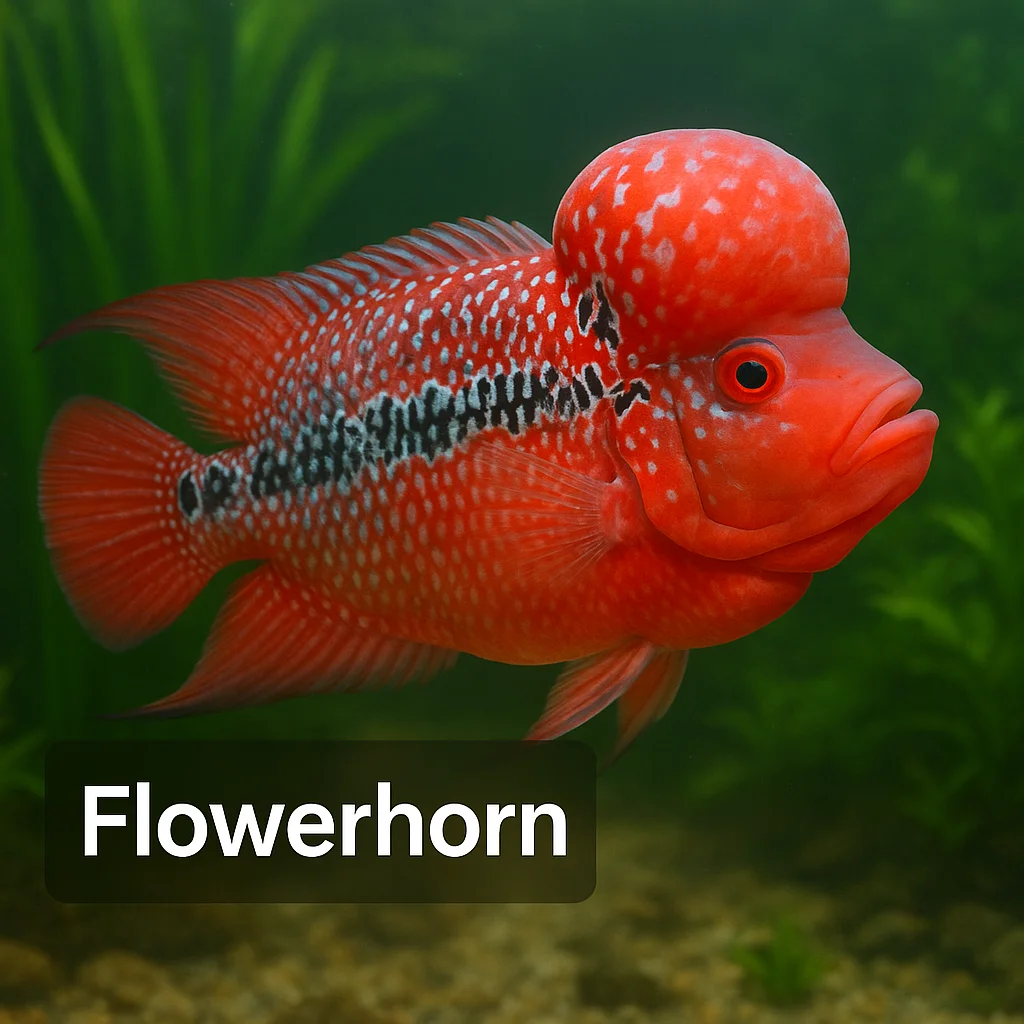
- Common names: Flowerhorn, Luohan Fish
- Scientific name: Varies (Hybrid species)
- Freshwater
- Origin: Bred in captivity, often in Southeast Asia
- Typical adult size range: 12 to 16 inches (30 to 40 cm)
- Lifespan: 10 to 12 years
- Temperament: Semi-aggressive
- Recommended tank size: Minimum 75 gallons (284 liters)
- Water temperature range: 80-86°F (27-30°C)
- pH: 6.5 to 7.8; moderate hardness
- Diet type: Omnivore
- Activity zone: Mid to bottom
- Social needs: Solitary; can be territorial
- Beginner suitability: Medium
🔍 Identification
Flowerhorns are unique and easily recognizable due to their pronounced nuchal hump and bright coloration. Their body shape is oval and robust, with fins that are often long and flowing.
- Body shape: Oval and robust with a prominent nuchal hump
- Colors and patterns: Bright red, pink, orange, with varying patterns; can change with mood
- Fin shapes: Flowing fins, with dorsal and anal fins often extending to a point
- Male vs female: Often subtle, varies by individual
- Look-alikes: Other large cichlids; however, the nuchal hump is distinctive
- Top ID Tips:
- Check for a prominent nuchal hump
- Look for bright, variable colors
- Observe the robust, oval body shape
- Notice the long, flowing fin extensions
- Check for unique patterning on each individual
- Watch for color changes reflecting mood shifts
🌍 Origin & Natural Habitat
Flowerhorns don't have a natural habitat as they are hybridized for the aquarium trade. Their ancestors come from various cichlid species originally found in South America. Understanding the adaptability of their parent species helps in creating a suitable aquarium environment.
These fish thrive in tanks that mimic the structure of South American rivers—calm waters with minor flow, suitable for showcasing their striking colors.
🧪 Tank Setup & Water Parameters
A spacious tank is vital for Flowerhorns due to their large size and active nature. Good filtration is critical to maintain high water quality, as these fish produce significant waste.
- Provide at least a 75-gallon tank to allow free movement
- Ensure robust filtration to handle bioload
- Maintain temperatures of 80-86°F (27-30°C)
- Use a substrate like sand or small gravel
- Add rocks or driftwood for territorial markers
- Provide moderate lighting
- Ensure some open swimming spaces and hiding spots
- Regular water changes to maintain quality
🤝 Temperament & Compatibility
Flowerhorns are semi-aggressive and territorial, especially when in the presence of other fish. They are best kept alone or with very large, robust tank mates in adequately sized tanks.
- Territorial by nature; establish distinct boundaries within tanks
- Feeding can trigger heightened aggression
- Potential tankmates include similarly sized large cichlids, but compatibility varies
- Avoid small, passive fish as they can become targets
- Behaviour can vary significantly among individuals
- Compatibility Notes:
- Best kept in solitary arrangements
- Consider tank dividers if necessary
- Keep with similarly aggressive species of equal size
- Avoid mixing with small, non-aggressive species
- Monitor interactions closely for signs of aggression
🍽️ Diet & Feeding
Flowerhorns are omnivorous and thrive on a varied diet. A balanced diet of high-quality pellets, frozen foods, and occasional live foods maintains their vibrant coloration and health.
- Balanced high-quality pellets as a staple
- Supplement with frozen or live foods like brine shrimp or worms
- Avoid overfeeding; offer small portions multiple times daily
- Provide diversity to avoid dietary deficiencies
- Remove uneaten food to maintain tank hygiene
- Feeding Tips:
- Use floating pellets to encourage surface activity
- Introduce variety with occasional treats
- Feed small portions to avoid waste accumulation
- Observe feeding to monitor health and appetite
- Soak pellets briefly in tank water if too hard
🧬 Growth, Color Changes & Lifespan
Flowerhorns grow quickly, reaching full size in around 1-2 years. They display pronounced color shifts based on mood, health, and quality of water. Stress often manifests as dull coloring and reclusive behavior.
With proper care, Flowerhorns live an average of 10-12 years. Key to their longevity are suitable tank conditions and diligent care.
🪺 Breeding & Reproduction
Flowerhorns are known egg-layers but breeding them in home aquariums can be challenging due to aggression. When conditions are optimal, they may display courtship rituals. Eggs are typically laid on flat surfaces, and fry require appropriate baby fish foods.
Without experience, breeding attempts may fail due to the aggressive nature of these fish.
🩺 Common Health Issues & Prevention
Common health issues include ich, fin rot, and digestive problems. Maintaining stable water conditions and good tank hygiene significantly reduces risks. Quarantine new arrivals and monitor for signs of distress.
- Monitor for common parasites like ich
- Provide a quarantine period for new fish
- Maintain stable water quality and temperature
- Prevent overfeeding and ensure diverse nutrition
- Install robust filtration to keep water clear
- Regularly clean and maintain the tank environment
- Prevention Basics:
- Establish a consistent cleaning schedule
- Keep filtration systems efficient and clean
- Observe fish regularly for changes in behavior or appearance
- Quickly isolate and treat sick fish
- Avoid sudden changes in water parameters
🌱 Role in the Aquarium
Flowerhorns are often used as centerpiece fish due to their vibrant appearance and engaging personality. They contribute a dynamic presence to the aquarium and require dedicated care. Ethically sourced specimens are recommended to support sustainable trade practices.
These fish are not aimed at algae control or other utility roles in a tank but serve a strong decorative purpose.
📉 Conservation & Responsible Keeping
Flowerhorns are exclusively captive-bred, minimizing pressure on wild populations. Always obtain them from reputable sources. Never release aquarium fish into the wild, and ensure ample space if rehoming becomes necessary.
- Ensure any new purchase is captive-bred
- Confirm ethical sourcing practices
- Plan for tank size and life stages before purchasing
- Never release into local waterways
- Consider responsible rehoming if space becomes limiting
- Responsible Keeping Tips:
- Securely cover tanks to prevent escape
- Invest in an appropriate-sized tank early
- Seek ethical, captive-bred sources
- Educate others on responsible fishkeeping
- Plan ahead for long-term fish care needs
📌 Summary
- Recognized by their vibrant colors and distinctive nuchal hump
- Hybrid origins, bred for the aquarium trade
- Require large tanks and good filtration
- Best kept individually due to territorial nature
- Omnivorous, requiring diverse feeding
- Medium difficulty, appropriate for dedicated aquarists
- Avoid wild release; promote ethical sourcing
- Longevity depends on care and environment
- Significant as a decorative centerpiece in aquariums