🐠 Discus
🧾 Quick Facts
The Discus fish, revered for its striking appearance, is a freshwater icon in the aquarium world. Known for their vibrant colors and graceful body shape, Discus are commonly kept by enthusiasts aiming to create South American biotope aquariums.
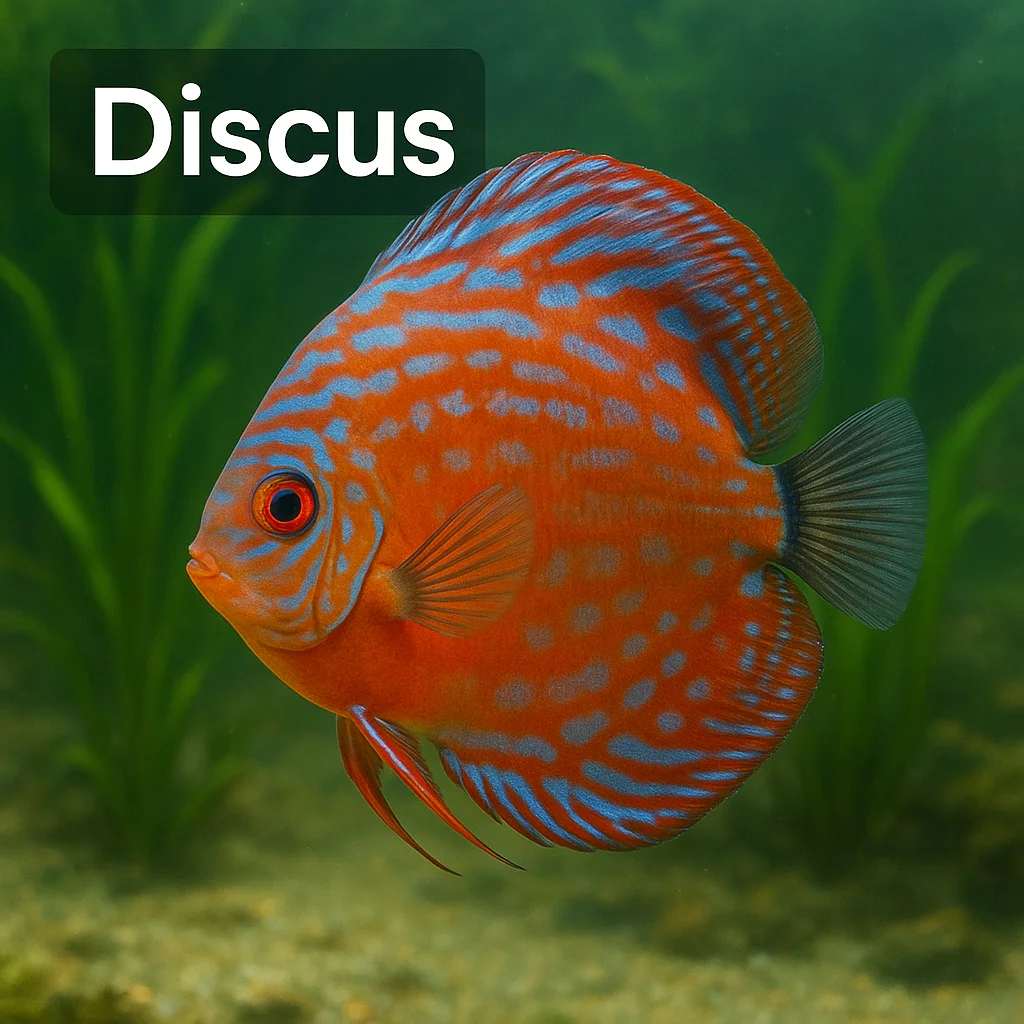
- Common names: Discus, Discus Fish
- Scientific name: Symphysodon spp.
- Freshwater
- Origin: South America, Amazon River Basin
- Typical adult size range: 4-6 inches (10-15 cm)
- Lifespan: 10-15 years
- Temperament: Peaceful
- Recommended tank size: Minimum 50 gallons
- Water temperature range: 82-86°F (28-30°C)
- pH / hardness guidance: Slightly acidic; pH 6.0-7.0
- Diet type: Omnivore
- Activity zone: Mid-level
- Social needs: Group of 5 or more
- Beginner suitability: Medium to Advanced
🔍 Identification
Discus fish captivate with their round, laterally compressed bodies that resemble a disc, hence their name. They exhibit a dazzling array of colors and patterns, which can change with age and mood. Their fins are large and flow gracefully, with the dorsal and anal fins extending seamlessly from the body. Gender identification is subtle, with males often displaying more vivid coloration.
- Round, disc-like body
- Vibrant colors: blues, reds, greens
- Extended dorsal and anal fins
- Males may have brighter colors
- Juveniles might have less pronounced patterns
- Common look-alikes: Angels, but Discus are rounder
- Whole fish in frame recommended for photography
- Consider subtle stripe differences for ID
🌍 Origin & Natural Habitat
Discus fish are native to the Amazon River Basin in South America, inhabiting slow-moving waters with rich organic matter. They thrive in dense vegetation areas with submerged roots and fallen leaves, providing shelter and ample hiding spots. Seasonal changes such as flooding create diverse biotopes, influencing their breeding and feeding patterns. Understanding their natural habitat emphasizes the importance of replicating similar conditions in captivity to ensure their wellness.
🧪 Tank Setup & Water Parameters
Setting up a Discus aquarium requires attention to maintaining pristine water quality. Ensure a spacious tank of at least 50 gallons to accommodate their size and group dynamics. Robust filtration is critical, with moderate water flow to mimic their natural environment. Water heaters are essential for stability in their preferred temperature range. Decor like driftwood and plants can provide hiding spots and mimic natural settings. Lighting should be gentle to prevent stress.
- Minimum 50-gallon tank for a small group
- Efficient filtration with moderate flow
- Water heater to maintain 82-86°F
- Substrate: Fine sand or gravel
- Incorporate driftwood for decoration
- Plant life: Ensure broad-leaf options for shade
- Hiding spots are crucial for comfort
- Gentle lighting preferred to reduce stress
🤝 Temperament & Compatibility
Known for their peaceful demeanor, Discus do best in groups of five or more, where they exhibit natural schooling behavior. While generally non-aggressive, they require ample space to prevent stress-induced behavior. Discus are compatible with other non-aggressive species that thrive in similar water conditions. Caution should be taken to avoid housing with overly active or aggressive tank mates such as large cichlids, which could outcompete them for food or intimidate.
- Prefer groups of 5 or more
- Tendency to school
- Suitable tank mates: Tetras, Corydoras
- Risky tank mates: Aggressive, large cichlids
- Avoid aggressive or fast fish
- Individual behavior can vary
- Feeding: generally peaceful
🍽️ Diet & Feeding
Discus are omnivores with a preference for protein-rich food. In the wild, they consume small insects, crustaceans, and plant matter. In captivity, they can be fed a varied diet including high-quality flakes, pellets, and frozen foods such as bloodworms and brine shrimp. It's advisable to feed them multiple small meals throughout the day, mimicking their natural foraging behaviors while avoiding overfeeding.
- Feed high-quality flakes or pellets
- Include frozen bloodworms or brine shrimp
- Regular feeding: 2-3 times a day
- Avoid overfeeding to maintain water quality
- Introduce variety for balanced diet
- Picky eater: adjust to preference
- Provide natural supplements occasionally
- Ensure uneaten food is promptly removed
🧬 Growth, Color Changes & Lifespan
Discus fish are distinguished for their dramatic color variations, which may change based on age, health, and mood. Juveniles exhibit subtler hues, intensifying into vibrant colors as they mature. Stress can cause color fading and clamped fins, indicating the need for environmental reassessment. With proper care, Discus can live up to 15 years, where diet, space, and pristine water conditions greatly influence their longevity.
🪺 Breeding & Reproduction
Discus are known as egg layers, often breeding in flat, sheltered surfaces in the aquarium. Their breeding is triggered by stable conditions akin to their natural flooding season. Parental care is noteworthy; both parents fan the eggs and later guard the free-swimming fry. Nonetheless, breeding in home aquariums is considered challenging due to their demanding water condition needs.
🩺 Common Health Issues & Prevention
Discus fish are susceptible to common freshwater ailments like ich and fin rot, primarily due to water quality fluctuations. Quarantining new arrivals and regular tank maintenance play significant roles in disease prevention. Ensuring consistent parameters with quality filtration systems helps minimize stress and associated health issues.
- Stable water conditions are vital
- Use quarantine for new fish
- Regularly clean and maintain tank
- Monitor for disease signs: ich, fin damage
- Prevent overfeeding to reduce waste
- Maintain good filtration to prevent ammonia buildup
🌱 Role in the Aquarium
Discus are often used as centerpiece fish in community tanks, contributing greatly to the aesthetic appeal. While they do not serve typical functional roles like algae control, they add vibrant color and grace to the aquarium. Sourcing from responsible breeders is paramount to avoid harvesting impacts on natural populations and preserve ethical aquarium keeping practices.
📉 Conservation & Responsible Keeping
With captive breeding becoming more prevalent, the impact of wild trapping for trade is reduced. Selecting captive-bred specimens supports sustainable practices and reduces the risk of ecological disruption. Always avoid releasing aquarium fish into local waters, instead considering rehoming through community forums if needed.
- Prioritize captive-bred over wild-caught
- Never release into local ecosystems
- Consider community forums for rehoming
- Support ethical breeders
- Research sourcing for environmental impact
- Educate others on responsible keeping
📌 Summary
- Discus have a unique round shape and vibrant colors
- Native to slow-moving Amazonian waters
- Require large tanks and stable tropical conditions
- Best housed with peaceful community fish
- Omnivorous diet with emphasis on protein
- Lifespan up to 15 years with proper care
- Breeding is possible but requires specific conditions
- Prone to common ailments, requiring preventive care
- Captive-bred purchases encourage sustainability
- Known for being a stunning aquarium centerpiece