🐠 Convict Cichlid
🧾 Quick Facts
The Convict Cichlid, known for its striking appearance and hardy nature, is a popular choice among aquarium enthusiasts. Native to Central America, these fish are adaptable and can thrive in a variety of freshwater conditions. Their vibrant colors and dynamic behavior make them an engaging addition to any home aquarium.
- Common names: Convict Cichlid, Zebra Cichlid
- Scientific name: Amatitlania nigrofasciata
- Freshwater / Marine / Brackish: Freshwater
- Origin: Central America, including countries like Honduras, Guatemala, and Nicaragua
- Typical adult size range: 4 to 6 inches (10 to 15 cm)
- Lifespan: 8 to 10 years
- Temperament: Semi-aggressive
- Recommended tank size: Minimum 30 gallons
- Water temperature range: 75 to 80°F (24 to 27°C)
- pH / hardness guidance: pH 6.5–8.0, moderately hard water
- Diet type: Omnivore
- Activity zone: Middle and bottom
- Social needs: Pair or solitary
- Beginner suitability: Easy
🔍 Identification
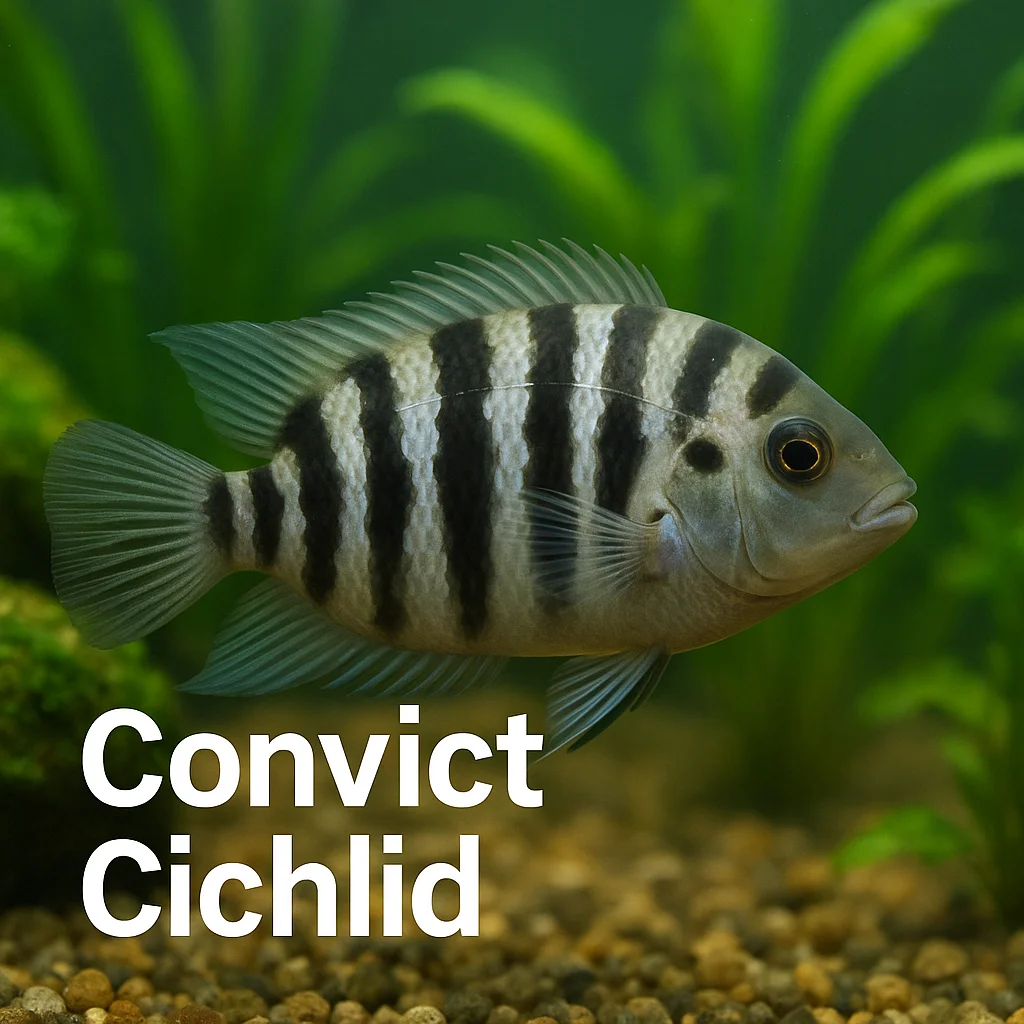
The Convict Cichlid is easily recognizable by its distinctive black and gray vertical stripes, resembling a convict's uniform. It has a robust, elongated body and a square-tipped caudal fin. Coloration can vary based on mood and maturity, with older fish displaying more intense hues. Males are typically larger with pointed dorsal fins, while females might display orange spots on their bellies, especially when ready to breed. Identifying males from females can sometimes be subtle, especially in juvenile fish.
- Body shape: Oval and robust
- Color pattern: Vertical black stripes on a gray body
- Fin shape: Males have more elongated, pointed dorsal fins
- Gender cues: Females have orange spots on lower parts
- Look-alikes: Similar to other cichlids but distinct stripes aid differentiation
- Age and mood-based color variations
- Whole fish in frame representation is ideal for photos
🌍 Origin & Natural Habitat
The Convict Cichlid originates from the freshwater rivers and streams of Central America. They are commonly found in areas with gentle currents and rocky substrates, often accompanied by submerged logs and dense vegetation. This environment provides ample hiding spots which the Convict Cichlids use for breeding and protection. Understanding their natural habitat helps aquarium keepers replicate these conditions, enhancing the fish's well-being in captivity.
🧪 Tank Setup & Water Parameters
Setting up a tank for Convict Cichlids involves creating an environment that mimics their natural habitat. A minimum of 30 gallons is suggested to provide sufficient horizontal space for swimming. Filtration systems should support moderate water flow and aid in maintaining cleanliness. Heaters are essential to keep water within the preferred temperature range. Natural décor, such as rocks, driftwood, and live plants, are recommended to offer hiding places and spawning areas. Proper lighting accentuates their vibrant patterns, while subdued spots allow for retreat.
- Tank size: Minimum of 30 gallons recommended
- Filtration: Moderate flow with a reliable filter
- Heating: Maintain water at 75–80°F (24–27°C)
- Substrate: Fine gravel or sand
- Décor: Include rocks, driftwood, and plants
- Lighting: Balanced with shaded areas
- Hiding spots: Essential for comfort and breeding
🤝 Temperament & Compatibility
Convict Cichlids are known for their semi-aggressive nature, which is more pronounced during breeding. They are territorial, often choosing specific areas of the tank to defend. While they seldom school, keeping them in pairs can prevent loneliness. During feeding and breeding, their assertive behavior becomes more prominent. Compatible tank mates include other robust cichlids and similarly sized fish, while small, timid species may be at risk. Individual personality differences can lead to varying behaviors.
- Pair bonding: Often form strong pairs
- Territoriality: Aggressive when defending space
- Feeding behavior: Can be assertive during meals
- Breeding aggression: Intensifies during spawning
- Good tank mates: Larger cichlids, sturdy fish
- Risky tank mates: Small or timid species
🍽️ Diet & Feeding
In the wild, Convict Cichlids exhibit omnivorous diets, consuming a mix of plants, insects, and small aquatic organisms. In aquariums, they thrive on a diet of high-quality flakes, pellets, and occasional live or frozen foods like brine shrimp and bloodworms. Feeding should be appropriate in size and portion, with two to three small meals a day being ideal. While they are versatile eaters, maintaining dietary variety ensures optimal health and growth.
- Staple foods: Flakes and pellets
- Variety: Include live or frozen foods
- Feeding frequency: 2–3 times daily
- Portioning: Small, manageable amounts
- Wild diet: Mix of plants and small organisms
- Behavior: Active during feeding times
🧬 Growth, Color Changes & Lifespan
As Convict Cichlids grow from juveniles to adults, their distinctive black and grey striped pattern becomes more defined. Their colors may intensify during courtship or stress, providing visual cues to their condition. Stress is subtly exhibited through behaviors like fin clamping or color fading, suggesting the need for attention to water quality or tank conditions. A typical lifespan of 8 to 10 years can be achieved with proper care, encompassing stable water conditions, adequate space, and a balanced diet.
🪺 Breeding & Reproduction
Convict Cichlids are prolific breeders, known for their egg-laying capabilities. During the breeding season, pairs exhibit intricate courtship behaviors, often choosing a secluded area to spawn. They lay eggs on flat surfaces, and both parents actively guard and care for the eggs and subsequent fry. Fry are capable of consuming crushed flakes and small live foods, promoting rapid development. Although breeding in home aquariums is common, providing optimal conditions encourages higher survival rates of the young.
🩺 Common Health Issues & Prevention
Despite their generally robust nature, Convict Cichlids can experience health issues typical to freshwater fish, such as ich, fin damage, and parasites. Prevention remains the best strategy, emphasizing the importance of quarantine for new additions and maintaining stable water parameters. Avoiding overfeeding, ensuring adequate filtration, and conducting regular tank maintenance contribute significantly to preventing outbreaks and promoting healthy environments.
- Quarantine new fish before introduction
- Monitor water parameters and quality
- Avoid sudden temperature changes
- Provide a balanced diet and avoid overfeeding
- Routine maintenance: Cleaning and water changes
🌱 Role in the Aquarium
Convict Cichlids bring a dynamic element to home aquariums with their vibrant coloration and active behavior. When housed properly, they can become the centerpiece of a freshwater tank. They help manage algae levels through grazing and contribute to a balanced ecosystem. Selecting reputable sources for captive-bred specimens can prevent ecological harm, as wild capture can impact native populations. Ethical choices ensure sustainable aquarium keeping practices.
📉 Conservation & Responsible Keeping
Opting for captive-bred Convict Cichlids over wild-caught options helps conserve their natural populations and supports responsible aquarium keeping. Releasing any aquarium fish into local waters is strongly discouraged due to potential ecological disruptions. If a Convict Cichlid outgrows its tank, rehoming through aquarist communities or stores is a responsible option to explore.
- Choose captive-bred over wild-caught
- Never release into local ecosystems
- Consider larger tanks or rehoming as they grow
- Support ethical breeding programs
- Share knowledge with fellow aquarists
📌 Summary
- Recognizable by black and grey stripes
- Native to Central America's freshwater regions
- Minimum tank size: 30 gallons
- Semi-aggressive, especially during breeding
- Omnivorous diet with varied food options
- Great for beginners due to hardiness
- Avoid keeping with small, timid species
- Common breeder in captivity
- Contributes to algae management
- Ethical choice: captive-bred preference