🐠 Apistogramma (Dwarf Cichlid)
🧾 Quick Facts
Apistogramma, often referred to as Dwarf Cichlids, is a diverse group of freshwater fish popular in the aquarium trade for their vibrant colors and dynamic behaviors. Known for their adaptability to well-maintained home aquariums, these fish are a staple among enthusiasts seeking to recreate vibrant slices of South American waterways.
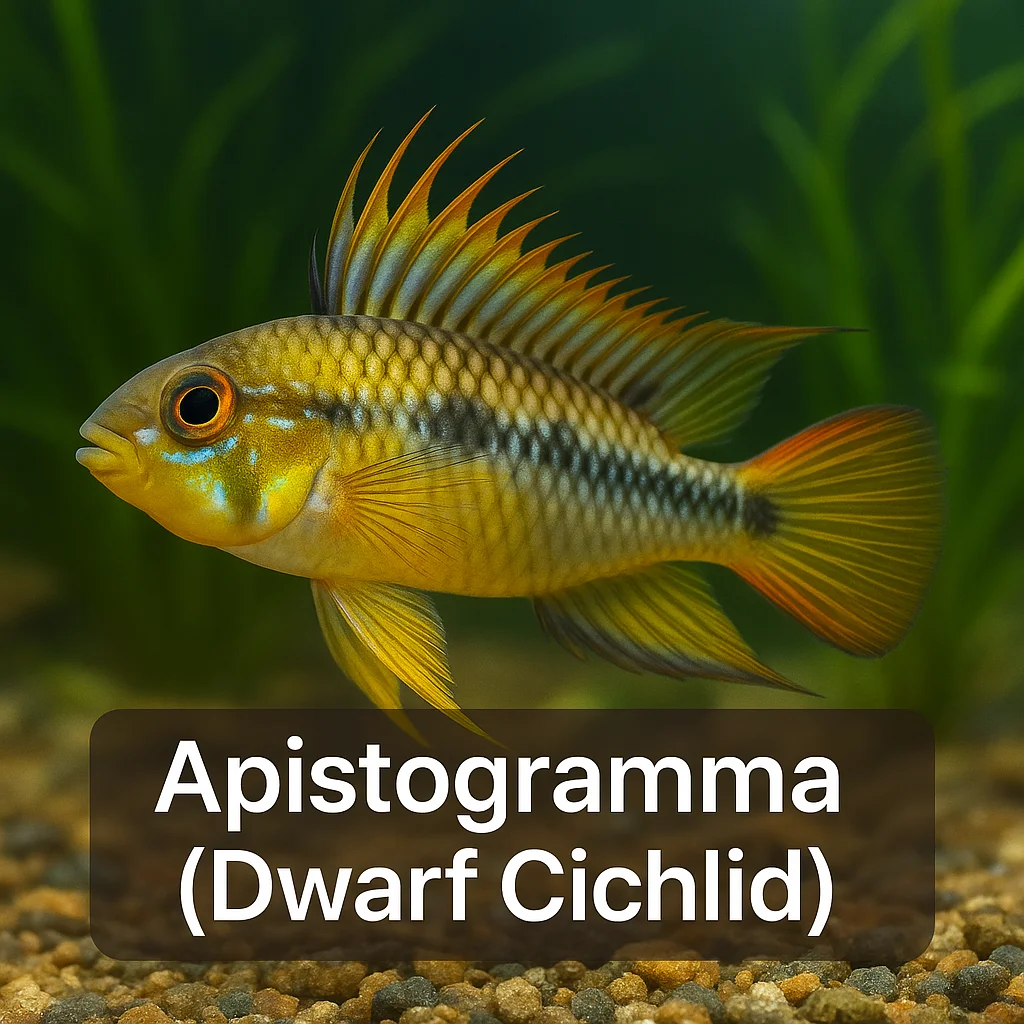
- Common names: Dwarf Cichlid, Apisto
- Scientific name: Apistogramma (varies by species)
- Freshwater
- Origin: South America, specifically Amazon Basin
- Typical adult size range: 3 – 5 cm (1.2 – 2 inches)
- Lifespan: 3 – 5 years (varies)
- Temperament: Semi-aggressive
- Recommended tank size: Minimum 60 liters (15 gallons)
- Water temperature range: 22 – 28°C (72 – 82°F)
- pH: Generally 6.0 – 7.5 (soft to slightly hard water)
- Diet type: Omnivore
- Activity zone: Bottom to mid-water levels
- Social needs: Pairs or harems
- Beginner suitability: Medium
🔍 Identification
Apistogramma cichlids are characterized by their compressed bodies and vivid coloration, which varies widely across species. Generally, they exhibit patterns of stripes or spots, with males often more colorful than females. Their dorsal fins are elongated and often feature an ornate pattern. In terms of sexual dimorphism, males typically are larger with more elaborate fin decorations.
- Top ID Tips:
- Compact body shape with elongated dorsal fins
- Wide color range - often bright blues, reds, or yellows
- Males are usually more colorful and larger than females
- Distinctive black markings along the body in many species
- Characteristic fin shapes with pointed tips
- Female coloration may intensify during spawning
- Whole fish visible with all fins when viewed in profile
🌍 Origin & Natural Habitat
Apistogramma species originate from the slow-moving waters of the Amazon River Basin. They are commonly found in shallow, soft waters with sandy substrates and abundant leaf litter. The natural habitat often includes shaded areas with abundant aquatic vegetation, providing ample hiding spots. Seasonal changes such as rainfall significantly impact water levels and habitat conditions, influencing breeding behaviors.
Understanding their natural habitat can help recreate similar conditions in aquariums, promoting better health and natural behaviors.
🧪 Tank Setup & Water Parameters
For optimal care, an Apistogramma tank should offer at least 60 liters (15 gallons) per pair, fitted with fine sand or soft substrates. Gentle water filtration mimicking their low-flow natural environments is preferred. Adding driftwood and leaf litter can help maintain lower pH levels while providing hiding places. Use subdued lighting to closely mimic their shaded natural habitat, and ensure plenty of hiding spots with plants or caves.
- Setup Checklist:
- Minimum tank size: 60 liters (15 gallons)
- Fine sand or soft substrate
- Gentle water flow
- Driftwood and leaf litter
- Plants for cover and hiding spots
- Subdued lighting
- Avoid sharp decor that may injure fins
🤝 Temperament & Compatibility
Dwarf Cichlids are generally semi-aggressive, especially during breeding when males may become territorial. They do well in a peaceful community tank setup when paired with compatible species such as small tetras, rasboras, or Corydoras catfish. They establish territories and exhibit pair-bonding or harem behaviors, best kept in a well-sized tank to dilute aggressiveness.
- Compatibility Notes:
- Best in pairs or harems
- Compatible with peaceful fish like small tetras and rasboras
- Avoid keeping with large or aggressive species
- Territorial behavior increases during breeding seasons
- Each individual may have unique temperamental differences
🍽️ Diet & Feeding
In the wild, Apistogramma are omnivorous, feeding on small invertebrates, plant matter, and detritus. In captivity, they thrive on a varied diet comprising high-quality flake food, pellets, frozen and live foods like brine shrimp or daphnia. Feeding should be done once or twice daily in small portions they can consume within a few minutes, ensuring leftover food does not spoil in the tank.
- Feeding Tips:
- Offer varied diet for optimal health
- Include live or frozen invertebrates for enrichment
- Feed small portions once or twice a day
- Avoid overfeeding; monitor for uneaten food
- Observe dietary preferences - some may favor live food
🧬 Growth, Color Changes & Lifespan
Juvenile Apistogramma are less colorful, gaining vibrancy with age and maturity. Environmental conditions such as stress can lead to muted colors or clamped fins, important cues for assessing fish well-being. Lifespan typically ranges from 3 to 5 years but varies with aquarium conditions, diet, and comprehensive care.
🪺 Breeding & Reproduction
Apistogramma cichlids are egg layers, often spawning in concealed locations like caves or dense vegetation. Females take over the care of eggs and fry, aggressively protecting them. Breeding is encouraged by mimicry of natural conditions, like slight water changes. Fried are typically fed with finely powdered foods or infusoria to promote healthy growth.
Breeding can be challenging due to specific conditions, often achieved by experienced aquarists.
🩺 Common Health Issues & Prevention
Like many aquatic species, Apistogramma may suffer from maladies such as ich, parasitic infections, and fin damage. Prevention includes maintaining a clean environment with good filtration, stable water parameters, and a balanced diet. It's vital to quarantine new fish, monitor for signs of disease and seek professional guidance for persistent issues.
- Prevention Basics:
- Quarantine new arrivals before introduction
- Monitor water quality regularly
- Provide varied and balanced diet
- Ensure stable and appropriate tank conditions
- Avoid overcrowding to reduce stress-induced illness
🌱 Role in the Aquarium
These fish add dynamism and color to community tanks, acting as a stunning centerpiece and interacting vibrantly with other species. They are peaceful with live plants, contributing positively to aquascapes without uprooting. Ethically, they should be sourced from reputable breeders, avoiding wild-caught individuals when it harms ecosystems.
📉 Conservation & Responsible Keeping
With habitat loss threatening wild populations, responsible keeping focuses on purchasing captive-bred Apistogramma. They should never be released into the wild, as they may disrupt local ecosystems. If rehoming is necessary, do so through trusted aquarist networks to ensure responsible ownership continuity.
- Responsible Keeping Tips:
- Prioritize captive-bred over wild-caught fish
- Never release into local ecosystems
- Consider future rehoming before purchase
- Educate on their care and habitat needs
- Support ethical breeding programs
📌 Summary
- Apistogramma are vibrant, small cichlids from South America
- Recognizable by their vivid colors and distinctive fin shapes
- Originates from the Amazon Basin's slow-moving waters
- Semi-aggressive, requiring carefully selected tankmates
- Omnivorous, thriving on varied home diets
- Moderate-level care and maintenance
- Breeding possible under ideal conditions but challenging
- Focus on captive-bred varieties for responsible keeping
- Never release pets into the wild or local waterways