🐠 Angelfish
🧾 Quick Facts
Angelfish are a popular group of aquarium fish appreciated for their striking appearance and graceful swimming habits. They are freshwater fish that belong to the cichlid family, and their unique body shape and vibrant colors make them a favorite among aquarists. Below are some key facts about angelfish:
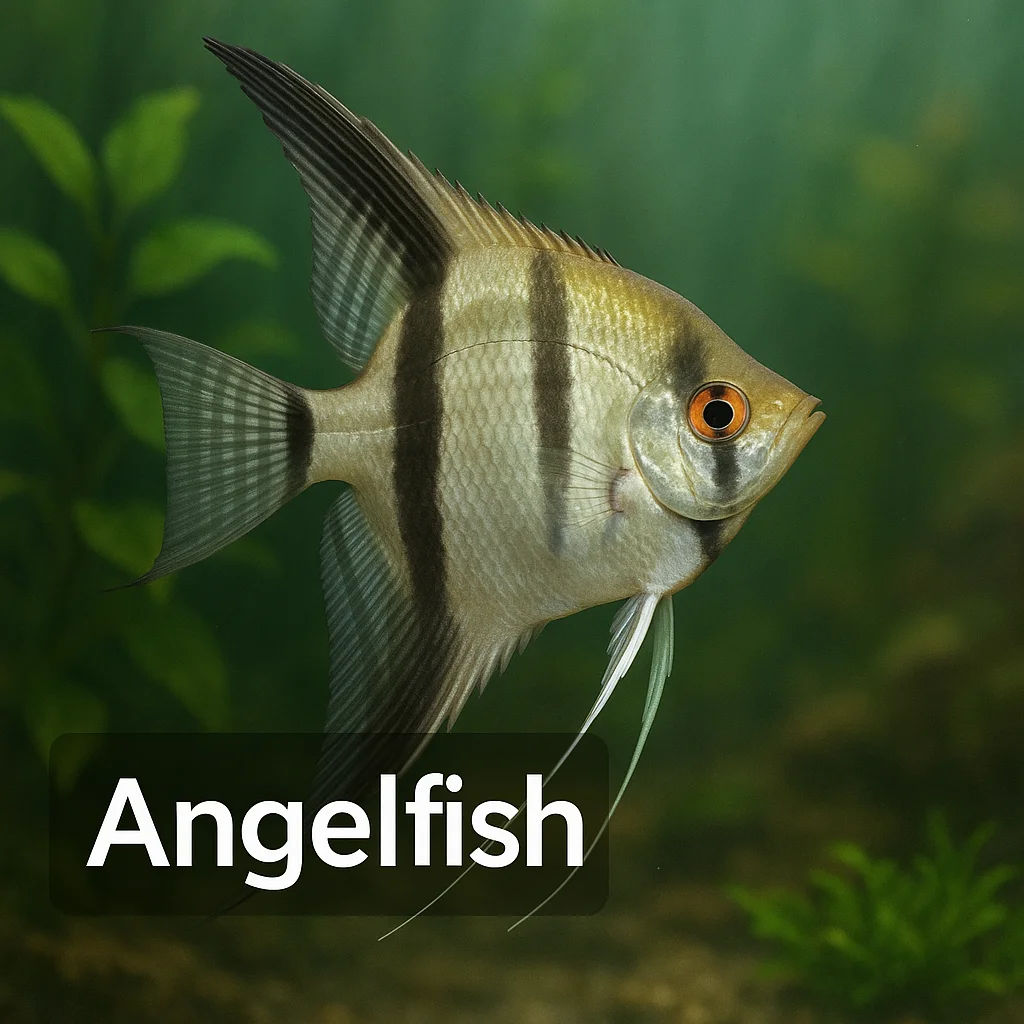
- Common names: Angelfish, Freshwater Angelfish
- Scientific name: Pterophyllum scalare (most common species; other species vary)
- Freshwater / Marine / Brackish: Freshwater
- Origin: Amazon Basin, South America
- Typical adult size range: 5 to 6 inches
- Lifespan: 8 to 12 years
- Temperament: Semi-aggressive
- Recommended tank size: Minimum 20 gallons (larger is better for groups)
- Water temperature range: 75 to 82°F
- pH / hardness: pH 6.5 to 7.5; soft to moderately hard water
- Diet type: Omnivore
- Activity zone: Mid to upper levels of the tank
- Social needs: Prefer to be kept in pairs or small groups
- Beginner suitability: Medium
🔍 Identification
Angelfish can be recognized by their tall, triangular bodies and flowing fins. Their dorsal and anal fins are long and pointed, while their pectoral fins are often extended and graceful. Angelfish come in various color patterns, including silver with black stripes, marble, gold, and koi varieties. Coloring can darken or lighten based on mood or stress. Males and females are difficult to distinguish visually.
- Top ID Tips:
- Tall, narrow body shape with elongated fins
- Commonly silver with vertical black stripes
- Fin extensions may vary by strain
- Ventral fins like delicate wires
- Mood-based color changes (lighter or darker)
- Similar to altum or leopoldi varieties (more elongated/darker spots)
- Look-alikes: Altum Angelfish and Leopold's Angel
🌍 Origin & Natural Habitat
Angelfish originate from the Amazon River Basin in South America, where they inhabit slow-moving streams, swamps, and flooded areas. These environments feature soft, acidic water and are rich in vegetation, providing ample hiding spots. The dense plant life and submerged roots offer a natural habitat where angelfish find food and protection from predators. Understanding their natural habitat helps aquarists replicate similar conditions to ensure their well-being in captivity.
🧪 Tank Setup & Water Parameters
Creating an ideal tank environment for angelfish involves ensuring adequate swimming space and a suitable habitat that mimics their natural surroundings. A tank of at least 20 gallons is recommended for a pair, with additional space preferred for groups.
- Setup Checklist:
- Tank size: Minimum 20 gallons, preferably tall tanks
- Moderate filtration with gentle flow
- Heater to maintain 75-82°F
- Substrate: Fine sand or smooth gravel
- Decor: Include driftwood, rocks, and vertical plants
- Lighting: Moderate, with shaded areas
- Provide ample hiding spots
🤝 Temperament & Compatibility
Angelfish are semi-aggressive and may exhibit territorial behavior, especially during breeding. They do well in community tanks with compatible species but could nip fins of slow-moving or long-finned fish. It's essential to monitor interactions and adjust tank mates if conflicts occur.
- Compatibility Notes:
- Best kept in groups of five or more to reduce aggression
- Compatible with similar-sized cichlids and peaceful fish
- Avoid housing with very small or fin-nipping species
- May become territorial during spawning
- Monitor interactions in community settings
🍽️ Diet & Feeding
In the wild, angelfish are omnivores, feeding on a variety of foods, including insects, worms, and plant material. In home aquariums, they thrive on a balanced diet consisting of high-quality flakes, pellets, frozen, or live foods. Offering a varied diet ensures their nutritional needs are met.
- Feeding Tips:
- Feed a mix of flakes, pellets, and frozen/live foods
- Include brine shrimp, bloodworms, and daphnia
- Feed twice a day, offering what they consume in 2-3 minutes
- Avoid overfeeding to prevent water quality issues
- Supplements: Occasional spirulina for varied nutrition
🧬 Growth, Color Changes & Lifespan
Juvenile angelfish are typically smaller and may show faint color patterns. As they mature, their colors can intensify and become more pronounced. Stressful conditions could cause colors to fade, while clamped fins might indicate discomfort.
Angelfish often live 8 to 12 years, with optimal lifespan achieved through proper tank size, diet, and water quality maintenance.
🪺 Breeding & Reproduction
Angelfish are egg layers that typically pair off and claim a territory for spawning. They clean a flat surface where they will lay eggs, which they guard diligently. Successful breeding may be challenging due to pair compatibility and environmental conditions.
Raising fry requires separate tank setups and feeding infusoria or specially prepared fry foods.
🩺 Common Health Issues & Prevention
Common health issues include ich, fin rot, and parasites, often stemming from poor water conditions or stress. Prevention strategies focus on maintaining clean environments, stable water parameters, and introducing new fish through quarantine.
- Prevention Basics:
- Quarantine new arrivals
- Maintain stable water parameters
- Avoid overcrowding
- Regular water changes
- Ensure a nutritious, varied diet
🌱 Role in the Aquarium
Angelfish serve as stunning centerpieces in community tanks. Their presence can add grace and elegance to an aquarium, but it's crucial to source them ethically. Opt for tank-bred individuals to avoid depleting wild populations and ensure healthy, adaptable fishes.
📉 Conservation & Responsible Keeping
When choosing angelfish, favor captive-bred over wild-caught specimens. This practice supports sustainability and often leads to hardier fish. Never release aquarium fish into the wild as it can disrupt local ecosystems.
- Responsible Keeping Tips:
- Choose captive-bred fish when possible
- Avoid releasing fish into natural waterways
- Research rehoming options for outgrown fish
- Educate new hobbyists on responsible fishkeeping
- Support sustainable breeding programs
📌 Summary
- Angelfish: Graceful, triangular body with flowing fins
- Origin from the Amazon Basin, South America
- Requires at least 20 gallons tank with gentle flow
- Semi-aggressive; watchful compatibility with other fish
- Omnivorous diet needing varied nutrition
- Medium difficulty for beginners
- Breeding may require separate setups
- Ethically choose captive-bred angelfish
- Commit to preventive measures for optimal health