🐠 African Cichlids (Mbuna)
🧾 Quick Facts
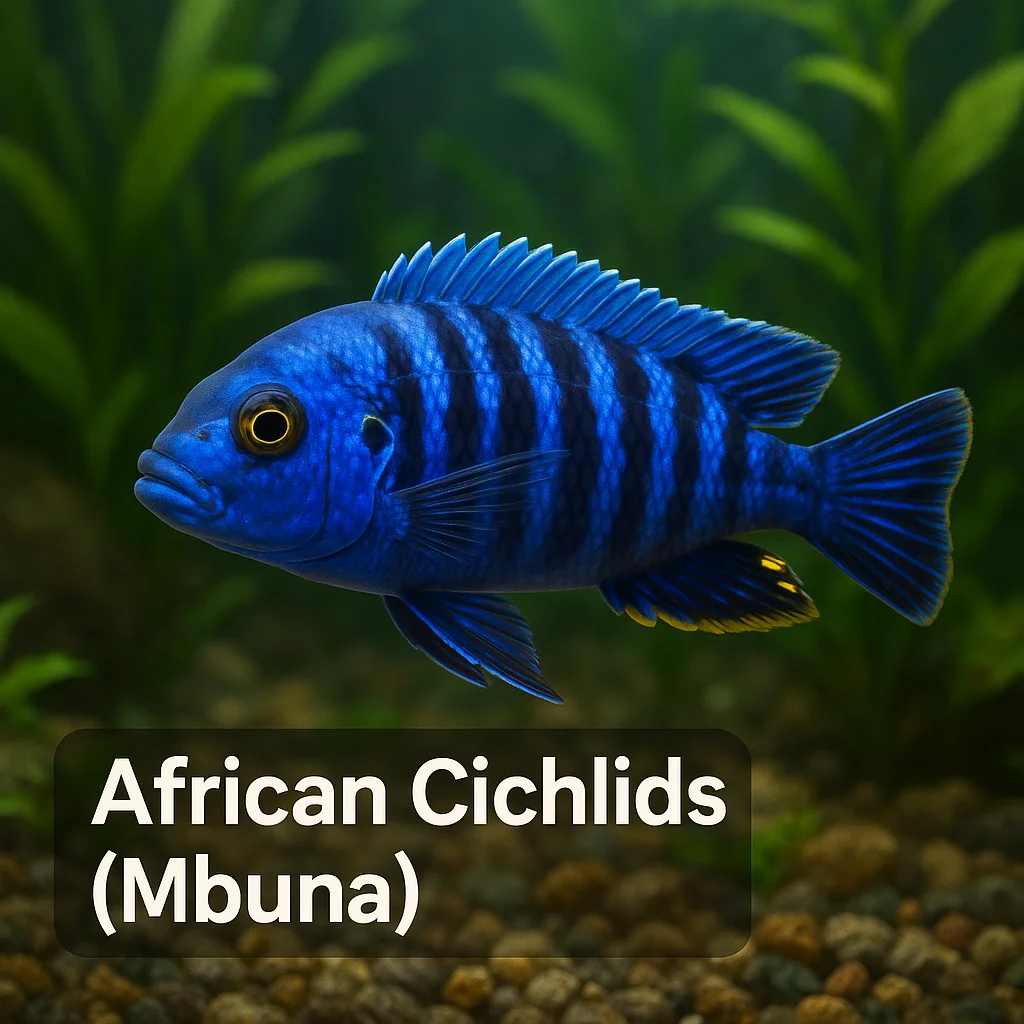
African Cichlids, often referred to as "Mbuna," are a captivating group of freshwater fish native to Lake Malawi in Africa. These vibrant fish are popular among aquarium enthusiasts for their dazzling colors and dynamic behaviors.
- Common names: Mbuna, Malawi Cichlids, Rock Dwellers
- Scientific name: Varies (Common genera include Pseudotropheus, Melanochromis, Labeotropheus)
- Freshwater
- Origin: Lake Malawi, Africa
- Typical adult size range: 4 to 6 inches (10 to 15 cm)
- Lifespan: 5 to 8 years
- Temperament: Semi-aggressive
- Recommended tank size: Minimum 30 gallons (bigger is better)
- Water temperature range: 75 to 82°F (24 to 28°C)
- pH / Hardness: pH 7.5 to 8.5, Hard water preferred
- Diet type: Herbivore
- Activity zone: Mid to bottom
- Social needs: Group of similar-sized Mbunas
- Beginner suitability: Medium
🔍 Identification
Mbuna are rock-dwelling cichlids known for their robust bodies and striking color patterns. They typically exhibit vibrant blues, yellows, and blacks, with intricate banding or blotching. Male Mbunas tend to have brighter colors compared to females. Their dorsal and anal fins are usually pointed and elongated, adding to their sleek silhouette. Identifying Mbuna involves noting their distinctive color patterns, which can shift based on mood or during breeding displays.
- Compact, robust body
- Vibrant color patterns, often striped or blotched
- Pointed and elongated dorsal and anal fins
- Males are more vividly colored than females
- Visible egg spots on anal fins of males
- Possible confusion with other cichlids; compare colors and patterns
- Color changes with mood or environmental conditions
🌍 Origin & Natural Habitat
Mbuna hail from Lake Malawi in Eastern Africa, one of the Great Rift Valley lakes. They are endemic to this region and inhabit rocky shorelines, where they establish territories among the rocks. The lake's waters are alkaline and stable, providing a consistent environment. Seasonal changes are minimal, but occasional rainfall can cause slight fluctuations. Understanding their habitat helps replicate their environment in home aquariums, emphasizing the need for rocky decor and stable water conditions.
🧪 Tank Setup & Water Parameters
Creating a suitable environment for Mbuna involves replicating their natural rocky habitat. A sturdy tank of at least 30 gallons is recommended, but larger tanks provide more space for territories and reduce aggression. Use robust filtration systems to maintain water quality and simulate moderate water flow.
- Tank size: Minimum 30 gallons
- Filtration: Strong filter for water clarity and flow
- Heating: Maintain 75 to 82°F (24 to 28°C)
- Substrate: Sand or small gravel
- Decor: Plenty of rocks and caves for hiding and territories
- Lighting: Moderate, avoid excessive brightness
- Hiding spots: Essential to reduce stress and aggression
🤝 Temperament & Compatibility
Mbuna are known for their territorial and semi-aggressive natures. They require careful selection of tank mates to prevent bullying. It's best to keep them in groups of similar-sized Mbunas, with multiple females to one male reducing aggressive behavior. They exhibit fascinating social behaviors during feeding and breeding but can become aggressive if improperly housed.
- Keep with similar-sized cichlids
- Avoid pairing with smaller or non-cichlid species
- Mix males with multiple females
- Risks with overly aggressive tankmates
- Watch for territorial disputes, especially in smaller tanks
- Individual temperament can vary; monitor adjustments
🍽️ Diet & Feeding
Mbuna are herbivores, feeding primarily on algae and plant matter. In aquariums, it's crucial to provide a balanced diet that mimics their natural consumption. Spirulina-based flakes or pellets are often used, along with occasional vegetable treats like spinach or peas. Overfeeding must be avoided, as it can lead to health issues.
- Spirulina flakes or pellets as staple food
- Supplement with fresh vegetables, such as spinach or peas
- Feed 2-3 times daily in small portions
- Avoid fatty or heavy protein foods
- Ensure diet variety to maintain health
- Remove uneaten food to maintain water quality
🧬 Growth, Color Changes & Lifespan
Juvenile Mbunas may appear more muted in color compared to adults, with their vibrant hues developing as they mature. Mood or breeding readiness can significantly affect their coloration, with stress often resulting in faded colors and clamped fins. Under optimal conditions, Mbunas can live between 5 to 8 years, with diet, tank size, and water conditions playing crucial roles in their longevity.
🪺 Breeding & Reproduction
Mbunas are mouthbrooders, where females incubate eggs in their mouths after spawning. The process begins with intricate courtship displays by males, often brightening their colors and showcasing their egg spots. In home aquariums, successful breeding may require controlled conditions, frequent water changes, and proper tank setups. Breeding is common but managing fry can be challenging due to potential aggression from adults.
🩺 Common Health Issues & Prevention
Mbunas can face health challenges, such as ich or fin rot, often due to stress, poor water quality, or inappropriate tank setups. Key preventive measures include quarantine of new fish, stable water conditions, and regular monitoring of their health signs.
- Quarantine new arrivals to prevent disease introduction
- Maintain stable water parameters to reduce stress
- Provide a varied diet to support immune health
- Avoid overstocking to minimize aggression-related injuries
- Regular water changes to maintain cleanliness
🌱 Role in the Aquarium
Mbuna bring dynamic activity and vibrant colors to any aquarium setup. They actively patrol their territories and can help with algae control due to their herbivorous diet. While not ideal for planted aquariums due to their digging tendencies, they make excellent centerpiece species in a cichlid-focused tank. Opt for captive-bred individuals to support sustainable aquarium practices.
📉 Conservation & Responsible Keeping
With many Mbuna species collected for the aquarium trade, choosing captive-bred fish helps conserve wild populations. Never release Mbunas into local waters, as they can disrupt ecosystems. Ensure you have a plan for rehoming if they outgrow your tank.
- Opt for captive-bred over wild-caught Mbunas
- Never release Mbunas into non-native waters
- Rehome through local clubs or aquarium associations if needed
- Research before purchase to ensure long-term viability
- Promote ethical fishkeeping by educating others
📌 Summary
- Mbuna are vibrant African cichlids from Lake Malawi
- Require rocky setups and stable water conditions
- Semi-aggressive, best kept with similar-sized cichlids
- Primarily herbivores with spirulina-based diets
- Medium difficulty level for committed hobbyists
- Capable of dynamic breeding behaviors
- Avoid occasions of aggression through proper tank setups
- Promote conservation by choosing captive-bred varieties