🐠 Sparkling Gourami
🧾 Quick Facts
The Sparkling Gourami, known for its iridescent colors and peaceful nature, is a favorite among aquarium enthusiasts. It's a small freshwater fish that provides vibrant beauty to any aquarium setup.
- Common names: Sparkling Gourami, Pygmy Gourami
- Scientific name: Trichopsis pumila
- Freshwater
- Origin: Southeast Asia (Thailand, Cambodia, Vietnam)
- Typical adult size range: 1.5 to 2 inches
- Lifespan: 3 to 5 years (varies)
- Temperament: Peaceful
- Recommended tank size: 15 gallons minimum
- Water temperature range: 72°F to 82°F
- pH guidance: 6.0 to 7.5, soft to moderately hard water
- Diet type: Omnivore
- Activity zone: Mid to top
- Social needs: Best kept in small groups or pairs
- Beginner suitability: Medium
🔍 Identification
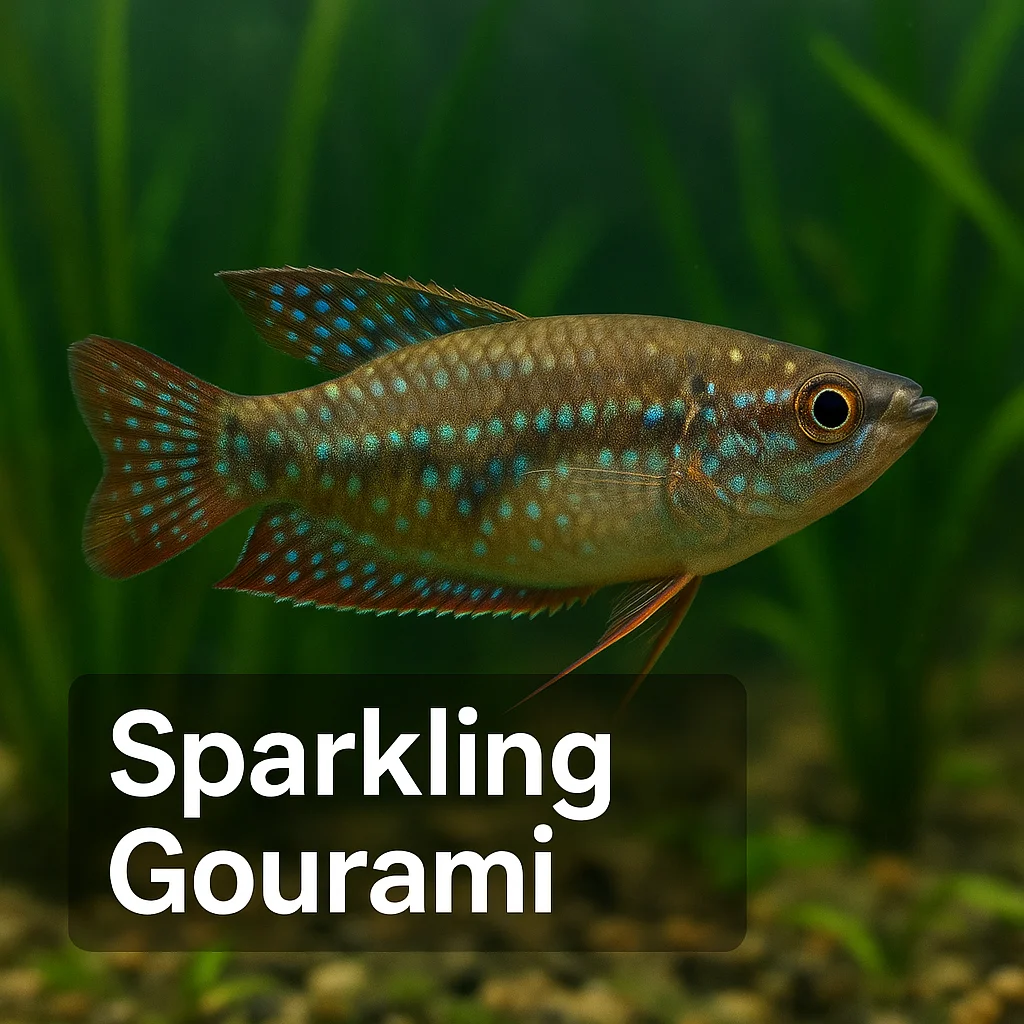
The Sparkling Gourami is recognized by its small, elongated body and bright iridescent colors that shimmer under aquarium lights. It displays a mixture of blue and green hues with distinctive spots along its body. In response to mood or environmental changes, its coloration can become more pronounced or subdued.
The fins are transparent with touches of red, and the tail shows a fan-like shape. Males often exhibit longer fin extensions than females. Identifying the difference between males and females can be subtle, primarily noted in fin length and more vibrant colors in males during breeding times.
Similar in appearance to other small gouramis, Sparkling Gouramis can be differentiated by their distinct color patterns and size.
- Elongated body shape
- Iridescent colors: blues and greens
- Transparent fins with red hues
- Spotted pattern along the body
- Male fin extensions
- Distinct shimmering in light
- Size typically under 2 inches
- Fan-like tail shape
🌍 Origin & Natural Habitat
Native to the slow-moving waters of Southeast Asia, Sparkling Gouramis inhabit areas like rice paddies, ponds, and shallow streams. These environments are often densely vegetated, providing plenty of cover and access to food sources such as small insects and plankton.
The natural habitats of these gouramis experience seasonal changes, typically marked by rainy and dry periods. Understanding their origin helps recreate suitable conditions in aquariums, promoting healthier fish and natural behavior exhibitions.
🧪 Tank Setup & Water Parameters
A well-planned aquarium setup is crucial for the thriving of Sparkling Gouramis. With their preference for calm waters, gentle filtration is advisable, along with a tank layout that simulates their natural habitat. Include plenty of plants, which offer hiding spaces and mimic their natural environment.
Tanks should be equipped with heaters to maintain a stable temperature due to their tropical origin. Lighting can be moderate, promoting plant growth without stressing the fish. Given their small size, horizontal swimming space is more crucial than death, so opt for a wider tank.
- 15-gallon tank minimum
- Gentle filtration system
- Stable water temperature between 72°F to 82°F
- Soft to moderately hard water
- Dense planting for cover
- Moderate lighting conditions
- Ample horizontal swimming space
- Include driftwood and rocks for decor
- Regular water changes (10-15% weekly)
🤝 Temperament & Compatibility
Sparkling Gouramis are generally peaceful and coexist well with similar-sized, non-aggressive fish. They thrive in community tanks where their gentle nature complements more active species and bottom-dwellers.
They can exhibit territorial behavior, especially during breeding. Therefore, providing plenty of hiding spots helps minimize stress interactions. Avoid housing with much larger or aggressive fish, which may outcompete them for food or intimidate them.
- Generally peaceful in community setups
- Territorial during breeding
- Compatible with small, non-aggressive fish
- Good tankmates: neon tetras, small rasboras
- Risky tankmates: aggressive cichlids, large predators
- Requires planting and decor for territory and privacy
- Behavioral variance per individual
- May exhibit shy tendencies in overly bright setups
🍽️ Diet & Feeding
In the wild, Sparkling Gouramis feed on a variety of small insects and zooplankton; in home aquariums, they accept a range of foods. A balanced diet of high-quality pellets or flakes supplemented with live or frozen offerings such as bloodworms and brine shrimp supports their health and vibrancy.
Feeding twice daily in small amounts ensures all fish have access to food, reducing waste and maintaining water clarity. Observing each fish eat helps monitor their health and wellbeing.
- Balanced diet: high-quality flakes/pellets
- Supplement with live or frozen food
- Feed twice daily in small servings
- Observe eating to ensure food consumption
- Avoid overfeeding to maintain water quality
- Variety helps maintain color and health
- May enjoy occasional vegetable treats
🧬 Growth, Color Changes & Lifespan
Juvenile Sparkling Gouramis are less colorful, with adults developing the full range of iridescent hues over time. Changes in color intensity can indicate mood or environmental stress, seen in subdued colors or clamped fins, often mitigated by stable conditions and minimal disruptions.
The lifespan of these gouramis ranges between 3 to 5 years, heavily influenced by tank conditions, diet, and genetic factors. Providing consistent care helps maximize their longevity in home settings.
🪺 Breeding & Reproduction
Sparkling Gouramis are bubble nest builders. Males construct nests using saliva and plant fragments at the water's surface to attract females for spawning. Successful breeding often requires careful tank preparation, with reduced water flow and ample surface cover conducive to nest building.
While not common in beginner tanks, breeding can occur when conditions such as higher temperatures and suitable nesting sites are provided. After spawning, males often tend to the nest until fry hatch, requiring careful feeding with infusoria and transitioning to larger food as they grow.
🩺 Common Health Issues & Prevention
Sparkling Gouramis, like many fish, can be susceptible to common freshwater ailments such as ich (white spot disease), fin rot, and parasites. Maintaining stable water conditions, quarantining new arrivals, and ensuring good nutrition and filtration significantly reduce the risk of disease.
- Quarantine new fish before introducing
- Maintain stable water conditions
- Do not overfeed
- Ensure good filtration and aeration
- Regular water changes and tank maintenance
- Avoid sudden changes in tank conditions
- Observe fish for unusual behavior
🌱 Role in the Aquarium
Sparkling Gouramis add beauty and tranquility to aquariums, enhancing the visual appeal with their shimmering colors. They are considered plant-safe, making them ideal for lushly planted setups. Their calm demeanor complements a peaceful tank atmosphere, benefiting community balance and interaction.
Choosing responsibly sourced Sparkling Gouramis helps ensure the sustainability of native populations, promoting ethical aquarium keeping by selecting captive-bred options over wild-caught specimens where applicable.
📉 Conservation & Responsible Keeping
While largely available in the aquarium trade as captive-bred, it is important to advocate responsible fish keeping. Never release any aquarium fish into the wild, as this can have harmful environmental impacts. If rehoming is necessary due to tank size or compatibility changes, contact local aquarist groups or pet stores for solutions.
- Opt for captive-bred individuals
- Never release into local waterways
- Rehome responsibly as tank needs change
- Support ethical fishkeeping practices
- Consider community swaps or forum listings
📌 Summary
- Recognizable by small size and iridescent colors
- Originates from Southeast Asia's slow waters
- Tank setup includes plants and gentle filtration
- Peaceful nature suits community aquariums
- Omnivorous diet with balanced feeding
- Medium difficulty for beginner aquarists
- Distinctive breeding with bubble nests
- Opt for captive-bred to support conservation
- Full tank setups enhance their natural behavior
- Require stable water conditions for health