🐠 Rummy Nose Tetra
🧾 Quick Facts
The Rummy Nose Tetra is a popular and visually appealing freshwater fish that is cherished by aquarists around the world for its unique coloration and peaceful demeanor. Despite the common name, "Rummy Nose Tetra" is not a single species but a collective term for three different species often found in the aquarium trade.
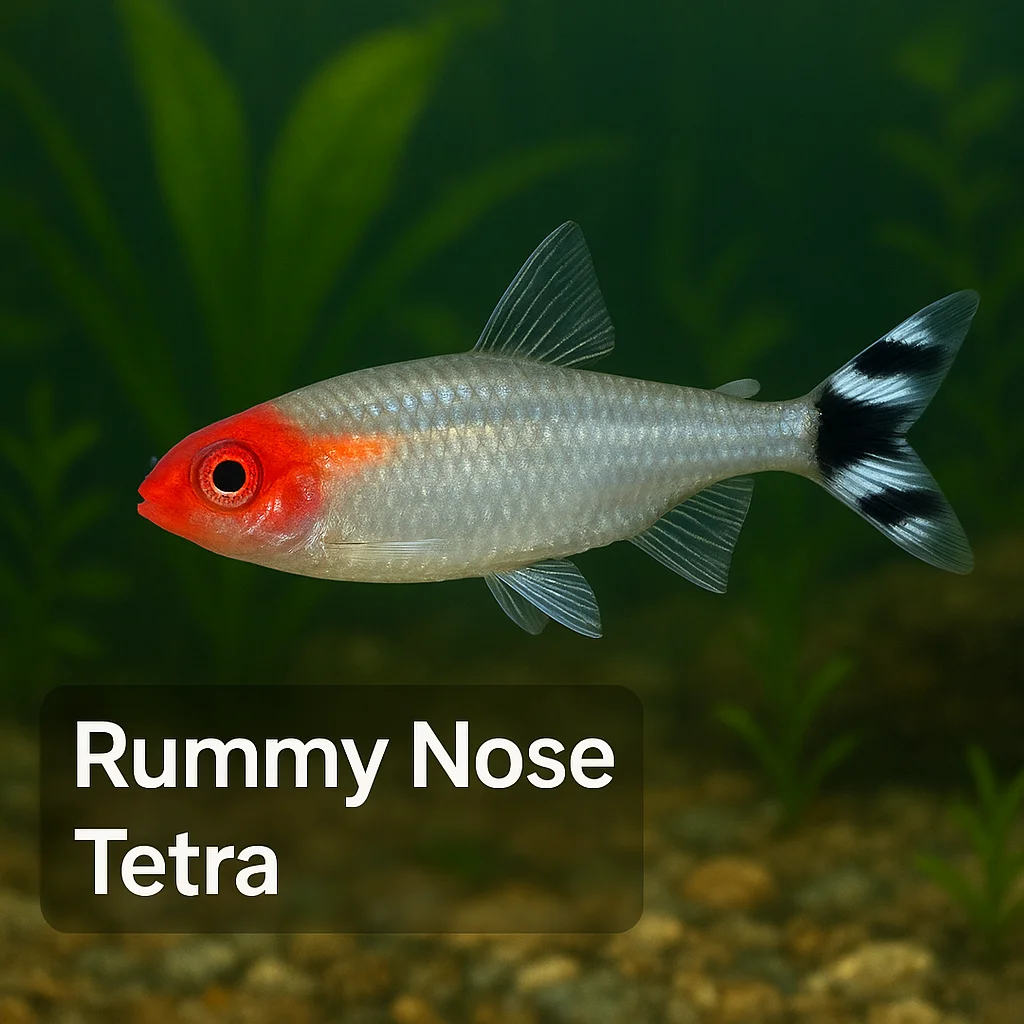
- Common names: Rummy Nose Tetra, Firehead Tetra, Red Nose Tetra
- Scientific name: Hemigrammus rhodostomus, Hemigrammus bleheri, Petitella georgiae
- Type: Freshwater
- Origin: Amazon River Basin, South America
- Typical adult size: 1.75 to 2 inches (4.5–5 cm)
- Lifespan: 5 to 6 years
- Temperament: Peaceful
- Recommended tank size: Minimum 20 gallons (bigger is better)
- Water temperature range: 75–82°F (24–28°C)
- pH / hardness: pH 5.5–7.0; soft to moderately hard water
- Diet type: Omnivore
- Activity zone: Midwater
- Social needs: Schooling
- Beginner suitability: Medium
🔍 Identification
The Rummy Nose Tetra is easily identifiable by its distinctive bright red nose and striking black and white striped tail. Their slender and elongated bodies are typically silvery, offering a stunning contrast with the vivid red snout. This coloration may intensify or fade slightly based on mood or health.
Their fins are mostly transparent, and males and females are virtually identical, with subtle cues such as slightly larger bodies in females during the breeding season.
- Red snout and forehead
- Black and white striped tail
- Silvery body
- Transparent fins
- Males and females look similar; size differences can be subtle
- Look-alikes may include other small, silver-bodied tetras without the distinct red head
🌍 Origin & Natural Habitat
Native to the Amazon River Basin in South America, the Rummy Nose Tetra inhabits slow-moving freshwater creeks and tributaries. These areas are rich in vegetation and often have sandy substrates, providing plenty of cover and dim lighting. This natural habitat experiences seasonal changes such as rainy and dry periods, which affect water levels and flow.
Understanding their natural habitat helps aquarists replicate similar conditions in the tank, promoting healthy behavior and coloration.
🧪 Tank Setup & Water Parameters
To successfully house Rummy Nose Tetras, consider a tank that provides enough open swimming space and maintains stable water conditions. A gentle filter system that simulates their natural habitat's slow flow is recommended.
Use a dark substrate such as river sand or fine gravel to mimic their natural environment, complemented by plenty of live plants for shelter and ambulating spaces. Dim lighting and floating plants can help create a more inviting atmosphere.
- Minimum 20-gallon tank
- Gentle filtration with consistent water flow
- Stable temperature around 75–82°F
- Dark substrate recommended
- Plenty of live plants and hiding spots
- Dim lighting and floating plants for cover
🤝 Temperament & Compatibility
Rummy Nose Tetras are peaceful and thrive when kept in groups of at least six, promoting natural schooling behavior and reducing stress. They are compatible with other small, non-aggressive fish but may feel overwhelmed by larger or aggressive tankmates.
They are active during the day, displaying graceful movements as they explore the midwater zone.
- Schooling species; best kept in groups
- Calm and non-aggressive
- Best with similarly sized peaceful tankmates
- Fine with other tetras, rasboras, peaceful barbs
- Avoid housing with large or aggressive fish like cichlids
- Activity varies with water parameters and social grouping
🍽️ Diet & Feeding
In the wild, Rummy Nose Tetras consume a balanced diet of small insects, zooplankton, and plant matter. In captivity, they adapt well to high-quality flake or pellet foods supplemented with live or frozen treats such as brine shrimp, daphnia, and bloodworms.
Feed them small portions two to three times daily, only what they can consume in a few minutes, to maintain water quality and prevent overfeeding.
- Accepts flake, pellet, frozen foods
- Supplement with live or frozen treats
- Feed 2-3 times daily in small amounts
- Maintain feeding variety for optimal health
- Avoid overfeeding to prevent water issues
- Observe for picky eating; adjust types as needed
🧬 Growth, Color Changes & Lifespan
As juveniles, Rummy Nose Tetras have less vivid colors, which develop with maturity. Environmental stress factors like poor water quality, incorrect parameters, or inadequate diet may cause color fading or diminished activity.
Overall, maintaining stable conditions in a well-planned setup can support their typical lifespan of 5 to 6 years, ensuring vibrant coloring and active swimming behaviors.
🪺 Breeding & Reproduction
Breeding Rummy Nose Tetras in home aquariums can be challenging but not impossible. They are egg-layers, often spawning when water conditions mimic their natural environment during rainy seasons—preferably in a dedicated breeding tank with soft, slightly acidic water and plenty of plants.
The parents do not exhibit brood care, so separating the eggs and raising fry in a controlled environment is necessary.
🩺 Common Health Issues & Prevention
Common issues include ich, fin rot, and bacterial infections, often triggered by poor water quality or stress. Prevent these by quarantining new arrivals, maintaining consistent water parameters, and avoiding overstocking.
- Quarantine new fish
- Keep water parameters stable
- Avoid overfeeding
- Regular tank maintenance
- Observe for early signs of disease
- Consult a professional if severe issues arise
🌱 Role in the Aquarium
Rummy Nose Tetras offer visual interest through their vibrant colors and schooling behavior, enhancing community aquariums' aesthetic appeal. They maintain a plant-safe demeanor and contribute to a peaceful, harmonious tank environment.
Opt to purchase from reputable breeders to avoid unsustainable wild collection practices which could affect natural populations.
📉 Conservation & Responsible Keeping
While they are often bred in captivity, some Rummy Nose Tetras are still wild-caught. Supporting captive breeding efforts ensures sustainable sources and less environmental impact. Never release them into local waters where they can become invasive.
Always have a plan for rehoming if their needs surpass your available space.
- Choose captive-bred over wild-caught
- Create a plan for long-term care
- Do not release into the wild
- Work with local fish clubs if rehoming
- Support sustainable fishkeeping practices
📌 Summary
- Iconic red nose and striped tail for easy identification
- Originates from the Amazon Basin with specific habitat needs
- Requires a stable setup with adequate swimming space
- Compatible with peaceful, similarly sized fish
- Omnivorous diet needs variety for best health
- Intermediate care level due to specific water parameter needs
- Avoid stress to maintain vivid colors and prevent health issues
- Breed with a thought-out plan, but can be challenging
- Choose ethical sources to support conservation