🐠 Pygmy Corydoras
🧾 Quick Facts
The Pygmy Corydoras are a fascinating group of small, peaceful freshwater fish, popular among aquarists for their charming behavior and ease of care. They are ideal for small community tanks and display intriguing social dynamics.
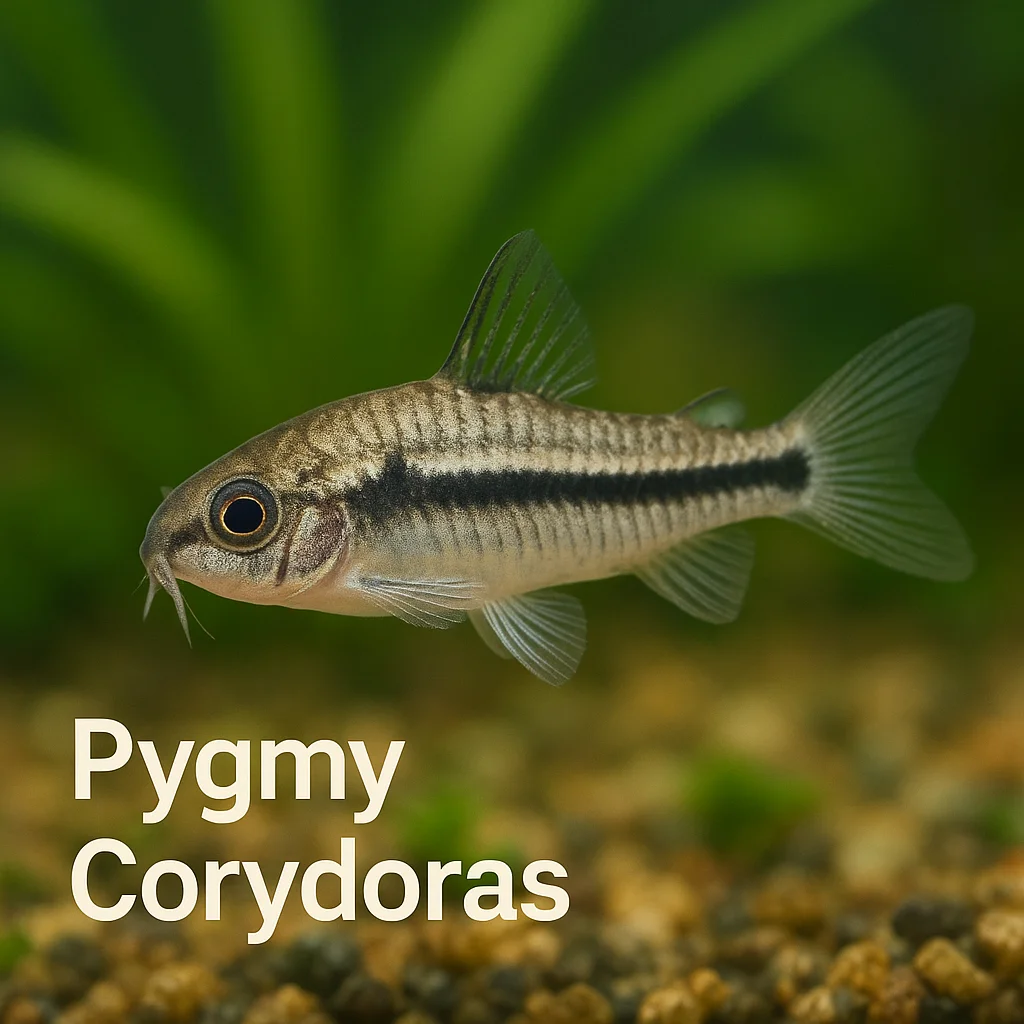
- Common names: Pygmy Cory, Dwarf Cory
- Scientific name: Corydoras pygmaeus
- Freshwater
- Origin: South America, specifically the Madeira River basin in Brazil
- Typical adult size range: 1-1.25 inches (2.5-3 cm)
- Lifespan: 3-5 years
- Temperament: Peaceful
- Recommended tank size: Minimum 10 gallons (38 liters); bigger is better
- Water temperature range: 22-26°C (72-79°F)
- pH: 6.0 - 7.5; soft to moderately hard water
- Diet type: Omnivore
- Activity zone: Bottom to mid-water
- Social needs: Schooling, prefer groups of 6 or more
- Beginner suitability: Easy
🔍 Identification
Pygmy Corydoras are easily recognizable by their small, slender bodies and their penchant for zipping around the tank in groups. Their coloration ranges from light grey to silvery with a distinct horizontal black line running from the nose through the body to the base of the tail. They might display varying hues depending on mood or water conditions. Pygmy Corys have rounded, overlapping scales and clear fins that may have hints of color in natural light. The differences between males and females can be subtle, typically with females being slightly larger and rounder when viewed from above.
- Slender, elongated body
- Horizontal black stripe along the body
- Clear fins with potential hints of color
- Males are often smaller and slimmer than females
- Look-alike species include other small Corydoras; differences in stripe patterns identify Pygmy Cory
- Color intensity may change with mood or environmental conditions
🌍 Origin & Natural Habitat
The Pygmy Corydoras hail from the Madeira River basin in South America, particularly within Brazil. In the wild, these fish inhabit slow-moving waters and floodplains where they seek refuge amid submerged vegetation and leaf litter. Such environments are characterized by soft, sandy substrates, often covered with fallen leaves and detritus. Seasonal changes, notably rainfall in their native habitat, influence water levels and chemistry, affecting their behavior and breeding. Understanding these conditions helps recreate a supportive environment in the aquarium, maximizing their well-being and reproducing natural behaviors.
🧪 Tank Setup & Water Parameters
When setting up a tank for Pygmy Corydoras, a spacious horizontal layout is crucial, allowing them ample room for their low-level exploration and schooling activities. Gentle filtration that provides a smooth flow mimics their natural habitats. Ensure stable temperatures with a reliable heater, and opt for a substrate of fine sand or smooth gravel to protect their delicate barbels. Adding live plants, driftwood pieces, and leaf litter will provide them with hiding spots and resemble their natural habitat, benefiting their comfort and health.
- Minimum tank size: 10 gallons (38 liters)
- Use gentle-flow filtration systems
- Maintain stable temperatures with a heater
- Soft, sandy substrate preferred
- Include plants, driftwood, and leaf litter for habitat resemblance
- Moderate lighting with dim areas for hiding
🤝 Temperament & Compatibility
Pygmy Corydoras are renowned for their peaceful disposition. Unlike some other small fish, they are social creatures often seen schooling in the middle and bottom levels of the tank. During feeding, they display synchronized movements that are delightful to observe. While they do well with most other peaceful community fish, avoid housing them with larger, aggressive species that could see them as prey. Suitable tankmates include small tetras, rasboras, and peaceful invertebrates.
- Schools best in groups of 6 or more
- Compatible with small, peaceful tankmates
- Enjoy synchronized swimming and feeding
- Avoid aggressive or large species as tankmates
- Exhibit tranquil behaviors enhancing community tanks
- Individual behavior may vary
🍽️ Diet & Feeding
In the wild, Pygmy Corydoras primarily feed on small invertebrates and organic matter found in the substrate. In aquariums, they readily accept a wide variety of foods. A balanced diet can include high-quality sinking pellets, flakes, and occasional frozen or live foods like daphnia or bloodworms for added protein. Feeding them small amounts multiple times a day ensures they get enough nutrition without overfeeding, which can foul the tank.
- Enjoys a varied diet of sinking pellets and high-quality flakes
- Supplement with live or frozen foods occasionally
- Feed in small, frequent portions
- Avoid overfeeding; monitor leftovers
- Ensure food reaches the lower levels of the tank
- Observe their feeding habits to adjust diet as needed
🧬 Growth, Color Changes & Lifespan
Pygmy Corydoras do not undergo significant color changes from juveniles to adults, although their body pattern may become more pronounced and their silvery hue more vibrant as they mature. Generally resilient, they require stable water conditions to thrive. Signs of stress in these fish can manifest as faded colors or clamped fins, so maintaining a clean environment is essential. With proper care, these fish can live for 3 to 5 years, though poor water quality or inadequate diet are common lifespan limiters.
🪺 Breeding & Reproduction
Pygmy Corydoras are egg layers, and while breeding in home aquariums is possible, it's not extremely common without focused effort. In nature, rising water levels or temperature changes often stimulate breeding. During spawning, females deposit eggs on aquarium walls, plants, or decor. While adults do not actively care for their eggs, providing hiding spots and gentle water flow can improve hatching success. Once hatched, fry benefit from infusoria or crushed flakes.
🩺 Common Health Issues & Prevention
Common health issues among Pygmy Corydoras include ich, fin damage, and various parasitic infections. Preventive measures are key, such as quarantining new arrivals, maintaining stable water parameters, and avoiding overfeeding to keep water clear and healthy. Using reputable sources for plant and fish purchases also helps avoid introducing pathogens.
- Quarantine new fish and plants
- Maintain stable water parameters
- Avoid overfeeding to prevent water quality issues
- Regular water changes and gravel vacuuming
- Observe for early signs of distress or illness
🌱 Role in the Aquarium
Pygmy Corydoras play a delightful role in community tanks, often moving in delightful synchrony and contributing to tank dynamics with their active grazing habits. They do not disturb plants and, therefore, are considered plant-safe. While they do not significantly control algae, they contribute to the cleaning of uneaten food particles in the substrate. Choosing captive-bred specimens is environmentally responsible and ensures better adaptability to home tanks.
📉 Conservation & Responsible Keeping
When keeping Pygmy Corydoras, it's crucial to rely on captive-bred sources, as over-collection from the wild can negatively impact native ecosystems. Never release them into local water bodies, and aim to rehome them responsibly if your tank becomes unsuitable. Educating oneself about their needs prior to acquiring them ensures long-term happiness and health for these charming fish.
- Prefer captive-bred over wild-caught if possible
- Avoid releasing into wild waters
- Research care needs before purchase
- Rehome responsibly if tank becomes unsuitable
- Support ethical and sustainable fish-keeping practices
📌 Summary
- Distinct small, slender body with a black lateral stripe
- Native to South American lakes and slow-moving waters
- Best in tanks with gentle filtration and sandy substrate
- Peaceful, school-loving fish for small community tanks
- Omnivorous diet with sinking pellets and occasional live foods
- Easy for beginners with consideration of their social needs
- Breeding possible but not typical in home aquariums
- Support conservation via captive-bred specimens
- Never release aquarium fish into local ecosystems