🐠 Pearl Danio
🧾 Quick Facts
Pearl Danios are small, active freshwater fish known for their shimmering, iridescent appearance. They make a popular choice for community aquariums due to their peaceful nature and ease of care.
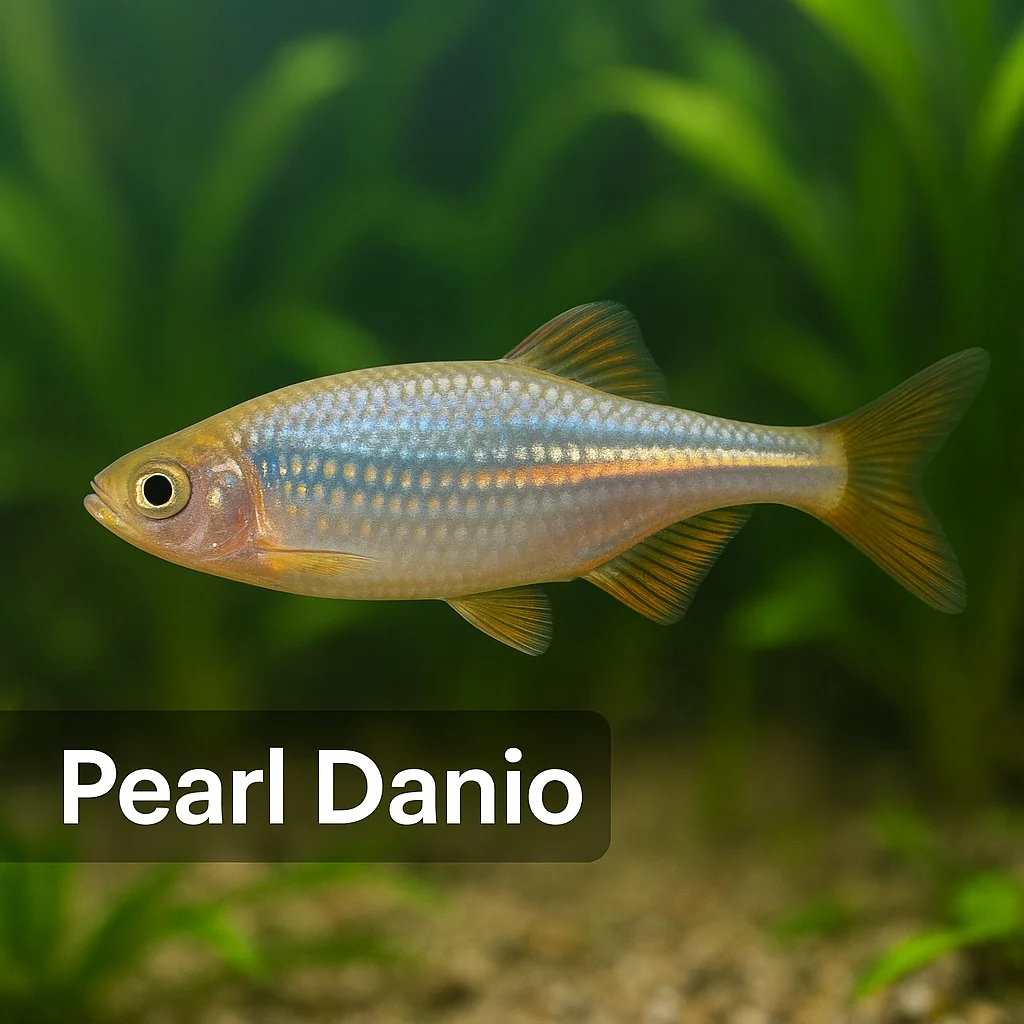
- Common names: Pearl Danio, Brachydanio albolineatus
- Scientific name: Danio albolineatus
- Environment: Freshwater
- Origin: Southeast Asia, primarily found in Myanmar, Thailand
- Typical adult size range: 1.5 to 2.5 inches (4 to 6 cm)
- Lifespan: 3 to 5 years
- Temperament: Peaceful
- Recommended tank size: 20 gallons (75 liters) minimum
- Water temperature range: 72°F to 78°F (22°C to 26°C)
- pH / hardness: pH 6.5 to 7.5; soft to moderately hard water
- Diet type: Omnivore
- Activity zone: Mid to upper levels of the tank
- Social needs: Schooling
- Beginner suitability: Easy
🔍 Identification
The Pearl Danio is easily recognized by its slim, torpedo-shaped body and its mesmerizing iridescent sheen that shifts between pink and blue, depending on lighting and viewing angle. Typically, its body is silvery-white with a distinct horizontal stripe running from just behind the eye to the tail. The fins are generally short and can exhibit a light pink hue.
Males often show more vibrant colors compared to females, which are slightly fuller around the abdomen, especially when carrying eggs. It's essential to distinguish the Pearl Danio from similar species like the Zebra Danio, which has bolder stripes and lacks the same shimmering effect.
- Slender, elongated body
- Iridescent pink-blue sheen
- Horizontal stripe running along the side
- Short, often pink-tinted fins
- Males are more colorful
- Females are rounder when breeding
- Avoid confounding with non-shimmering danios
- Full-body views show entire fish from snout to tail
🌍 Origin & Natural Habitat
The Pearl Danio hails from Southeast Asia, predominantly in Myanmar and Thailand. Naturally, they inhabit clear streams and rivers with gentle currents. The water in these regions varies seasonally, with periods of heavy rainfall that increase water flow and influence the availability of food sources.
Their natural environment usually consists of gravel or sandy substrates, often adorned with rocks and dense aquatic vegetation. Understanding their habitat needs helps recreate a suitable environment in an aquarium, facilitating natural behavior and coloration.
🧪 Tank Setup & Water Parameters
To keep Pearl Danios healthy in an aquarium, it's crucial to provide ample swimming space as they are active swimmers. A minimum of 20 gallons is recommended, but larger tanks are always beneficial. Due to their schooling nature, they should be kept in groups of at least six to mimic their natural social structure.
Install a reliable filtration system to maintain clean and oxygenated water, with moderate water movement simulating their stream habitat. A heater can ensure temperatures remain within their preferred range. Use fine gravel or sand for the substrate, and incorporate live plants and open swimming areas. Adding rocks or driftwood will offer hiding spots.
- Provide a tank of at least 20 gallons
- Keep in groups of 6 or more
- Moderate water flow with effective filtration
- Substrate: fine gravel or sand
- Incorporate live plants
- Maintain a temperature range of 72°F to 78°F
- Use rocks or driftwood for hiding spots
- Avoid extreme lighting; moderate is best
🤝 Temperament & Compatibility
Pearl Danios are known for their peaceful temperament, making them a desirable addition to community tanks. They thrive when kept in groups due to their schooling nature, which also helps mitigate stress.
They are fast swimmers and tend to stay in the mid-to-upper levels of the tank. When feeding, they exhibit lively activity but are generally non-aggressive. Suitable tankmates include other peaceful species like tetras, guppies, and other danios. Avoid large or aggressive fish that may see them as prey.
- Thrive in schools; minimum of six
- Peaceful behavior, active swimmers
- Compatible with tetras, guppies, small barbs
- Avoid pairing with large or aggressive fish
- Occupy mid-to-upper tank levels
- Sociable during feeding times
- Behavior varies by individual; monitor interactions
🍽️ Diet & Feeding
In the wild, Pearl Danios are omnivores. They typically feed on small insects, zooplankton, and plant matter. In an aquarium setting, a varied diet that includes quality flake foods, small pellets, and live or frozen offerings like brine shrimp or daphnia will keep them healthy. Feeding them twice a day with amounts they can consume within a few minutes prevents overfeeding and helps maintain water quality.
- Offer quality flake and small pellet foods
- Include live/frozen food: brine shrimp, daphnia
- Feed twice daily in moderate portions
- A surface and midwater feeder
- Ensure varied diet to maintain health and color
- Avoid overfeeding to prevent water fouling
🧬 Growth, Color Changes & Lifespan
Pearl Danios start life as smaller, less colorful juveniles and achieve full size around 1.5-2.5 inches. Their distinct iridescence becomes more prominent as they mature. Mood can temporarily affect color intensity, with stress causing fading. When stressed, they may exhibit clamped fins or reduced activity, which shouldn't be ignored. A healthy environment and proper feeding contribute to their vibrant hues.
The typical lifespan of a Pearl Danio ranges from 3 to 5 years, influenced by factors such as diet, water quality, and stress levels.
🪺 Breeding & Reproduction
Pearl Danios are egg layers and can spawn in captivity under the right conditions. They require slightly warmer water and a privacy-rich tank environment to encourage spawning behavior such as active chasing and courtship displays. The female scatters eggs among plants or over a spawning mop where they adhere.
Post-spawning, adults generally do not care for the eggs, which hatch within 2-3 days. Raising fry requires small, frequent feedings of infusoria or finely crushed flake food.
🩺 Common Health Issues & Prevention
Like many tropical fish, Pearl Danios may face common ailments such as ich (white spot disease), fungal infections, or parasitic infestations. Maintaining stable water parameters, implementing quarantine protocols for new arrivals, and avoiding packed tanks will minimize health risks. Regular monitoring and prompt responses to signs of illness help in maintaining their well-being.
- Quarantine new fish introductions
- Maintain clean and stable water conditions
- Avoid overcrowding the tank
- Immediately isolate sick or stressed fish
- Regular observation to catch issues early
🌱 Role in the Aquarium
Pearl Danios contribute significantly to the dynamic activity of a community freshwater tank. Their constant movement and striking colors often serve as a focal point. These fish are generally plant-safe, adding vibrancy without harming foliage. Ethically, they should be sourced from reputable breeders, ensuring a captive-bred specimen that reduces the impact on wild populations.
📉 Conservation & Responsible Keeping
While not currently under significant threat in their natural habitat, responsible aquarium practices are vital. Opt for captive-bred individuals to support sustainable practices and decrease the demand for wild-caught fish. Never release aquarium fish into the wild, as this disrupts local ecosystems. Should a Pearl Danio outgrow its intended environment, consider verified rehoming options through aquarist communities.
- Choose captive-bred over wild-caught
- Never release into the wild
- Rehome responsibly if necessary
- Support ethical breeding programs
- Educate others on responsible fishkeeping
📌 Summary
- Identifiable by iridescent shimmer and stripe
- Originates from Southeast Asia's streams
- Requires a tank of 20 gallons or larger
- Peaceful, compatible with small community fish
- Feeds on a varied omnivorous diet
- Suitable for beginners (ease of care)
- Avoid high-stress tank environments
- Breeding possible with specific conditions
- Maintain water quality to prevent health issues
- Opt for captive-bred for sustainability