🐠 Lambchop Rasbora
🧾 Quick Facts
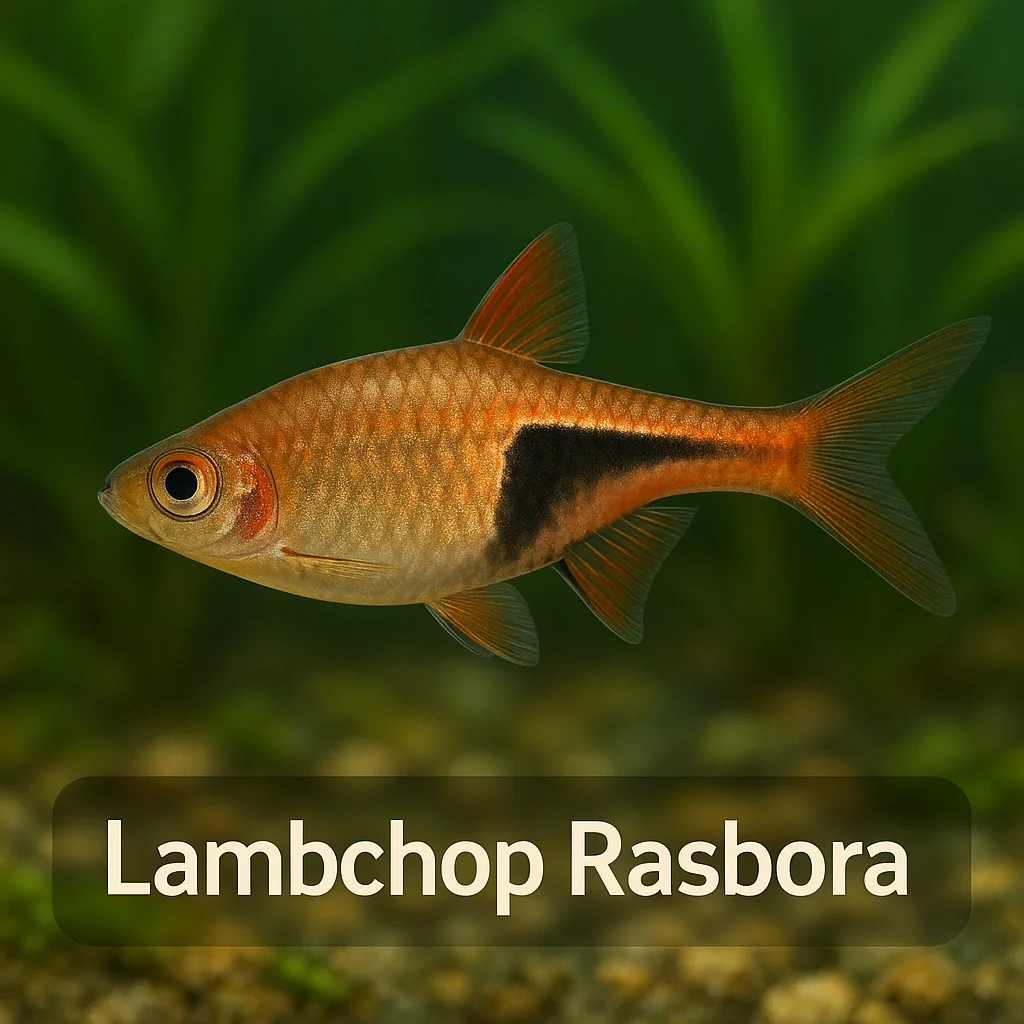
The Lambchop Rasbora, scientifically often listed as Trigonostigma espei, is a small and attractive freshwater fish, popular among aquarium enthusiasts for its vibrant coloration and lively behavior. It is an excellent choice for community tanks, offering a peaceful demeanor and compatibility with a wide range of tank mates.
- Common names: Lambchop Rasbora, Espe's Rasbora
- Scientific name: Trigonostigma espei
- Water type: Freshwater
- Origin: Southeast Asia (Thailand, Cambodia)
- Typical adult size range: 2 to 2.5 cm (0.8 to 1 inch)
- Lifespan: 3 to 5 years
- Temperament: Peaceful
- Recommended tank size: Minimum 38 liters (10 gallons)
- Water temperature range: 23°C to 28°C (73°F to 82°F)
- pH guidance: 6.0 to 7.5
- Diet type: Omnivore
- Activity zone: Mid-level
- Social needs: Schooling
- Beginner suitability: Easy
🔍 Identification
The Lambchop Rasbora is characterized by its sleek, torpedo-shaped body, which is narrow yet robust. The most striking feature is the distinctive black, lambchop-shaped marking on its side, which gives it its common name. This mark stands out against its vibrant orange or reddish body, becoming more intense with age and breeding conditions. Fins are generally translucent with a hint of orange.
Males typically exhibit brighter colors than females, whose hues may appear subtler. While there may be slight differences, these are subtle and may vary between individuals.
When distinguishing the Lambchop Rasbora from similar species such as the Harlequin Rasbora, look for a more narrowed, pointed black marking in the latter. Accurate identification may require close observation, especially in a community tank setting.
- Slender, torpedo-shaped silhouette
- Distinctive lambchop mark on the sides
- Vibrant orange/reddish body coloration
- Males have brighter hues
- Translucent fins with an orange tint
- Similar to but distinguishable from Harlequin Rasbora
- Marking differences with similar species help ID
- Subtle differences in males and females
🌍 Origin & Natural Habitat
The Lambchop Rasbora originates from Southeast Asia, primarily in the calm, slow-moving waters of Thailand and Cambodia. These environments often consist of shallow streams and peat swamps with dense vegetation and sandy or muddy substrates. The water is typically acidic due to decaying plant matter, and the areas are well-shaded by overhead foliage.
Understanding their natural habitat aids in recreating suitable conditions in the aquarium, including the provision of ample plant cover and maintenance of water parameters that mimic their native waters for optimal health and coloration.
🧪 Tank Setup & Water Parameters
A spacious tank with a soft substrate, such as sand, is recommended to accommodate the Lambchop Rasbora's active swimming and schooling needs. Filtration should produce minimal current to mimic their natural environment, while sufficient water circulation maintains oxygen levels.
Opt for a heater to maintain water temperatures within their preferred range, and consider a setup that includes live plants, such as Java fern and Anubias, which provide cover and reduce stress. Dim lighting is preferred to parallel their natural shading.
- Minimum 38-liter (10-gallon) tank recommended
- Soft, sandy substrate
- Filter with low current
- Aquarium heater to maintain warmth
- Dense planting with shade
- Reliable lid to prevent jumping
- Regular water parameter checks
- Routine cleaning without disturbing substrate
🤝 Temperament & Compatibility
Lambchop Rasboras are peaceful, social creatures that thrive in groups of six or more, which encourages natural schooling behavior and reduces stress. They exhibit curious, non-aggressive behavior, making them ideal for community setups.
Compatible tank mates include other peaceful fish such as small tetras, guppies, and dwarf gouramis. Be cautious with larger or aggressive species, which may outcompete them for food or cause stress.
- Peaceful and social species
- Best kept in schools of 6 or more
- Compatible with other small, peaceful fish
- Avoid larger or aggressive tank mates
- May compete during feeding, so ensure fair distribution
- Behavior may vary among individuals
🍽️ Diet & Feeding
In the wild, the Lambchop Rasbora feeds on small insects, zooplankton, and plant material. In captivity, they accept a varied diet including high-quality flakes, micro pellets, and live or frozen foods like bloodworms and daphnia.
Feed small amounts twice daily, ensuring all individuals have access to food. Their omnivorous diet supports a balanced intake of proteins and plant matter, promoting vibrant color and energy.
- High-quality flakes and micro pellets are staples
- Supplement with live/frozen foods for variety
- Feed twice daily in small portions
- Allocate food evenly to avoid competition
- Occasional green foods can be beneficial
- Ensure a varied diet for best health
🧬 Growth, Color Changes & Lifespan
Juvenile Lambchop Rasboras are paler with less defined markings, gaining vibrancy as they mature. Color intensity may fluctuate with mood or during breeding, often intensifying in males during courtship.
Signs of stress, such as clamped fins or color fading, usually indicate environmental issues. Maintaining stable conditions supports a lifespan of 3 to 5 years, with diet and water quality being critical factors.
🪺 Breeding & Reproduction
Breeding Lambchop Rasboras in captivity is possible but may require specific conditions. They are egg scatterers, releasing eggs among dense vegetation where they adhere to plant surfaces. Males often display intensified coloration as part of courtship.
After spawning, remove adults to prevent egg predation. Feed the fry a diet of infusoria or specially formulated fry food. Breeding may not always occur in community tanks due to conditions or stress factors.
🩺 Common Health Issues & Prevention
While generally hardy, Lambchop Rasboras can be susceptible to common issues such as ich, fin damage, or internal parasites. The best prevention includes stable water parameters, good filtration, and quarantine of new additions.
- Ensure stable water conditions
- Quarantine new arrivals
- Maintain good filtration
- Avoid sudden temperature or pH shifts
- Prevent overfeeding to reduce waste
- Observe regularly for unusual behavior
🌱 Role in the Aquarium
Lambchop Rasboras add vibrant color and dynamic activity to freshwater community tanks. Their peaceful nature and schooling behavior contribute to a harmonious environment, providing visual interest for both hobbyists and tank mates.
Purchase from reputable suppliers to avoid supporting harmful wild-capture practices, and ensure they are kept in suitable environmental conditions to prevent stress and maintain health.
📉 Conservation & Responsible Keeping
Opting for captive-bred Lambchop Rasboras helps reduce pressure on wild populations and ensures healthier specimens. Never release them into the wild, as they can disrupt local ecosystems.
If rehoming is necessary, consider aquarium clubs or pet shops capable of accommodating them responsibly.
- Buy captive-bred to lessen wild collection impact
- Rehoming options include clubs or pet shops
- Never release into local waters
- Ensure tank suitability to prevent stress
- Regular observation helps early issue detection
📌 Summary
- Small, vibrant freshwater fish; ideal for community tanks
- Originates from Southeast Asia, found in slow-moving streams
- Easy to care for with a minimum 38-liter (10-gallon) tank
- Prefers soft substrate, low current, and ample plant cover
- Peaceful and schools well; compatible with other small fish
- Omnivorous, feed varied diet twice daily
- Breeding possible under optimal conditions with rich vegetation
- Watch for stress indicators like clamped fins or color fade
- Role in tanks includes schooling dynamics and color vibrancy
- Opt for captive-bred to conserve wild populations
- Rehome responsibly if needed; avoid releasing into the wild