🐠 Kuhli Loach
🧾 Quick Facts
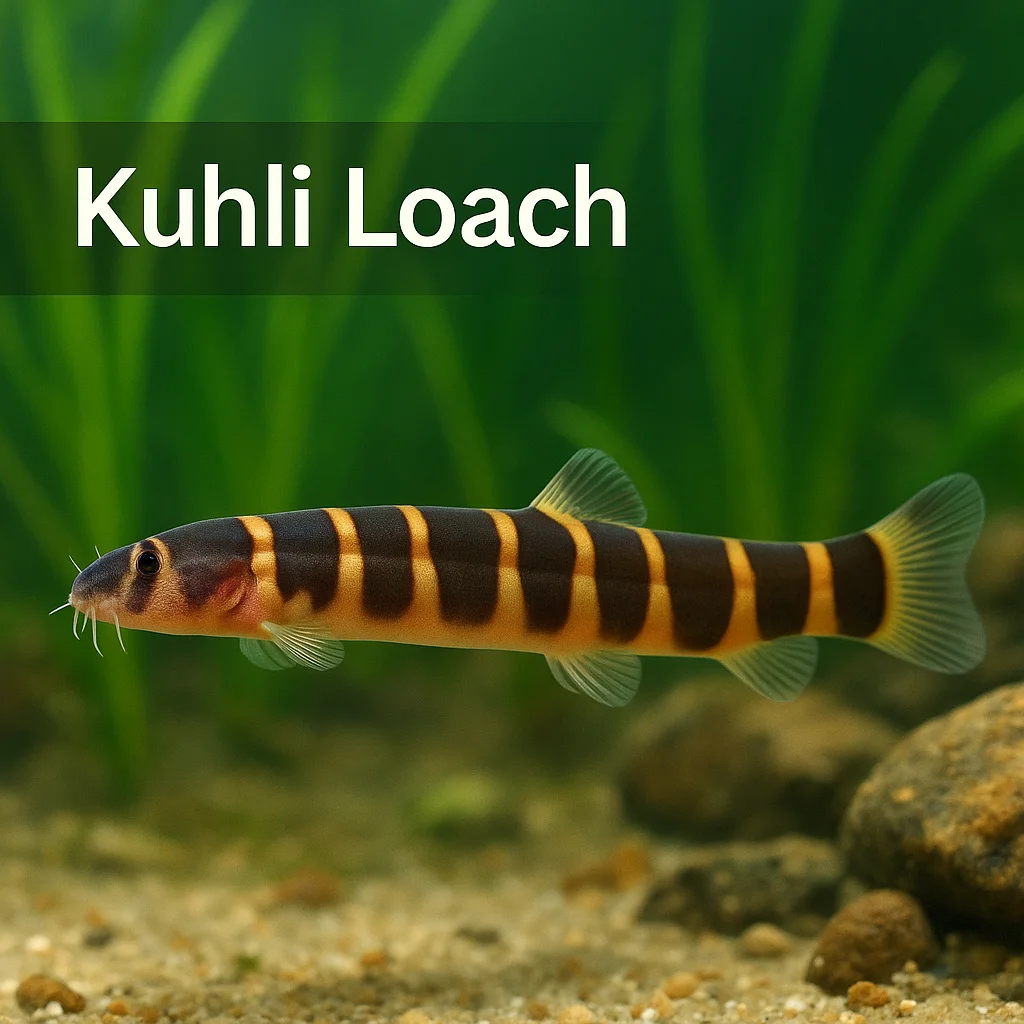
The Kuhli Loach, a popular choice among aquarium enthusiasts, is a small, eel-like freshwater fish known for its fascinating behavior and charming appearance.
- Common names: Kuhli Loach, Coolie Loach
- Scientific name: Pangio kuhlii (varies across similar species)
- Type: Freshwater
- Origin: Southeast Asia, Indonesia, Malaysia, Thailand
- Typical adult size: 3.5 – 5 inches (9 – 12 centimeters)
- Lifespan: 5 – 10 years (varies)
- Temperament: Peaceful
- Recommended tank size: 20 gallons minimum
- Water temperature range: 75°F – 86°F (24°C – 30°C)
- pH guidance: 5.5 – 6.5
- Diet type: Omnivore
- Activity zone: Bottom
- Social needs: Schooling
- Beginner suitability: Medium
🔍 Identification
Recognizing the Kuhli Loach involves observing its slender, eel-like body, distinct banded pattern, and smooth fins. The body is usually light to dark brown with yellow to orange bands. These colors might appear duller in stress or low light.
- Body shape: Slender, eel-like
- Color pattern: Banded pattern of yellow and brown
- Fin shapes: Smooth, rounded pectoral and caudal fins
- Male vs female: Subtle/varies; females tend to be slightly larger
- Common look-alikes: Other Pangio species, Leopard Loach
- Top ID Tips:
- Look for its characteristic banding
- Check for its slender, elongated shape
- Observe its movement at the bottom of the tank
- Note the lack of visible scales
- Look for antennae-like barbels near the mouth
- Distinct from Leopard Loach by Kuhli’s narrower stripes
🌍 Origin & Natural Habitat
The Kuhli Loach originates from Southeast Asia, broadly inhabiting slow-moving streams and floodplains. These waters are typically shaded, with soft, acidic conditions and a sandy or muddy substrate. The loach thrives in regions with abundant leaf litter and dense plant cover, which offers shelter and food.
Understanding its habitat aids in replicating favorable tank conditions. Kuhli Loaches prefer calm waters with plenty of hiding spots and soft substrates to mimic their natural environment.
🧪 Tank Setup & Water Parameters
Setting up a tank for a Kuhli Loach involves considering their need for bottom space due to their bottom-dwelling nature. A minimum of 20-gallon tank is recommended, with a focus on horizontal space and good hiding spots such as caves or driftwood. A sandy substrate mimics their natural habitat, and consider adding live plants.
- Tank size: 20 gallons minimum
- Filtration: Moderate flow, gentle filtration
- Substrate: Sand or smooth gravel
- Decor: Caves, plants, driftwood
- Lighting: Low to moderate
- Hiding spots: Essential for stress relief
- Setup Checklist:
- Ensure stable, soft water parameters
- Provide adequate filtration with gentle flow
- Secure hiding spots to replicate their natural habitat
- Avoid sharp substrate or decor
- Maintain consistent temperature within their preferred range
- Incorporate live plants as part of the decor
🤝 Temperament & Compatibility
Kuhli Loaches are peaceful and communal, displaying a preference for being in groups. They are predominantly nocturnal and may seem shy during the day, becoming more active when evening arrives. While generally compatible with other peaceful species like tetras or rasboras, avoid housing them with aggressive or significantly larger fish.
- Schooling behavior: Best kept in groups of 5 or more
- Peaceful demeanor, avoids conflict
- Compatibility with small, non-aggressive species
- Risky tankmates: Avoid large or aggressive species
- Not territorial; rarely initiates disputes
- Compatibility Notes:
- Compatible with small, peaceful community fish
- Avoid large predators like cichlids
- Enjoys hiding, hence best kept with other bottom dwellers
- Individual behavior may vary, observe interactions
- Provide enough space to reduce competition for space
🍽️ Diet & Feeding
In the wild, Kuhli Loaches scavenge for detritus, small invertebrates, and plant matter. In captivity, they adapt to a varied diet that includes sinking pellets, frozen bloodworms, and brine shrimp. Feeding should be conducted in the evening or night to match their natural feeding behavior.
- Staple foods: Sinking pellets, algae wafers
- Treat foods: Bloodworms, brine shrimp
- Feeding frequency: Once or twice daily
- Adapts well to a mixed diet
- Requires some focus on bottom-feeder foods
- Feeding Tips:
- Feed after lights are dimmed for evening activity
- Ensure appropriate sinking food is available
- Offer varied diets to avoid nutritional gaps
- Monitor feeding to avoid food waste
- Supplement with live or frozen foods occasionally
🧬 Growth, Color Changes & Lifespan
Kuhli Loaches do not undergo significant color changes with age, but their intensity may fluctuate based on mood or stress. Adult loaches are slightly larger than juveniles, and any stress affecting them is observed through subtle color fading or increased hiding.
Their lifespan, typically ranging between 5 to 10 years, is largely influenced by tank conditions, diet, and water quality. Stress signs should be minimized by ensuring stable environmental conditions and appropriate companionship.
🪺 Breeding & Reproduction
Breeding Kuhli Loaches in home aquariums is uncommon, primarily due to their specific spawning requirements. They are egg layers that exhibit sporadic breeding behavior, usually triggered by changes in water conditions that mimic the onset of a rainy season. Providing a heavily planted breeding tank could encourage spawning, though egg and fry care is minimal, as the parents do not exhibit extensive parental behaviors.
Feeding the fry with small live foods can aid their development, although results on breeding attempts vary widely among hobbyists.
🩺 Common Health Issues & Prevention
Kuhli Loaches are susceptible to common aquarium diseases such as ich and bacterial infections, frequently exacerbated by poor water quality or fluctuating conditions. Quarantine new additions, maintain stringent tank hygiene, and avoid overfeeding to help prevent infestations.
- Common issues: Ich, fin rot, and parasitic infections
- Prevention: Ensure stable water parameters and filtration
- Quarantine new introductions to prevent spread
- Avoid sudden changes in temperature or water chemistry
- Prevention Basics:
- Conduct regular water changes
- Observe fish for any signs of distress or illness
- Implement a suitable quarantine protocol for new fish
- Ensure balanced diets with sufficient nutrition
- Maintain mechanical and biological filtration efficiency
🌱 Role in the Aquarium
Kuhli Loaches contribute to community tanks by maintaining the substrate's cleanliness as they scavenge for food remnants. While not effective algae eaters, their activity keeps the tank lively, and they blend well into plant-heavy aquariums due to their peaceful nature. Ethically, it's recommended to purchase these loaches from reputable captive-bred sources to avoid harmful impacts on wild populations.
📉 Conservation & Responsible Keeping
The tension between captive-bred and wild-caught Kuhli Loaches centers on sustainability. Captive breeding reduces the environmental impact on native habitats and ensures healthier specimens for aquariums. Always avoid releasing aquarium fish into local ecosystems, seeking rehoming options through responsible channels if necessary.
- Encourage captive-bred purchases to protect wild populations
- Never release aquarium fish into natural water bodies
- Consider rehoming options if fish outgrow the environment
- Responsible Keeping Tips:
- Source fish from reputable breeders
- Plan for long-term care before acquisition
- Educate on the species' needs before purchasing
- Keep informed about conservation issues affecting species
- Engage with communities promoting sustainable practices
📌 Summary
- Kuhli Loach is a peaceful, eel-like freshwater fish ideal for community tanks
- Originates from Southeast Asia, preferring slow-moving, soft waters
- Minimum 20-gallon tank with sandy substrate and hiding spots recommended
- Best housed in groups with small, non-aggressive species
- Omnivorous diet with a focus on sinking foods like pellets and worms
- Sensitivity to water quality necessitates careful parameter monitoring
- Breeding in captivity is rare, requiring specific conditions
- Captive-bred sources preferred over wild-caught to conserve wild populations
- Engage responsibly by planning for long-term care and potential rehoming