🐠 Dwarf Pleco (small species)
🧾 Quick Facts
The Dwarf Pleco commonly refers to various small species of Plecostomus, loved by aquarists for their manageable size and algae-eating capabilities. These freshwater dwelling fish are native to South America and have been selectively bred and kept worldwide due to their adaptability and unique appearances.
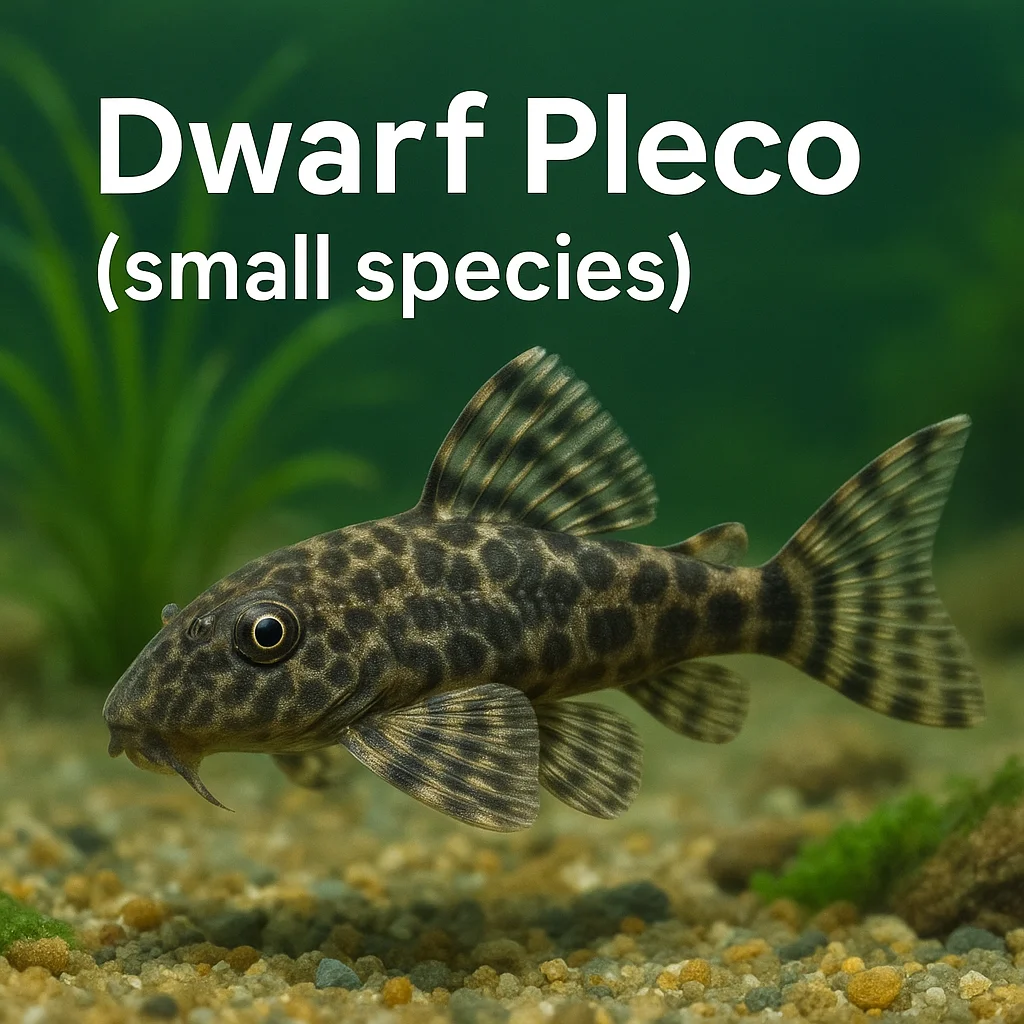
- Common names: Dwarf Pleco, Clown Pleco, Bristlenose Pleco
- Scientific name: Varies (includes species like Panaqolus maccus, Ancistrus sp.)
- Freshwater / Marine / Brackish: Freshwater
- Origin: South America (Amazon Basin, Orinoco River)
- Typical adult size range: 2-5 inches
- Lifespan: 5-10 years (varies)
- Temperament: Peaceful
- Recommended tank size: 20 gallons minimum
- Water temperature range: 72-82°F
- pH / hardness: pH 6.5-7.5; soft to moderately hard water
- Diet type: Omnivore
- Activity zone: Bottom
- Social needs: Solitary or small groups
- Beginner suitability: Easy
🔍 Identification
Dwarf Plecos are distinguishable by their flattened bodies and sucker mouths, designed for clinging to surfaces. Their coloring ranges from brown to black with lighter stripes or spots, which may change based on mood or environment. The flared pectoral fins and sometimes bristled noses add to their familiar silhouette.
- Compact, flattened body shape for substrate attachment
- Color varies with environment: browns, blacks, stripes, or spots
- Bristles on the nose are more prominent in males
- Fins have characteristic flaring
- Distinguishable from larger plecos by size and more elaborate markings
- Juveniles are often brighter than adults
🌍 Origin & Natural Habitat
Dwarf Plecos originate from the rich, flowing streams and rivers of South America, notably in the Amazon and Orinoco basins. These environments have soft substrates with abundant driftwood, rocks, and shaded areas formed by plants. The seasonal changes between wet and dry periods influence water levels and flow, which are aspects to consider in the aquarium.
Understanding their natural habitat assists in recreating an environment that promotes health and longevity in home aquariums. By simulating the presence of driftwood and providing hiding spots, aquarists can ensure a habitat that mimics their natural environment.
🧪 Tank Setup & Water Parameters
An ideal setup for Dwarf Plecos involves a tank size of at least 20 gallons, with a focus on bottom space for their active scavenging. A good filtration system is crucial to maintain water quality, with moderate water flow to replicate riverine conditions.
Use a soft substrate to protect their delicate undersides, and include driftwood and caves for hiding. These fish prefer low to moderate lighting which aligns with their shaded natural habitats. Driftwood is not only decorative; it provides beneficial tannins and fibers in their diet.
- Minimum tank size of 20 gallons
- Use a reliable filtration system with moderate flow
- Maintain water temperature between 72°F and 82°F
- Incorporate driftwood and caves for hiding
- Soft substrate such as sand or fine gravel
- Moderate lighting conditions
- Regular water changes to ensure quality
🤝 Temperament & Compatibility
These small plecos are generally peaceful and get along well with other non-aggressive tank mates. They tend to be solitary or form small, non-schooling groups. During feeding and occasional breeding, they may exhibit mild territorial behaviors.
Good tankmates include small to medium-sized peaceful fish like tetras, rasboras, and Corydoras. Avoid aggressive or large fin-nipping species.
- Compatible with peaceful community fish
- Avoid housing with fin-nippers
- Fine with other bottom dwellers, space permitting
- Tends to be more active during night hours
- Breeding may incite mild territorial behavior
- Individual behavior can vary slightly from typical descriptions
🍽️ Diet & Feeding
In the wild, Dwarf Plecos feed on algae and detritus, making them effective cleaners. In an aquarium, a balanced diet comprises algae wafers, vegetables like zucchini or cucumber slices, and occasional protein-rich snacks such as bloodworms or brine shrimp.
Feed once or twice daily, ensuring not to overfeed. Regularly offering fresh vegetables helps meet their herbivorous needs while supplementing their diet with protein strengthens overall health.
- Vegetables like zucchini should be weighted down in the tank
- Use sinking pellets and algae wafers as staples
- Match feeding schedule to their nocturnal activity
- Avoid overfeeding to maintain water quality
- Remove uneaten food to prevent decay
🧬 Growth, Color Changes & Lifespan
Juvenile Dwarf Plecos often exhibit brighter patterns which may fade as they mature. Their coloration can also change slightly based on mood, breeding phase, or environment adjustments, such as increased hiding behaviors or duller colors, often indicating stress.
Providing ample hiding spots and maintaining good water quality are pivotal in managing stress levels. They typically live between 5 to 10 years with proper care.
🪺 Breeding & Reproduction
Dwarf Plecos are egg layers, but breeding in a home aquarium is uncommon without specific conditions. Usually, males guard hidden nests within driftwood or rock caves where the female deposits her eggs. Successful breeding might require adjustments like creating more hiding spaces and slightly raising temperatures.
The fry generally subsists on biofilm and blanched vegetables, transitioning to protein and algae wafers as they grow.
🩺 Common Health Issues & Prevention
Common issues include fungal infections and ich, often appearing due to stress or poor water quality. Prevention relies heavily on maintaining stable water parameters and minimizing stressors.
A quarantine tank is beneficial for new introductions to minimize the spread of disease. Regular tank maintenance and monitoring are vital to keeping plecos healthy.
- Ensure stable water parameters and regular filtration
- Perform regular, small water changes
- Quarantine new additions before introducing them
- Provide a stress-free environment with hiding places
- Monitor for common signs of distress or illness
🌱 Role in the Aquarium
Dwarf Plecos contribute significantly to aquarium health by helping control algae growth, thus maintaining cleaner tanks. Their gentle temperament and distinctive appearance also add aesthetic value to the setup without posing threats to plants or tank mates under typical conditions.
Opting for captive-bred species when possible supports ethical aquarium practices. Invasive potential is aacknowledged, hence careful handling and rehoming strategies are respectively advised in nongrowing conditions.
📉 Conservation & Responsible Keeping
When choosing Dwarf Plecos, always seek captive-bred individuals to reduce pressure on wild populations. Never release them into local waterways as they can become invasive. If your fish outgrows its home, consider rehoming options through local aquarist clubs or sustainable fish-keeping resources.
- Choose captive-bred over wild-caught when possible
- Never release into the wild
- Consider rehoming if tank conditions change
- Educate others on ethical fishkeeping
- Support sellers who prioritize sustainablesourcing practices
📌 Summary
- Dwarf Plecos encompass various small, manageable species
- Originating from South America's river basins
- Requires an aquarium setting with driftwood and hiding spots
- Peaceful temperament compatible with community tanks
- Omnivorous diet focused on algae and supplemented greens
- Highly suitable for beginner aquarists
- Role as natural tank cleaners
- Ethical considerations on sourcing methods critical
- Rehoming advised if tank capacity is exceeded