🐠 Chili Rasbora
🧾 Quick Facts
Chili Rasbora is a popular small freshwater fish often recommended for nano tanks due to its vibrant colors and peaceful nature. These fish are well-regarded for their schooling behavior and add a dynamic flair to community tanks.
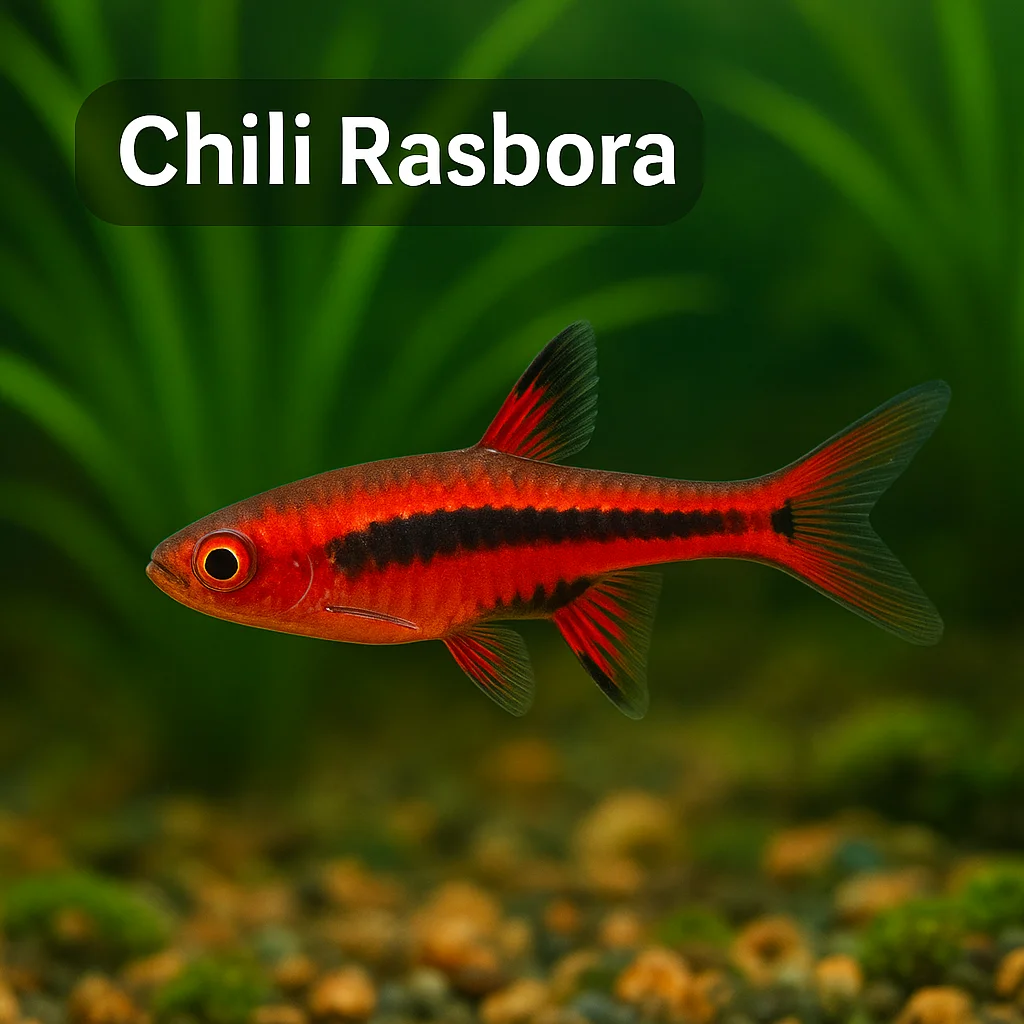
- Common names: Chili Rasbora, Mosquito Rasbora
- Scientific name: Boraras brigittae
- Freshwater / Marine / Brackish: Freshwater
- Origin: Southeast Asia, particularly Borneo in Indonesia
- Typical adult size range: 1.6–2.0 cm (0.6-0.8 inches)
- Lifespan: Typically 4-8 years
- Temperament: Peaceful
- Recommended tank size: Minimum 20 liters (5 gallons); larger preferred for schools
- Water temperature range: 22–28°C (72–82°F)
- pH / hardness: Slightly acidic to neutral, pH 5.0–7.0; soft water preferred
- Diet type: Omnivore
- Activity zone: Mid to top layers of the aquarium
- Social needs: Schooling fish; keep in groups of six or more
- Beginner suitability: Medium
🔍 Identification
The Chili Rasbora is a diminutive gem in the aquarium world, known for its slender, torpedo-shaped body adorned with striking red and black hues. Its vivid colors are more pronounced in males and during courtship. The eyes often have an iridescent quality that catches the light beautifully, adding an extra level of appeal.
- Body shape: Slender and elongated, typical of rasbora species.
- Key colors/patterns: Mainly red with a distinctive black line running from nose to tail.
- Fin shapes: Rounded fins with translucent pigmentation.
- Male vs female cues: Males are generally more colorful and slimmer; females are slightly larger and fuller-bodied.
- Common look-alikes: Similar to other Boraras species but distinguished by specific coloration and patterning differences.
- Top ID Tips
- Look for the black horizontal stripe along the body.
- Fin transparency with slight red tones is typical.
- Note the small size, rarely exceeding 2 cm in captivity.
- Males often exhibit more vibrant colors compared to females.
- Schools tightly in numbers, which enhances their visual appeal.
- Eyes have an iridescent glint under good lighting.
🌍 Origin & Natural Habitat
Chili Rasboras originate from the densely vegetated, slow-moving waters of Borneo, Indonesia. They are typically found in shallow streams and swampy forest areas with a lot of leaf litter, providing ample hiding spaces.
Their native waters are soft and acidic, driving the importance of replicating these conditions in captivity for their health and vibrant coloration. Understanding their natural habitat helps in providing a suitable environment in the aquarium, which includes using a lot of aquatic plants and maintaining a gentle water flow.
🧪 Tank Setup & Water Parameters
When setting up a tank for Chili Rasboras, consider their natural habitat for an optimal environment. Start with a well-planted aquarium, using live plants to offer hiding spots and to promote natural behaviors. These fish appreciate dimmer lighting; consider floating plants to diffuse the light.
Ensure the tank offers sufficient horizontal swimming space along with a gentle water flow to mimic their natural slow-moving waters.
- Setup Checklist
- Minimum 20 liters (5 gallons) aquarium; larger for schools.
- Install efficient filtration but ensure gentle water flow.
- Use a heater to maintain temperature between 22–28°C (72–82°F).
- Substrate can be sand or fine gravel, typical of their natural river beds.
- Incorporate plenty of live plants, providing both cover and enrichment.
- Consider floating plants to reduce light and simulate natural canopy cover.
- Ensure water quality with regular changes to keep parameters stable.
🤝 Temperament & Compatibility
Chili Rasboras are extremely peaceful, thriving best in schools. They display a heightened sense of security and exhibit more natural and lively behavior when kept in groups of six or more. This schooling nature not only enhances their wellbeing but also the aesthetic appeal of the aquarium.
Due to their small size, they are best housed with other similarly peaceful and small fish species. Avoid aggressive or significantly larger tank mates that may stress them or view them as prey.
- Compatibility Notes
- Schooling fish; keep in groups of six or more.
- Ideal for community tanks with other peaceful species.
- Do not house with large, predatory fish.
- Compatible with small tetras, dwarf shrimp, and snails.
- A lively addition to nano tank ecosystems.
- Stress-reducing when kept in well-planted, stable environments.
🍽️ Diet & Feeding
In the wild, Chili Rasboras consume a variety of tiny invertebrates and plant matter. In home aquariums, they adapt well to a diet of high-quality micro foods. It's important to provide a mix of live, frozen, and dried foods to ensure a balanced diet.
Feed multiple small meals throughout the day, ensuring that all fish catch their fair share. Their small mouths make them suited for micro pellets, baby brine shrimp, and daphnia.
- Feeding Tips
- Offer a varied diet of micro pellets and live/frozen food.
- Feed small quantities multiple times a day.
- Focus on sinking and floating foods, as they inhabit mid to upper tank areas.
- Include high-quality micro foods for proper nutrition.
- Monitor to avoid overfeeding, which can affect water quality.
🧬 Growth, Color Changes & Lifespan
Chili Rasboras are known for their vibrant coloration which can intensify under optimal conditions. Stress, poor water quality, or inadequate diet can affect their colors, often resulting in paleness or clamped fins.
Juveniles generally sport less intense colors compared to adults, but these can deepen with age and proper care. Lifespan on average ranges from 4 to 8 years when maintained under suitable conditions, with stable water quality and a varied diet being crucial factors.
🪺 Breeding & Reproduction
Breeding Chili Rasboras in home aquariums is possible but can require specific conditions. They are egg layers, often scattering eggs among plants without subsequent care. To encourage spawning, maintain slightly acidic water with a temperature around the upper range of their comfort zone.
While breeding unfocused tanks may result in feeding by adults on their eggs or fry, dedicated breeding setups with fine-leaved plants can help protect eggs until they hatch. Fry are diminutive and require infusoria or commercially prepared fry foods when they first emerge.
🩺 Common Health Issues & Prevention
Chili Rasboras are generally hardy if their environmental conditions are met. Susceptible to common issues like ich and fin rot, it is crucial to maintain stable parameters and practice regular tank maintenance. Always quarantine new additions to prevent the introduction of diseases.
- Prevention Basics
- Regular water changes maintain quality and stability.
- Quarantine new arrivals before adding them to a community tank.
- Monitor for signs of stress and immediately adjust environment if needed.
- Avoid overfeeding to maintain water quality.
- Constantly check for early signs of diseases like ich or velvet.
🌱 Role in the Aquarium
Chili Rasboras bring color and life to planted aquascapes and nano tank setups. They play a vital role in community setups due to their peaceful nature and compatibility with similarly sized and tempered species.
While not significant algae consumers, their schooling behavior promotes community balance. Always choose specimens from reputable breeders or suppliers focused on sustainable breeding practices, avoiding wild-caught varieties when it risks ecosystem damage.
📉 Conservation & Responsible Keeping
As with all aquarium species, opting for captive-bred Chili Rasboras helps protect wild populations and encourages sustainable practices. Never release aquarium fish into local waterways due to possible ecological impact.
- Responsible Keeping Tips
- Choose captive-bred individuals to prevent wild population depletion.
- Research ethical breeders or suppliers for new collection additions.
- Never release into local ecosystems.
- Consider community swap events for rehoming oversized groups.
- Support eco-friendly practices in aquarium goods and livestock.
📌 Summary
- Chili Rasbora (Boraras brigittae) is a small, vibrant, freshwater species.
- Native to slow-moving waters of Borneo, Indonesia.
- Requires a minimum 20-liter tank, preferably with more space for groups.
- Peaceful; best kept in schools, compatible with other small species.
- Omnivorous diet; regular micro meals ensure health.
- Sensitive to water quality; maintain stable, soft, slightly acidic parameters.
- Relatively hardy but monitor for stress or diseases.
- Choose captive-bred varieties to support conservation efforts.