🐠 Black Neon Tetra
🧾 Quick Facts
The Black Neon Tetra is a vibrant and popular choice for aquarium enthusiasts due to its striking appearance and peaceful demeanor. This freshwater fish is known for its beautiful color pattern and ease of care, making it suitable for both beginners and experienced aquarists.
- Common names: Black Neon Tetra
- Scientific name: Hyphessobrycon herbertaxelrodi
- Freshwater / Marine / Brackish: Freshwater
- Origin: South America, primarily in the Paraguay River basin
- Typical adult size range: 3.5–4 cm (1.4–1.6 inches)
- Lifespan: 3–5 years
- Temperament: Peaceful
- Recommended tank size: 20 gallons (75 liters) minimum
- Water temperature range: 22–28°C (72–82°F)
- pH / hardness guidance: pH 5.0–7.5, soft to moderately hard water
- Diet type: Omnivore
- Activity zone: Midwater
- Social needs: Schooling
- Beginner suitability: Easy
🔍 Identification
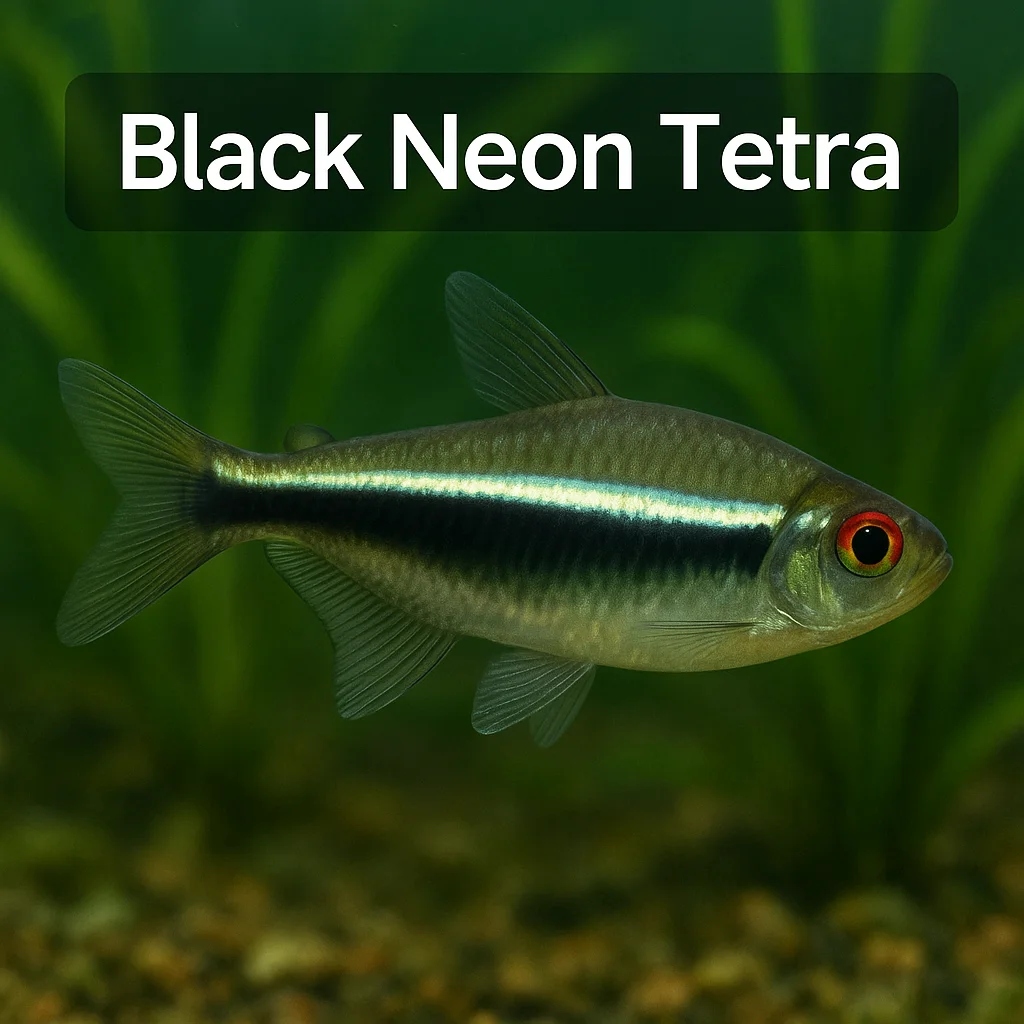
The Black Neon Tetra is easily recognizable due to its distinctive black horizontal stripe that runs along its body, complemented by a shiny iridescent stripe above it. This contrast creates an eye-catching effect that is further highlighted by its translucent fins.
- Slender, elongated body shape
- Black stripe with iridescent silver hue above it
- Translucent fins with subtle colors
- Sex differences are subtle; females are often slightly larger
- Common look-alike: Neon Tetra (Paracheirodon innesi) has a blue and red stripe instead of black
- Can change intensity of color based on mood and light conditions
🌍 Origin & Natural Habitat
The Black Neon Tetra is native to the slow-moving, tannin-rich waters of the Paraguay River basin in South America. These waters are characterized by dense plant growth and dim lighting due to the canopy cover of the rainforest, providing plenty of hiding spaces and leaf litter.
Understanding their natural habitat helps recreate conditions in the aquarium that reduce stress and promote natural behavior. The environment features soft, acidic water and a moderate temperature range, mimicking seasonal rainfall and fluctuations that can impact spawning behaviors.
🧪 Tank Setup & Water Parameters
A well-planned tank setup is essential for the wellbeing of Black Neon Tetras. Consider a horizontal swimming space to accommodate their active nature. A dark substrate with plenty of plants, driftwood, and hiding areas replicates their natural environment and reduces stress.
- Minimum tank size: 20 gallons, with greater length than height
- Use a gentle filter to simulate their preference for slow-moving waters
- Aquarium heater required to maintain tropical temperatures
- Substrate: Dark sand or fine gravel
- Decor: Driftwood, live plants (e.g., Java Fern, Anubias), and leaf litter
- Lighting: Dim to moderate, with shaded areas using floating plants
🤝 Temperament & Compatibility
Black Neon Tetras are peaceful and thrive in well-established community tanks with other non-aggressive species. They are schooling fish, needing groups of at least six to exhibit natural behaviors. Their calm nature makes them compatible with a wide variety of inhabitants.
- Best in schools of six or more for comfort and display
- Generally peaceful and non-territorial
- Compatible with other small, peaceful species like Corydoras and small Rasboras
- Avoid housing with large or aggressive fish
- Interacts positively during feeding, showing active, social behavior
🍽️ Diet & Feeding
In the wild, Black Neon Tetras feed on small insects, crustaceans, and plant material. In captivity, they should be given a balanced diet of high-quality flakes or pellets, supplemented with live or frozen foods like brine shrimp and daphnia for optimal health and coloration.
- Feed a varied diet for balanced nutrition
- Offer food once or twice daily
- Rotate staple foods with live or frozen treats
- Avoid overfeeding; remove uneaten food to maintain water quality
- Observe feeding behavior to ensure tankmates do not outcompete them
🧬 Growth, Color Changes & Lifespan
As juveniles, Black Neon Tetras already display a hint of their iconic coloration, which becomes more pronounced as they mature. Stress can cause the colors to dull, so maintaining optimal conditions is crucial for their vibrancy. Typically, these fish have a lifespan of 3–5 years, significantly influenced by the quality of care, diet, and environment.
During times of stress, such as changes in water parameters or aggression from tankmates, they may exhibit clamped fins and reduced color intensity. Ensuring a stable and peaceful tank environment helps prolong their lifespan and maintain their health.
🪺 Breeding & Reproduction
Black Neon Tetras are egg layers that require specific conditions to breed successfully, often needing very soft, acidic water and a spawning tank setup. Conditioning the breeding parents with live foods can trigger spawning, where the female scatters eggs over fine-leaved plants. The adults do not provide care for the eggs or fry.
Breeding in home aquariums is challenging due to water parameter requirements. Successful breeding often results from setting up a dedicated breeding tank with subdued lighting and optimal water conditions to encourage spawning.
🩺 Common Health Issues & Prevention
Common health issues for Black Neon Tetras include ich, fin rot, and parasite infestations. Maintaining optimal water parameters and cleanliness, such as regular water changes and avoiding overfeeding, is crucial for preventing diseases. Quarantining new fish before introducing them to the tank is highly recommended to avoid the spread of disease.
- Maintain stable water parameters to prevent stress
- Conduct regular partial water changes
- Quarantine new arrivals before introducing
- Observe diet and feeding practices to avoid overfeeding
- Monitor for signs of illness and act promptly
🌱 Role in the Aquarium
In a well-maintained aquarium, Black Neon Tetras are known for adding vibrant colors and dynamic movement. They play a critical role in community tanks by promoting natural schooling behaviors, making them a lively addition to any peaceful aquatic setup. While not particularly known for algae control, their presence contributes to a balanced biotope, complementing plants without causing harm.
Select carefully from reputable sources to ensure they are sustainably bred. Avoid wild-caught specimens if ethically problematic, as they can impact native ecosystems.
📉 Conservation & Responsible Keeping
While Black Neon Tetras are widely available as captive-bred specimens, it's essential to purchase from responsible breeders to ensure the sustainability of natural populations. Never release them into the wild, as they can disrupt local ecosystems. If they outgrow your tank, consider rehoming options with fellow aquarists or fish clubs.
- Choose captive-bred over wild-caught
- Never release aquarium fish into the wild
- Rehome responsibly if unable to keep
- Support sustainable breeding practices
- Avoid contributing to invasive species problems
📌 Summary
- Iconic black stripe distinguishes Black Neon Tetra
- Native to Paraguay River basin, prefers soft, acidic water
- Requires tank with plants, driftwood, and low light
- Peaceful schooling fish, best kept in groups
- Omnivorous, feeding on flakes, pellets, live foods
- Easy to care for, suitable for beginners
- Not usually bred in home tanks without alteration
- Monitor water parameters to prevent health issues
- Select from ethical sources to avoid harming wild populations