🐠 Betta (single male setup)
🧾 Quick Facts
The Betta, often known as the Siamese fighting fish, is a popular freshwater fish known for its striking appearance and personality. A single male Betta can be a captivating centerpiece in a home aquarium, combining beautiful colors with intriguing behavior. It's important to provide appropriate care and habitat to ensure the Betta thrives in captivity.
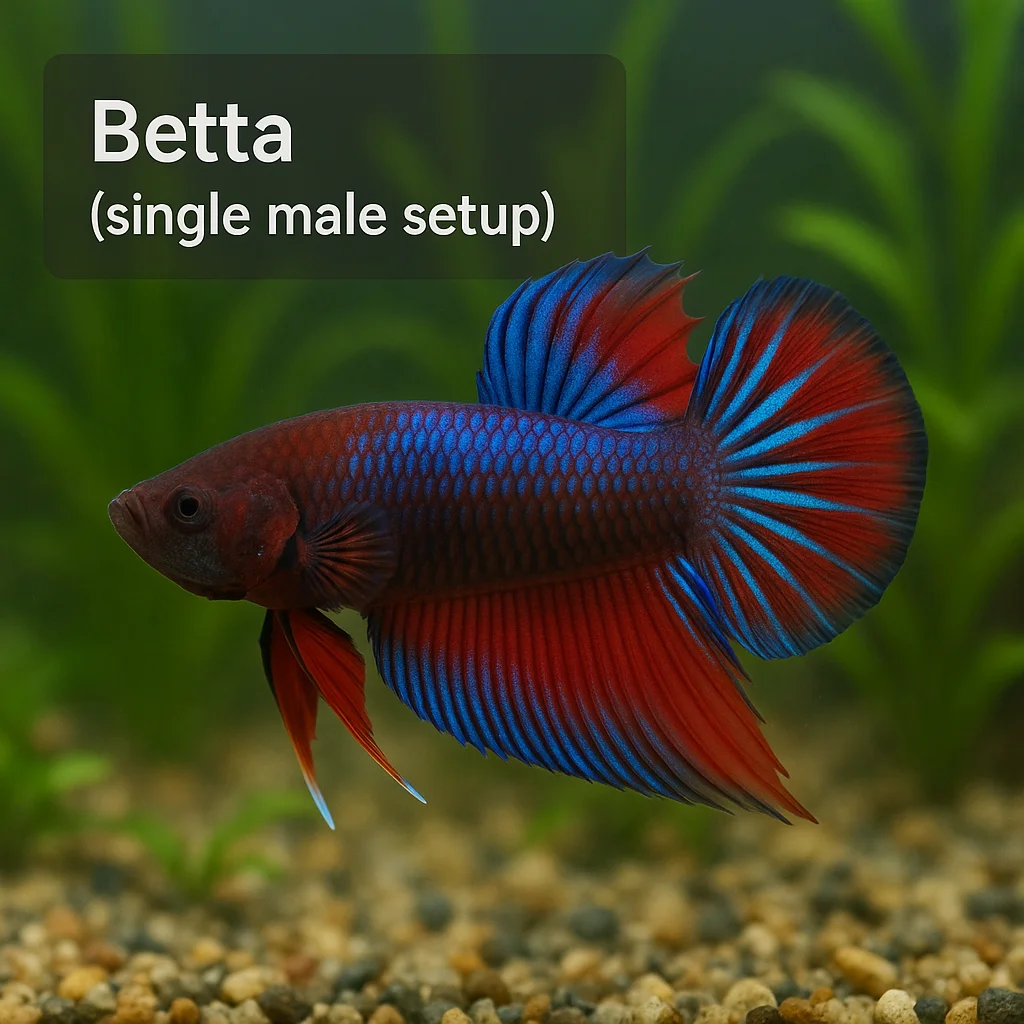
- Common names: Siamese fighting fish, Betta
- Scientific name: Betta splendens
- Water type: Freshwater
- Origin: Asia (Thailand, Cambodia, Vietnam)
- Typical adult size range: 2.5 to 3 inches
- Lifespan: 3 to 5 years (varies)
- Temperament: Semi-aggressive to aggressive
- Recommended tank size: Minimum 5 gallons
- Water temperature range: 76-82°F (24-28°C)
- pH range: 6.5 to 7.5
- Diet type: Carnivore
- Activity zone: Top to mid
- Social needs: Solitary
- Beginner suitability: Easy to medium
🔍 Identification
Bettas are easily recognizable due to their vivid coloration and long, flowing fins. The body shape is elongated and strong, supporting their need for territorial display. They come in many color variations, including blues, reds, greens, and purples, often with iridescent scales. Color can change slightly with mood, particularly when displaying aggression or courtship behavior.
Male Bettas can be distinguished from females due to their significantly longer and more elaborate fins and brighter colorations, whereas females tend to be smaller with shorter fins. Other fish, such as guppies, may closely resemble Bettas, but lack their distinct aggressive nature and the flare of Bettas' fins.
- Elongated body with strong build
- Brilliant, sometimes iridescent colors
- Long, flowing fins in males
- Smaller females with shorter fins
- Color changes with mood and age
- Clear distinction between sexes in fin length and color
- Notable look-alikes: Guppies, paradise fish
- Whole fish visible in frame is ideal for photography
- Males display by flaring gills and fins
🌍 Origin & Natural Habitat
Bettas are native to Southeast Asia, primarily found in Thailand, Cambodia, and Vietnam. In the wild, they inhabit slow-moving streams, floodplains, and rice paddies, which often have dense vegetation and muddy substrates. The tropical climate contrasts between rainy and dry seasons influence water levels and vegetation cover, providing varied conditions.
Understanding their natural habitat helps aquarists by emphasizing the need for calm waters and sufficient plant cover in the aquarium, replicating the lush, sheltered environments Bettas are adapted to.
🧪 Tank Setup & Water Parameters
When setting up a tank for a single male Betta, opt for an appropriate size, ideally not less than 5 gallons to provide sufficient space for swimming and territorial displays. A gentle filtration system ensures low water flow that resembles their natural habitats. Bettas thrive in warm water, so a heater is crucial to maintain temperatures between 76-82°F.
Use a soft substrate such as sand or fine gravel and incorporate live plants and smooth decorations. The tank should have ample hiding spots but enough open space for swimming. Low to moderate lighting is preferred to mimic their natural environment.
- Minimum tank size: 5 gallons
- Gentle filtration system
- Heater to maintain tropical temperatures
- Soft substrate, like sand or fine gravel
- Includes live plants and soft decorations
- Moderate lighting and ample hiding areas
- Ensure whole fish is visible in tank setup images
- Regular maintenance and water changes
🤝 Temperament & Compatibility
Bettas are known for their solitary and territorial nature, particularly among males. They do not require companions and can become aggressive if housed with other males or fish that resemble them in size and fin shape. During feeding, Bettas may display assertive behaviors here too, prioritizing their own feeding needs.
Compatible tankmates include small, non-nipping fish such as certain tetras and corydoras, though it's critical to be cautious as individual Betta temperaments vary significantly.
- Primarily solitary
- Aggressive towards other males and similar-looking fish
- Not typically suitable for community tanks
- Feeding-time behavior: Dominant in securing food
- Possible tankmates: Small, peaceful tetras, corydoras
- Observe each Betta's unique temperament
- Avoid fin-nipping species like barbs
- Semi-compatibility with shrimp (risk varies)
🍽️ Diet & Feeding
In the wild, Bettas consume small invertebrates and insect larvae, a carnivorous diet rich in protein. In captivity, they should be fed a balanced diet of high-quality Betta-specific pellets or flakes, supplemented by occasional feedings of freeze-dried or live foods like brine shrimp or bloodworms.
Feed small portions multiple times per day, ensuring uneaten food doesn't compromise water quality. Overfeeding can lead to health issues such as obesity and water pollution.
- High-quality Betta pellets or flakes
- Supplement diet with freeze-dried/live foods
- Feed 1-2 times daily in small portions
- Remove uneaten food promptly
- Avoid overfeeding to prevent obesity
- Monitor dietary preferences
- Whole fish visibility is crucial for feeding observation
🧬 Growth, Color Changes & Lifespan
Bettas grow to their full size within a year, often showing vibrant colors and full fin development by three months. Color changes can occur due to stress, maturity, and environmental factors. Signs of stress, such as clamped fins or fading color, indicate a need for better water quality or habitat adjustment.
The typical lifespan of a Betta ranges from 3 to 5 years, significantly influenced by diet, tank conditions, and overall care. Providing an enriched environment with attentive care is vital to maximize lifespan.
🪺 Breeding & Reproduction
Bettas are bubble-nest builders, with males constructing nests of bubbles on the water's surface during breeding. Courtship rituals involve the male displaying his fins and colors to the female. Following spawning, the male takes primary responsibility for the eggs, guarding and tending to the nest until hatch.
While breeding can be achieved in home aquariums, it requires specific preparation and may not always be successful due to the care demands of fry. Providing separate tanks and carefully managed conditions improves breeding outcomes.
🩺 Common Health Issues & Prevention
Bettas may experience health issues like ich, fin rot, and parasites. Preventative care involves maintaining stable water conditions, regular tank cleaning, and avoiding overfeeding. Quarantine new additions before introducing them to prevent disease spread.
- Stable, clean tank environment
- Regular water changes
- Avoid overfeeding to prevent pollution
- Quarantine new fish before tank introduction
- Early signs of stress require prompt action
- Whole fish visibility aids in health monitoring
- Seek professional advice for severe issues
🌱 Role in the Aquarium
Bettas serve as vibrant, interactive centerpieces in aquariums, adding life and color. Being solitary, they do not contribute to social schooling dynamics but can help stimulate owner interaction with their engaging behaviors. Ethically sourced Bettas ensure sustainable practices, avoiding ecological harm through unnecessary wild capture.
📉 Conservation & Responsible Keeping
It's crucial to choose captive-bred Bettas over wild-caught counterparts to conserve natural populations. Releasing Bettas into local waters is discouraged, as they can disrupt ecosystems. If necessary, rehome through aquarist communities, maintaining responsibility for their well-being.
- Prefer captive-bred over wild-caught
- Avoid impulsive purchases
- Never release into wild waters
- Rehome if outgrown the tank
- Research breeders for ethical practices
- Ensure whole fish visible during tank rehoming
📌 Summary
- Distinctive vibrant colors and long fins
- Native to Southeast Asia's slow-moving waters
- Semi-aggressive, suitable for single-species tanks
- Minimum 5-gallon tank, warm and clean
- Carnivorous diet: quality pellets and live treats
- 3-5-year lifespan with proper care
- Breeding involves bubble-nest building
- Health: stable environment, avoid overfeeding
- Centerpiece value and ethical keeping
- Responsible choices prevent ecosystem impact