🐠 Yellow Watchman Goby
🧾 Quick Facts
The Yellow Watchman Goby, also known as the Watchman Prawn-Goby, is a fascinating and colorful addition to saltwater aquariums. Known for its symbiotic relationship with pistol shrimp, this species is popular among marine aquarists. Here are the essential quick facts about this charming fish:
- Common names: Yellow Watchman Goby, Watchman Prawn-Goby
- Scientific name: Cryptocentrus cinctus
- Marine
- Origin: Indo-Pacific reefs, including Fiji and Maldives
- Typical adult size range: 3 to 4 inches (7.6 to 10.2 cm)
- Lifespan: 5 to 6 years; varies with care
- Temperament: Peaceful
- Recommended tank size: Minimum of 20 gallons; larger preferred
- Water temperature range: 72°F to 78°F (22°C to 26°C)
- pH / Salinity: pH 8.1 to 8.4, specific gravity 1.020 to 1.025
- Diet type: Carnivore
- Activity zone: Bottom
- Social needs: Often found in pairs; can be solitary
- Beginner suitability: Medium
🔍 Identification
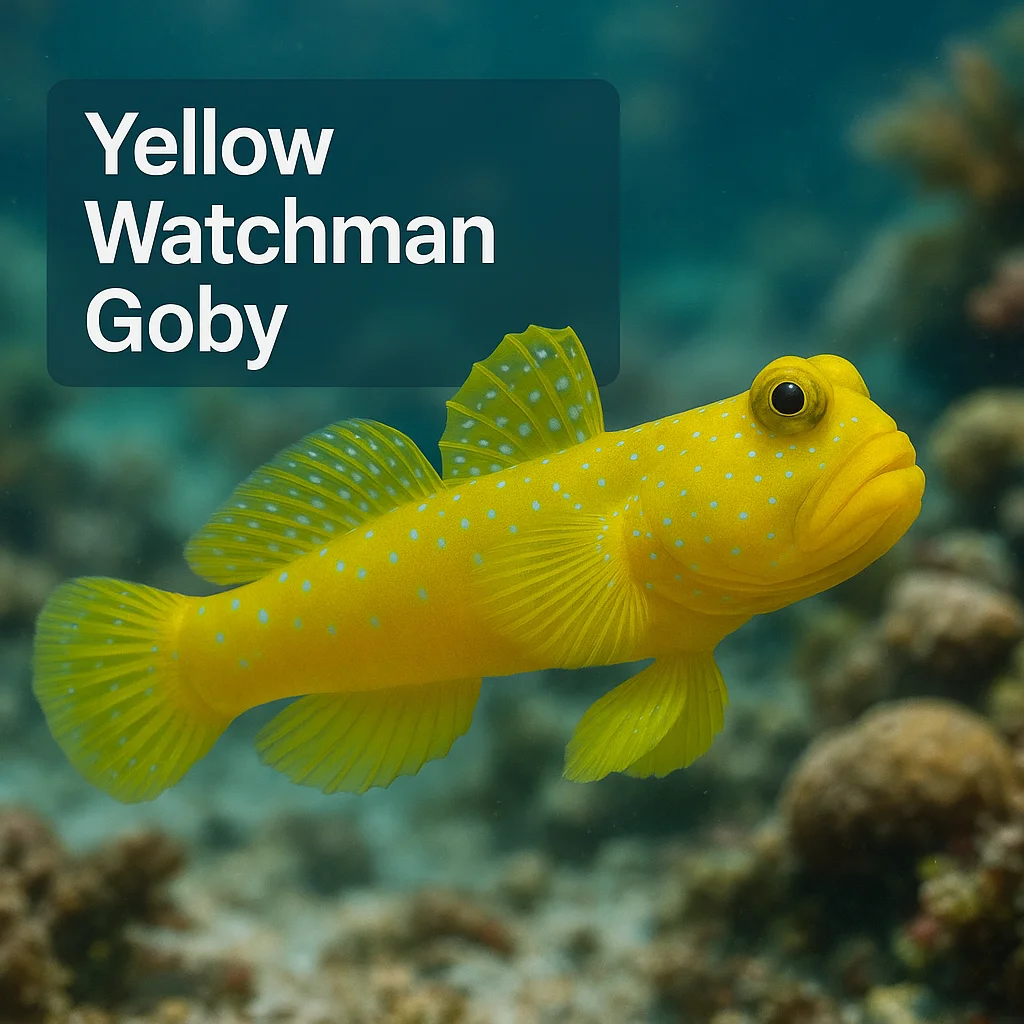
The Yellow Watchman Goby is readily identified by its vibrant yellow coloration and distinctive body shape. It has a stocky appearance with a large head and a tapering body. The overall body color is bright yellow, sometimes with subtle blue or gray hues fringed along the edges, particularly noticeable around the face and fins.
Its dorsal and anal fins are elongated, extending along the back and underbelly, and are often outlined with a fine blue edge. Males and females can be difficult to distinguish, as differences are subtle, often varying by individual and not reliably documented.
Though similar to other gobies, such as the Blue Neon Goby, the Yellow Watchman Goby's size and coloration make it relatively easy to identify. The following tips can aid in its identification:
- Bright yellow body with occasional blue highlights
- Stocky figure with a large head
- Elongated dorsal and anal fins with a blue trim
- Pairs well with pistol shrimp for symbiotic relationship
- Usually found close to substrate in aquariums
- Tends to perch, often remaining stationary
- Establishes and defends a small territory
- Blue or gray highlights around face and fins
🌍 Origin & Natural Habitat
Native to the Indo-Pacific region, the Yellow Watchman Goby inhabits coastal reef areas, including reefs in Fiji and the Maldives. It thrives in shallow lagoon environments and sandy substrate areas where it can engage in its symbiotic relationship with pistol shrimp. This goby is well adapted to the gentle tidal flows and stable temperatures found in these marine environments.
Understanding its natural habitat aids in successful aquarium housing, as providing a similar environment helps reduce stress and encourages natural behaviors. Replicating its preferred substrate and offering adequate hiding spots ensures its vitality in a home aquarium, which can greatly contribute to the overall health and comfort of this species.
🧪 Tank Setup & Water Parameters
For those keeping a Yellow Watchman Goby, a well-planned tank setup is critical. A minimum tank size of 20 gallons is recommended, though larger environments allow for more stable water conditions and social interactions. Providing a sandy substrate is essential, as it allows the goby to dig and create the burrows that it becomes accustomed to in the wild. Incorporating live rock structures not only enhances the aesthetic but provides essential hiding spots and enhances its comfort.
The standard marine aquarium temperature of 72°F to 78°F should be maintained, along with stable pH and salinity levels. Moderate water flow simulates its natural habitat and ensures high oxygenation, important for all marine life within the tank.
- Sandy substrate to promote natural burrowing behavior
- Live rock structures for hiding spots
- Ensure stable water temperature and salinity
- Moderate water flow for oxygenation
- Aim for a pH of 8.1 to 8.4
- Avoid aggressive tankmates to prevent stress
- Pairs with pistol shrimp for symbiosis
- 20-gallon minimum tank size; larger preferred
🤝 Temperament & Compatibility
The Yellow Watchman Goby is generally peaceful and well-suited for community aquariums with compatible species. It displays a unique partnership with pistol shrimp, sharing a burrow and alerting each other to potential threats. While predominantly solitary or in pairs, it maintains a semi-territorial nature, defending its chosen burrow and immediate surroundings.
Compatible tankmates include other non-aggressive fish species, invertebrates, and communal fish that prefer the same peaceful environment. Caution should be taken when introducing aggressive or territorial fish, as they may stress the goby.
- Stable companionship with pistol shrimp
- Unfavorable with aggressive or territorial species
- Compatible with invertebrates
- Prefers sand or open substrates
- Establishes its own territory, usually near its burrow
- Pairs or solitary, varies with tank setup
🍽️ Diet & Feeding
As a carnivorous species, the Yellow Watchman Goby's diet in the wild primarily consists of small invertebrates it finds within its burrow habitat. In an aquarium, it benefits from a diverse diet of high-quality marine food options, including frozen or live brine shrimp, mysis shrimp, and other protein-rich foods. It is critical to supplement these with occasional vegetable-based matter for a balanced diet.
Several small feedings throughout the day replicate natural feeding habits and ensure it receives sufficient nutrition. The goby also exhibits grazing behavior at the tank bottom, searching for leftover food.
- Include a mix of frozen/live brine and mysis shrimp
- Supplement with vegetable matter occasionally
- Multiple small feedings daily mimics natural behavior
- Ensure food reaches the bottom
- Avoid overfeeding, maintain water quality
- Encourage foraging behavior with varied food types
🧬 Growth, Color Changes & Lifespan
Upon reaching maturity, the Yellow Watchman Goby usually attains a length of three to four inches, continuing to display its characteristic vibrant yellow coloration—a sign of healthy growth. Notably, stress or environmental changes can cause temporary fading of colors, which is reversible by rectifying the underlying condition and maintaining an optimal habitat.
Providing a stable and enriching environment, with quality nutrition and consistent water parameters, ensures maximized lifespan. Typically, this goby species enjoys a lifespan of five to six years under optimal conditions in home aquariums.
🪺 Breeding & Reproduction
Breeding the Yellow Watchman Goby in home aquariums is not commonly achieved, largely due to the specific environmental and social cues needed to stimulate spawning. When breeding does occur, the species is an egg-layer, with the female depositing her eggs within the secure boundaries of a burrow.
The symbiotic relationship with pistol shrimp may provide some environmental conditions conducive to breeding, but success varies and generally requires a controlled setup that mimics natural reef conditions. Fry are challenging to rear without live foods and specific coral structures.
🩺 Common Health Issues & Prevention
Yellow Watchman Gobies may experience common marine fish ailments, such as ich (white spot disease) and fin rot, often resulting from stress or poor water conditions. Prevention is achieved through proper acclimation, maintaining clean and stable water parameters, regular tank maintenance, and careful monitoring for signs of deterioration.
- Quarantine new arrivals to avoid disease introduction
- Regular water quality checks for stability
- Avoid overfeeding to prevent tank pollution
- Clean tank regularly to prevent disease outbreaks
- Monitor for signs of stress and address promptly
- Maintain a peaceful tank environment with suitable companions
🌱 Role in the Aquarium
Within a marine aquarium, the Yellow Watchman Goby serves multiple roles. It enhances the environment with vibrant coloration and is often a highlight for aquarists due to its symbiotic behavior with pistol shrimp. These gobies are considered reef-safe, making them ideal for vibrant, peaceful reef tank setups. While they are not significant algae eaters, their burrowing inadvertently aids in substrate aeration.
Choosing this goby from reputable and sustainable sources is crucial to prevent adverse ecological impacts. Where possible, opting for captive-bred specimens reduces environmental strain and supports conservation-friendly practices.
📉 Conservation & Responsible Keeping
The Yellow Watchman Goby is an example of a species where careful consideration of sources is important. Captive-bred gobies are preferable, ensuring sustainable populations and minimal environmental disruption. Never release gobies, or any aquarium fish, into local waters as this can damage ecosystems.
In cases where the goby outgrows or becomes incompatible within its tank setup, responsible rehoming by contacting local aquarist groups or pet stores is encouraged.
- Opt for captive-bred to support sustainability
- Avoid wild-caught specimens when possible
- Never release into local waterways to protect ecosystems
- Seek aquarist communities for rehoming if necessary
- Ensure proper knowledge and preparation before purchase
- Support conservation-focused suppliers
📌 Summary
- Identifiable by its bright yellow body and symbiotic relationship with pistol shrimp
- Native to Indo-Pacific reef regions, thriving in sandy substrates
- Minimal tank size of 20 gallons with stable water conditions recommended
- Compatible with peaceful marine tankmates; pairs with pistol shrimp
- Carnivorous diet; benefits from a variety of marine protein sources
- Lifespan ranges from 5 to 6 years with good care and stable habitat
- Considered medium difficulty for beginners due to specific habitat needs
- Reefe-safe and non-aggressive, a great addition to community marine tanks