🐠 Yellow Tang
🧾 Quick Facts
The Yellow Tang, often referred to by aquarists for its vibrant color and active swimming patterns, is a popular marine species known for its resilience and community-friendly nature.
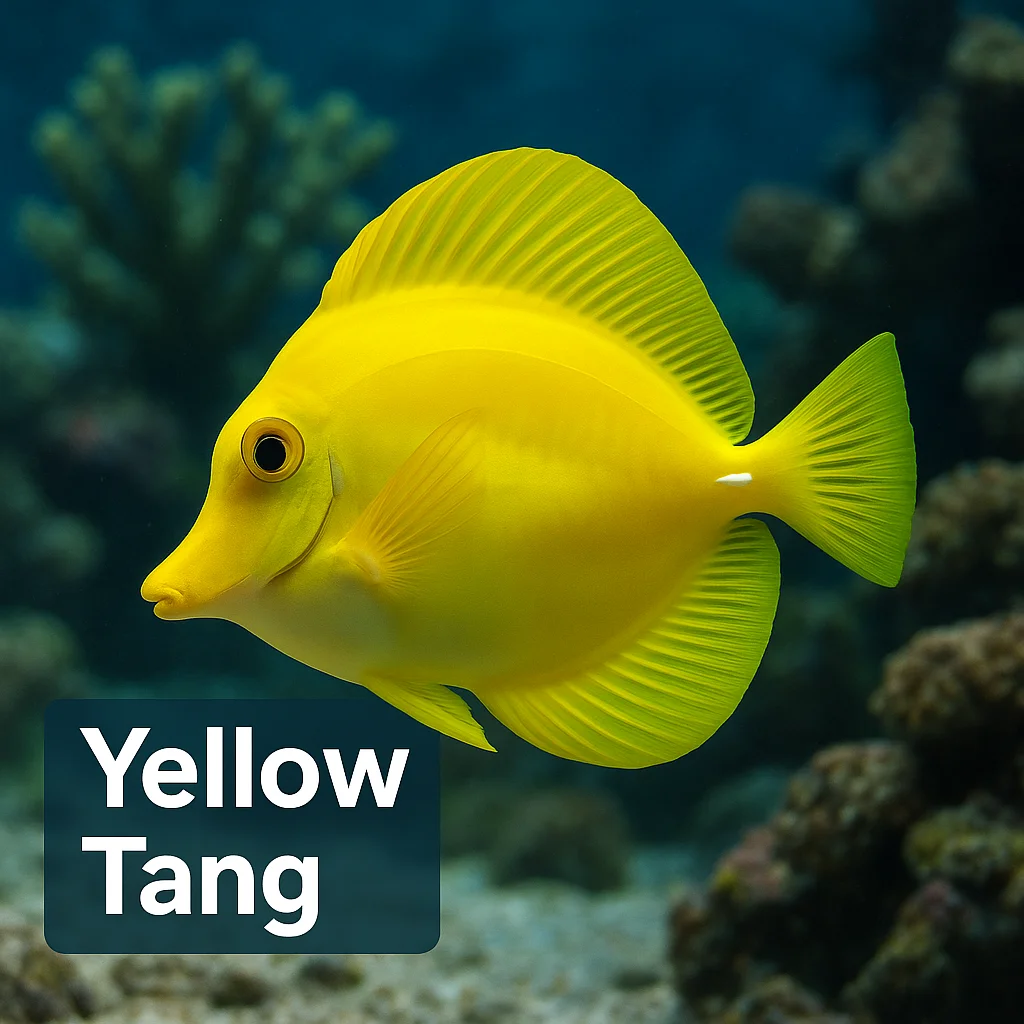
- Common Names: Yellow Tang, Yellow Surgeonfish
- Scientific Name: Zebrasoma flavescens
- Type: Marine (Saltwater)
- Origin: Tropical reefs of the Pacific Ocean, predominantly found around Hawaii
- Typical Adult Size: 6 to 8 inches (15 to 20 cm)
- Lifespan: 5 to 10 years in captivity
- Temperament: Semi-aggressive
- Recommended Tank Size: Minimum of 75 gallons (283 liters)
- Water Temperature Range: 72°F to 78°F (22°C to 26°C)
- Water Parameters: Salinity 1.020–1.025, pH 8.1–8.4
- Diet Type: Herbivore
- Activity Zone: All water zones, especially mid to top regions
- Social Needs: Primarily solitary; can coexist with similar-sized non-aggressive species
- Beginner Suitability: Medium
🔍 Identification
The Yellow Tang is easily recognized by its bright lemon-yellow coloration, which covers its disc-shaped body and all fins.
- Body Shape and Silhouette: Distinctive oval body shape with a flat, tall profile
- Color and Pattern Changes: Intense yellow in adulthood, may show slightly paler shades when stressed
- Fin Shapes: Dorsal and anal fins are long and neat, flaring out slightly at the tips
- Male vs Female Cues: Subtle differences, often varies by individual
- Look-Alikes: The Mimic Lemon Peel Tang, which appears similar but has blue around the eyes
- Top ID Tips:
- Consistent solid yellow color with no stripes or spots
- Sharp, scalpel-like spine near the tail base used for defense
- Entire fish visible when it swims due to its bright color
- Juveniles are smaller but maintain the same coloration
- Adults develop a forked tail distinct among tang species
- No significant change of colors with age
🌍 Origin & Natural Habitat
Yellow Tangs are widespread in the Pacific Ocean, with a strong presence in Hawaiian waters. They inhabit coral reefs and lagoons, thriving in areas with abundant algae growth for feeding.
- Continents/Regions: Central and Western Pacific, notably around Hawaii, Guam, and the Marshall Islands
- Water Flow and Substrate: Found in moderate to strong water flows, with coral and rocky sea floors
- Climate/Seasonal Changes: Warm waters with minor seasonal temperature variance
Understanding their natural habitat helps in replicating tank conditions, such as providing sufficient algae and ensuring proper water flow.
🧪 Tank Setup & Water Parameters
To provide an optimal environment for the Yellow Tang, aquarists should ensure a spacious tank with strong filtration and moderate water flow to simulate natural reef conditions.
- Tank Size: A minimum of 75 gallons to allow for horizontal swimming
- Filtration: High-quality external filter systems recommended
- Heating: Maintain a stable temperature between 72°F and 78°F
- Substrate and Decor: Include rocks or artificial reef structures for grazing
- Lighting: Moderate to high lighting to promote algae growth for grazing
- Setup Checklist:
- Minimum 75-gallon tank
- Efficient, strong filtration
- Moderate water flow
- Ample swimming space
- Algae-friendly lighting
- Rock and coral formations for hiding
- Regular water parameter checks
🤝 Temperament & Compatibility
Yellow Tangs are semi-aggressive but generally peaceful with different species if adequate space is provided. They can be territorial, especially in smaller tanks.
- Behavior: Active and inquisitive, often seen swimming throughout the tank
- Social Structure: Solitary by nature; best kept singly to avoid intra-species aggression
- Tankmates: Compatible with clownfish, napoleons, smaller angelfish
- Risky Tankmates: Other tangs, similar-shaped fish without ample space
- Compatibility Notes:
- Avoid pairing with similar-looking species
- Provide plenty of hiding areas
- Monitor closely for territorial disputes
- Best mixed in community tanks with diverse shapes and colors
- Avoid aggressive species that may stress the Yellow Tang
🍽️ Diet & Feeding
In the wild, Yellow Tangs primarily graze on algae. In captivity, they thrive on a diet supplemented with plant-based foods and occasional protein sources.
- Staple Foods: High-quality marine algae flakes and pellets
- Supplementary Foods: Frozen or fresh seaweed, spirulina, occasional brine shrimp
- Feeding Frequency: Offer food 2 to 3 times daily
- Special Needs: Ensure plenty of leafy options to mimic grazing behavior
- Feeding Tips:
- Provide a seaweed clip in the tank
- Use a varied diet to ensure balanced nutrition
- Monitor feeding for excessive leftover food
- Encourage algae naturally within the tank
- Consider a rotational feeding schedule with treats
🧬 Growth, Color Changes & Lifespan
Yellow Tangs can grow up to eight inches and usually maintain a consistent coloration. Stress may manifest as color fading or clamped fins, but these issues resolve with improved conditions.
- Juvenile vs Adult: Minimal size difference, consistent yellow color
- Color Changes: Some fading if stressed
- Stress Signs: Hiding, loss of appetite, reduced swimming
- Lifespan: With good care, often lasts up to 10 years
Healthy, spacious environments and a varied diet contribute most significantly to their lifespan.
🪺 Breeding & Reproduction
Breeding Yellow Tangs in home aquariums is rare due to their specific spawning requirements. They are egg layers, releasing eggs into the water column where fertilization occurs.
- Spawning Triggers: Generally unclear in captivity, relies on environmental and lunar cycles in the wild
- Egg Care: No parental involvement after spawning
- Fry Feeding: If bred, fry require specialized care and feeding with planktonic foods
Their need for tightly controlled conditions makes home breeding challenging without advanced experience.
🩺 Common Health Issues & Prevention
Yellow Tangs can face a variety of health challenges like ich, fin damage, and skin parasites. Maintaining clean water, stable parameters, and nutritional variety can help prevent these issues.
- Preventing ich and parasites: Use a quarantine tank for new additions
- Water Parameters: Keep stable for reduced stress
- Overfeeding Avoidance: Carefully portion meals to ensure clean tank conditions
- Prevention Basics:
- Regular water changes
- Strong, reliable filtration
- Controlled feeding schedule
- Healthy diet with variety
- Monitoring for symptoms early
- Quarantine new fish
🌱 Role in the Aquarium
Yellow Tangs contribute to aquarium ecosystems by controlling algae growth through grazing behaviors. They serve as lively centerpieces but require care with tankmate selection to maintain harmony.
- Algae Control: Natural grazer, reduces algae overgrowth
- Reef-Safe: Generally reef-safe, compatible with many reef inhabitants
- Visual Appeal: Bright color offers aesthetic appeal as a tank centerpiece
Choosing captive-bred specimens helps protect natural populations and strengthens ecosystem conservation efforts.
📉 Conservation & Responsible Keeping
When acquiring a Yellow Tang, opting for captive-bred options is environmentally responsible and encourages sustainable aquarium practices. These fish should never be released into local ecosystems. If a Yellow Tang outgrows its tank or becomes unmanageable, consider rehoming to an appropriate aquarium facility or experienced hobbyist.
- Captive-Bred Pros: Sustainable, less stress on wild populations
- Wild-Caught Cons: Impacts natural ecosystems when overharvested
- Rehoming: Consider ethical rehoming options
- Responsible Keeping Tips:
- Avoid impulse buys
- Research breeders committed to conservation
- Contemplate tank longevity before purchasing
- Increase tank size as the fish grows
- Participate in local aquarium communities
📌 Summary
- Vibrant yellow fish known for its bright color and active nature
- Origin: Pacific Ocean, predominantly Hawaiian reefs
- Requires a minimum 75-gallon tank with strong filtration
- Temperament: Semi-aggressive with territorial needs
- Herbivorous diet with emphasis on algae and marine vegetation
- Medium beginner suitability with specific water parameter needs
- Captive-bred specimens preferred for environmental conservation
- Avoid overcrowding and provide ample swimming space
- Identified by consistent yellow color and scalpel-like tail spine
- Contributes to aquarium health by controlling algae growth