🐠 Royal Gramma
🧾 Quick Facts
The Royal Gramma, renowned for its striking appearance and peaceful demeanor, is a popular choice among marine aquarium enthusiasts. This vibrant species offers both beauty and ease of care, making it an excellent option for beginners and experienced aquarists alike.
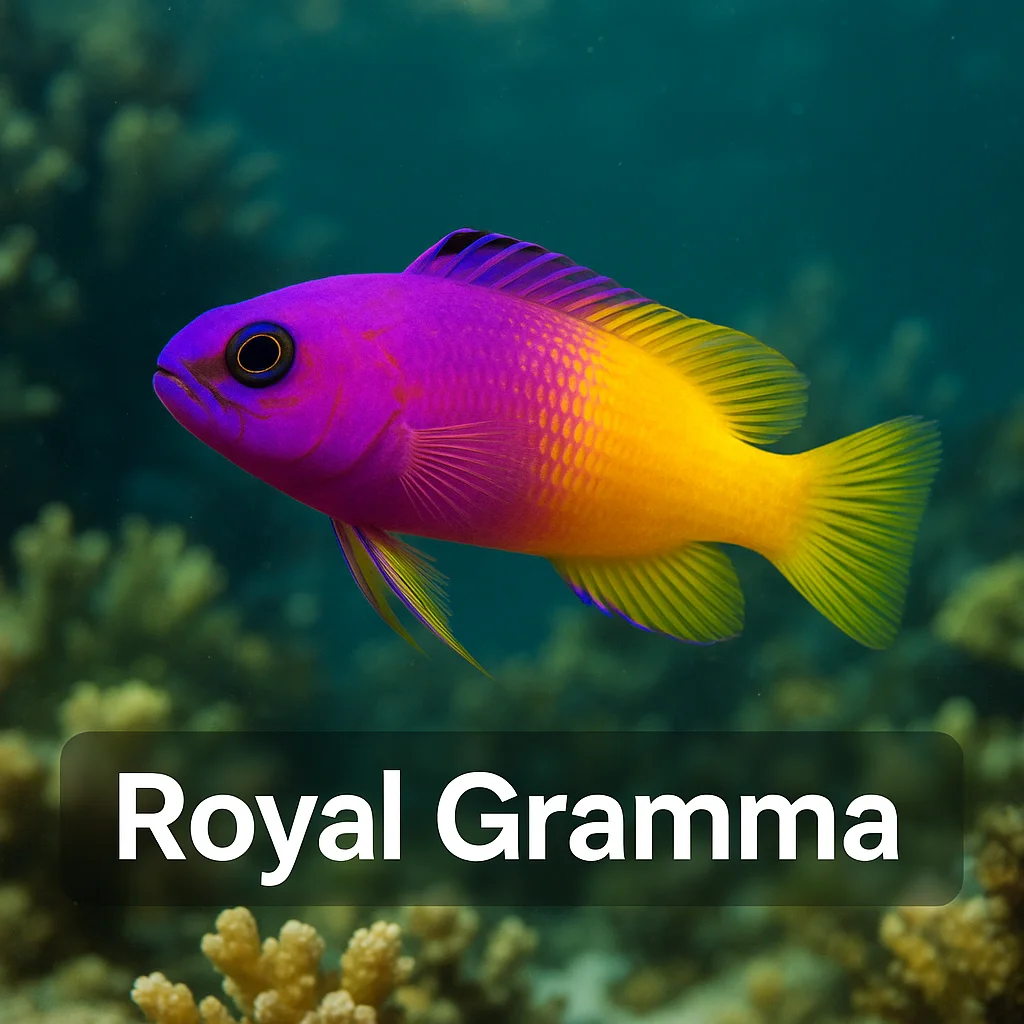
- Common names: Royal Gramma, Fairy Basslet
- Scientific name: Gramma loreto
- Marine
- Origin: Caribbean Sea, tropical reefs
- Typical adult size range: 3 to 4 inches (7.6 to 10.2 cm)
- Lifespan: 5 to 6 years
- Temperament: Peaceful
- Recommended tank size: Minimum 30 gallons (113 liters)
- Water temperature range: 72°F to 78°F (22°C to 26°C)
- pH/salinity guidance: pH 8.1 to 8.4; Salinity 1.020 to 1.025
- Diet type: Carnivore
- Activity zone: Mid to bottom reef zone
- Social needs: Solitary or small groups
- Beginner suitability: Easy
🔍 Identification
Royal Grammas are distinctive with their vivid coloration and graceful appearance. Their bodies display a mesmerizing gradient from vibrant purple at the head to yellow at the tail. This distinct coloration makes them highly sought after for display aquariums. They possess elongated, torpedo-shaped bodies with rounded fins.
- Body Shape: Elongated, torpedo-shaped silhouette
- Colors/Patterns: Purple to yellow gradient, unchanging with age
- Fin Shapes: Rounded fins with a distinct dorsal fin
- Male vs Female: Subtle differences, varies between local populations
- Common Look-alikes: Brazilian Gramma, but distinguishable by coloration
- Top ID Tips:
- Look for the distinct purple and yellow body gradient
- Check for the torpedo-shaped, elongated body
- Observe the rounded and striking dorsal fin
- Note the peaceful demeanor and habitat preference
- Identify by size, typically 3 to 4 inches
🌍 Origin & Natural Habitat
The Royal Gramma hails from the tropical coral reefs of the Caribbean Sea. It thrives in vibrant marine ecosystems with plenty of nooks and crannies, often found hiding among rocky outcrops or coral branches. These fish are adapted to stable tropical climates without extreme seasonal variations.
Understanding their natural habitat is crucial for aquarium success. Mimicking reef settings helps maintain ideal health and behavioral patterns.
🧪 Tank Setup & Water Parameters
To maintain a healthy Royal Gramma, set up a marine tank with abundant live rock structures to mimic their natural habitat. They require a minimum tank size of 30 gallons for swimming space and comfort. Consider moderate water flow to replicate reef conditions and support a healthy marine ecosystem.
Use efficient filtration and maintain stable salinity levels. The addition of crevices and hiding spots ensures they can exhibit natural behaviors.
- Setup Checklist:
- Minimum 30-gallon tank
- Good quality marine filtration system
- Stable salinity level, pH between 8.1 to 8.4
- Live rocks for hiding and grazing
- Moderate water flow
- Consistent water temperature: 72°F to 78°F
- Regular aquarium maintenance routine
🤝 Temperament & Compatibility
Royal Grammas are celebrated for their peaceful nature, making them excellent community fish. They coexist harmoniously with other non-aggressive tank mates. However, they do establish territories in reef-like environments, often retreating to their favorite crevices.
Compatible with other peaceful marine species, they should not be paired with aggressive or overly territorial fish to avoid stress.
- Compatibility Notes:
- Pairs well with non-aggressive tank mates
- Avoid mixing with aggressive or territorial species
- Peaceful during feeding
- Establish territories, requiring suitable hiding spots
- Ideal for reef tanks with diverse species
- Individual behavior may vary
🍽️ Diet & Feeding
In the wild, Royal Grammas primarily feed on small crustaceans, zooplankton, and other marine microorganisms. In an aquarium setting, they thrive on a varied diet that includes high-quality marine flakes, pellets, and frozen foods.
Feed them small portions once or twice a day to prevent overeating and ensure all nutritional needs are met.
- Feeding Tips:
- Offer high-quality marine flakes and pellets
- Supplement with frozen foods like brine shrimp
- Avoid overfeeding to maintain water quality
- Feed once or twice daily
- Monitor eating habits to prevent leftovers
🧬 Growth, Color Changes & Lifespan
Royal Grammas exhibit consistent coloration throughout their lives, maintaining their purple-to-yellow gradient. Though generally robust, stress may cause paler colors and clamped fins, staying aware of these signs can indicate suboptimal conditions.
With proper care, they typically live for 5 to 6 years. Their longevity and vibrant appearance are influenced by tank size, water quality, and diet.
🪺 Breeding & Reproduction
Breeding Royal Grammas in home aquariums is uncommon, although not impossible. They are egg layers, with courtship displaying subtle behaviors. If breeding, provide cave-like structures for eggs and isolate from other fish to ensure better survival rates.
Fry are typically small and require suitable food such as zooplankton for proper growth.
🩺 Common Health Issues & Prevention
Royal Grammas are susceptible to common marine fish ailments like ich and fin damage. Prevention includes quarantining new additions, maintaining excellent water quality, and avoiding sudden environmental changes.
- Prevention Basics:
- Quarantine new fish before adding
- Maintain stable water parameters
- Regular tank cleaning and maintenance
- Monitor fish behavior and appearance
- Avoid overfeeding and remove uneaten food
🌱 Role in the Aquarium
Royal Grammas bring dynamism and color to any marine aquarium. They are reef-safe, making them ideal for reef environments. These fish contribute by helping balance the community dynamics while displaying captivating hues.
Always opt for captive-bred individuals to encourage responsible aquarium keeping and reduce environmental impact related to wild capture.
📉 Conservation & Responsible Keeping
Support conservation by choosing captive-bred Royal Grammas. Avoid wild-caught specimens to prevent harm to natural populations and ecosystems. Never release them into local waterways, as this can harm native species.
- Responsible Keeping Tips:
- Opt for captive-bred fish
- Do not release into wild waters
- Provide ample space and hiding spots
- Consider rehoming options if necessary
- Support sustainable fishkeeping practices
📌 Summary
- Vibrant purple and yellow coloration for easy identification
- Originates from the Caribbean Sea coral reefs
- Beginner-friendly with easy care requirements
- Needs a well-planned 30-gallon minimum marine tank
- Peaceful disposition, excellent in community settings
- Diet includes marine flakes, pellets, and frozen foods
- Potential to breed with dedicated habitat preparation
- Opt for captive-bred specimens to support conservation
- Avoid aggressive tank mates, prioritize peace
- Monitor water parameters to prevent common illnesses
- Contribute vivid beauty and activity to marine aquariums