🐠 Percula Clownfish
🧾 Quick Facts
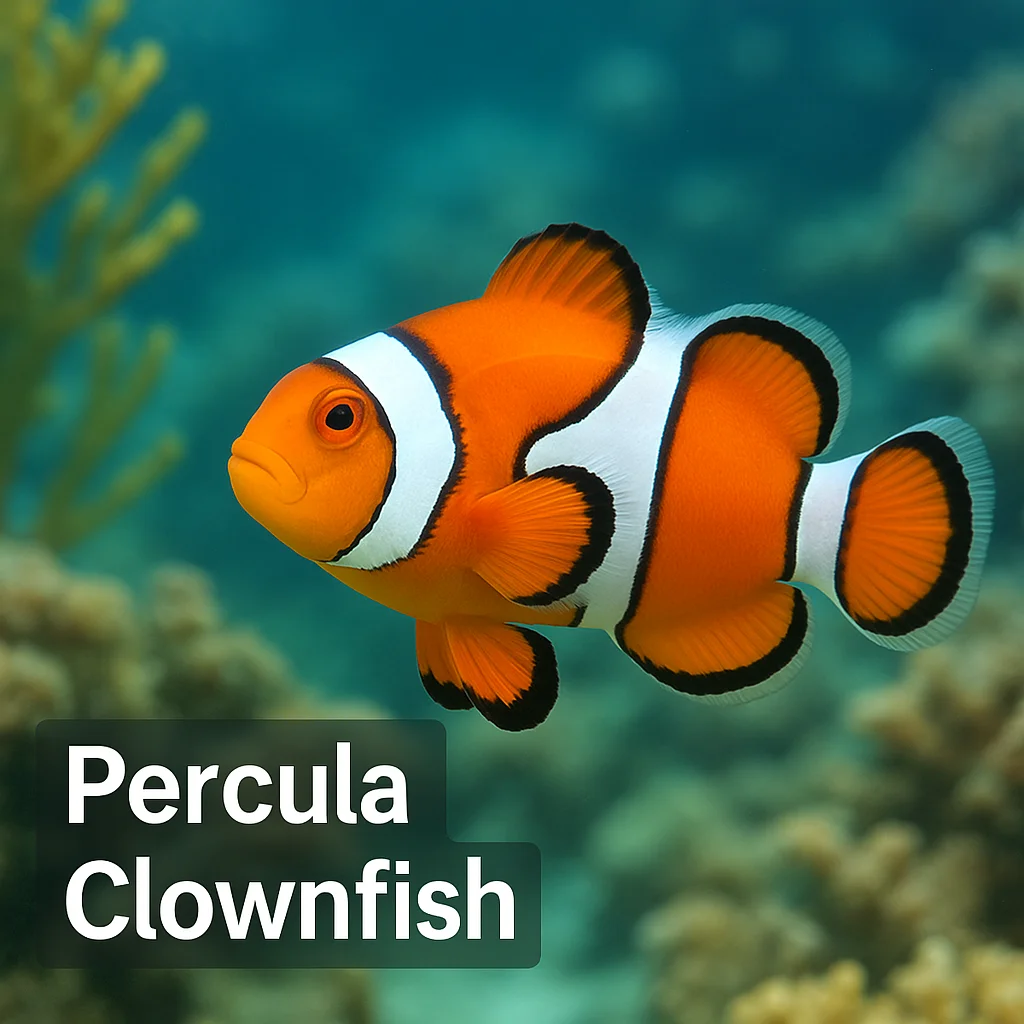
The Percula Clownfish, a popular choice among marine aquarists, is beloved for its vibrant colors and engaging personality. Known for its relationship with sea anemones, it's often a centerpiece in marine aquariums.
- Common names: Percula Clownfish, True Percula Clownfish
- Scientific name: Amphiprion percula
- Marine
- Origin: Indo-Pacific region, including reefs around Northern Australia, Papua New Guinea, and Solomon Islands
- Typical adult size range: 2 to 3 inches (5 to 8 cm)
- Lifespan: 6 to 10 years
- Temperament: Peaceful
- Recommended tank size: Minimum 20 gallons
- Water temperature range: 75°F to 82°F (24°C to 28°C)
- Salinity: 1.020 to 1.026
- Diet type: Omnivore
- Activity zone: Mid to bottom reef zones
- Social needs: Pairs or small groups
- Beginner suitability: Easy
🔍 Identification
The Percula Clownfish is easily recognized by its bright orange body with three distinct white bands and black outlines. They have an oval, laterally compressed body shape with rounded dorsal and pectoral fins. Males and females appear similar, though females are typically larger.
- Oval-shaped, laterally compressed body
- Bright orange with distinct white bands
- Black edging on the white bands
- Similar appearance to the Ocellaris Clownfish, but with thicker black lines
- Fins are rounded; dorsal fin is continuous
- Subtle variations in color intensity
- Tends to swim in a hopping motion
- Distinguishable from look-alikes by band thickness and color depth
🌍 Origin & Natural Habitat
Native to the warm waters of the Indo-Pacific region, the Percula Clownfish thrives in shallow, sheltered coral reefs and lagoons. They often inhabit areas with an abundance of sea anemones, which provide protection and a symbiotic relationship. Due to its natural habitat, understanding the requirements helps in recreating suitable conditions in an aquarium.
🧪 Tank Setup & Water Parameters
A well-designed tank for the Percula Clownfish should mimic its natural environment. A 20-gallon tank is a practical minimum, allowing for adequate swimming space and anemone integration. Effective filtration and stable water conditions are critical for maintaining their health.
- Minimum 20-gallon tank with more horizontal swimming space
- Good filtration to maintain water quality
- Maintain water temperature between 75°F to 82°F
- Provide live rock and sandy substrate
- Incorporate anemones for a natural relationship
- Moderate lighting to support any anemones or reef life
- Ensure hiding spots with rock formations
- Stable salinity and pH are crucial
🤝 Temperament & Compatibility
The Percula Clownfish is generally peaceful and well-suited for community tanks. They form pairs and establish territories around their chosen host anemones but can coexist with other non-aggressive species. Suitable tankmates include gobies, blennies, and other reef-compatible fish.
- Peaceful tendency, suitable for community tanks
- Forms strong pair bonds; prefers to live in pairs or small groups
- Territorial around its anemone but generally non-aggressive
- Best with non-aggressive species like gobies and blennies
- Avoid housing with large, aggressive fish
- Behavior can vary slightly among individuals
🍽️ Diet & Feeding
In the wild, Percula Clownfish are omnivores, feeding on plankton, algae, and small crustaceans. In aquariums, a varied diet of marine-based flakes, pellets, and frozen foods is recommended to ensure balanced nutrition.
- Omnivorous diet includes both marine flakes and pellets
- Supplement with frozen foods like brine shrimp and mysis shrimp
- Feed small amounts multiple times a day
- Accepts a wide range of foods; very adaptable
- Keep diet varied for optimal color and health
- Monitor feeding to prevent overfeeding
🧬 Growth, Color Changes & Lifespan
Young Percula Clownfish are similar in appearance to adults but may have different color intensities. They may experience slight color changes with mood or environmental changes, such as brighter colors when in optimal health. Stress might show through clamped fins and faded color, indicating the need for attention to tank conditions.
🪺 Breeding & Reproduction
Percula Clownfish exhibit interesting breeding behaviors, such as cleaning a flat surface for egg-laying. Spawning is often triggered by stable, optimal conditions and accompanies a clear courtship display. While breeding in home tanks is possible, it requires dedication due to the specific early care needs of the larvae. Clownfish can change gender if a female in a pair or group is lost, demonstrating their protandrous nature.
🩺 Common Health Issues & Prevention
Percula Clownfish are generally hardy, but like all marine species, they are susceptible to common health issues such as marine ich and fin rot. Preventive care includes maintaining excellent water quality through consistent filtration and water changes, as well as quarantining new arrivals to prevent the introduction of diseases.
- Regular water changes to keep parameters stable
- Quarantine new fish before adding to the tank
- Use high-quality filtration systems
- Maintain stable temperature and salinity
- Do not overfeed to prevent water quality issues
- Observe for signs of stress or illness regularly
🌱 Role in the Aquarium
Percula Clownfish are active swimmers and bring life to the aquarium with their interaction with sea anemones. They are considered reef-safe, contributing to a harmonious community without harming coral or invertebrates. Always choose captive-bred specimens to support sustainable marine aquarium practices and the health of natural reefs.
📉 Conservation & Responsible Keeping
It's essential to prioritize responsible keeping practices for Percula Clownfish by selecting captive-bred individuals over wild-caught ones. Captive breeding helps preserve wild populations and ensures fish accustomed to aquarium life. Never release aquarium fish into local waters; rehome them responsibly instead, if necessary.
- Choose captive-bred specimens
- Support sustainable marine practices
- Never release fish into local ecosystems
- Offer fish to aquarists or trade if necessary
- Contribute to conservation efforts indirectly
📌 Summary
- Percula Clownfish are an iconic and vibrant marine species
- Native to Indo-Pacific coral reefs
- Easy to care for; suitable for beginner marine hobbyists
- Thrives in well-maintained, matching marine environments
- Pairs or small groups with non-aggressive tankmates are ideal
- Omnivorous diet must be varied for best health
- Choose captive-bred to protect wild populations
- Engaging interactions make them a centerpiece fish
- Practice responsible rehoming and conservation support