🐠 Ocellaris Clownfish
🧾 Quick Facts
The Ocellaris Clownfish, known for its vibrant colors and engaging behaviors, is a popular choice for marine aquariums around the world. With a relatively peaceful nature, these fish are often admired not only for their beauty but also their unique interaction with sea anemones.
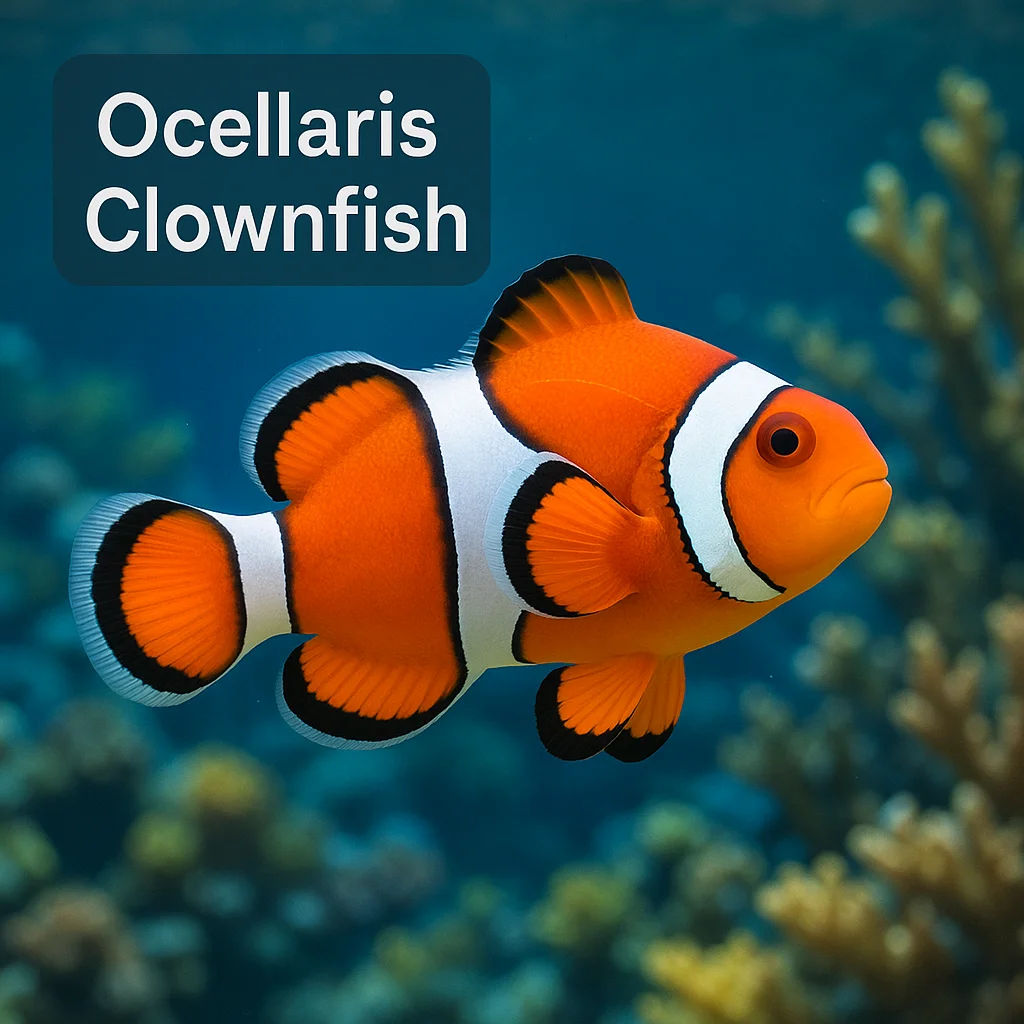
- Common names: Ocellaris Clownfish, False Percula Clownfish
- Scientific name: Amphiprion ocellaris
- Marine
- Origin: Indo-Pacific reefs, especially around the Philippines and Australia
- Typical adult size: 3 to 4 inches (7.5 to 10 cm)
- Lifespan: 6 to 10 years (varies)
- Temperament: Peaceful
- Recommended tank size: 20 gallons
- Water temperature range: 74 - 79°F (23 - 26°C)
- Salinity: 1.020 - 1.025 specific gravity
- Diet type: Omnivore
- Activity zone: Middle
- Social needs: Form pairs, can be kept singly or in groups
- Beginner suitability: Easy
🔍 Identification
Ocellaris Clownfish can be recognized by their distinctive orange bodies, highlighted with three vertical white bands outlined by thin black lines. Their round bodies and triangular tails offer a classic clownfish silhouette.
- Body shape and silhouette: Oval body with a rounded dorsal fin
- Key colors/patterns: Bright orange with three white stripes
- Fin shapes and notable traits: Rounded fins with smooth edges
- Male vs female cues: Females are usually larger
- Common look-alikes: Percula Clownfish, distinguishable by subtle differences in body outline and band separation
🌍 Origin & Natural Habitat
Ocellaris Clownfish originate from the warm waters of the Indo-Pacific, often found in shallow lagoons and reefs. They are typically associated with sea anemones, with which they share a symbiotic relationship. These clownfish thrive in coral-rich environments with moderate water flow.
In an aquarium, replicating such environments with plenty of live rocks and coral decorations helps in maintaining their natural behaviors and health.
🧪 Tank Setup & Water Parameters
Providing a well-structured habitat for the Ocellaris Clownfish involves accommodations that emulate their natural environment. Adequate swimming space, combined with hiding spots from live rock, enhances their well-being.
- Tank size considerations: Larger setups preferred for a stable environment
- Filtration and flow preferences: Moderate flow with efficient filtration
- Heating needs: Reliable heater to maintain stable temperatures
- Substrate and decor: Sand substrate with various coral/simulated coral structures
- Lighting: Medium to high lighting for coral care
- Hiding spots: Caves and crevices among rocks
🤝 Temperament & Compatibility
Ocellaris Clownfish are generally peaceful and can coexist with numerous marine species. They form bonds with certain anemones and generally do not stray far from them. These fish display territorial behavior toward other species of clownfish if the tank is too small.
- Schooling/shoaling: Often prefer living in pairs
- Feeding behavior: Non-aggressive, must watch for competitive eaters
- Good tankmates: Gobies, blennies, some tangs
- Risky tankmates: Aggressive species such as larger damsels
🍽️ Diet & Feeding
In the wild, Ocellaris Clownfish feed on plankton, algae, and small invertebrates. In captivity, they accept a range of foods including flakes, pellets, and frozen substances. Maintaining a varied diet ensures optimal health and color vibrancy.
- Staple foods: Quality marine flakes and pellets
- Supplementary foods: Frozen mysis shrimp and brine shrimp
- Feeding frequency: Multiple small feedings daily
- Special needs: Ensure balanced diet rich in nutrients
🧬 Growth, Color Changes & Lifespan
Juvenile Ocellaris Clownfish may exhibit brighter colors, but as they mature, their hues become richer. Stress can manifest through color fading, which corrects once conditions stabilize. A healthy lifestyle with a balanced diet and clean water can extend their lifespan.
The average lifespan stretches between 6 to 10 years, with proper care being a significant contributor.
🪺 Breeding & Reproduction
Breeding Ocellaris Clownfish in captivity is relatively common. They are egg layers, laying eggs on flat surfaces near their host anemone. The parents protect and oxygenate the eggs until they hatch. Fry are typically fed on rotifers and gradually transition to larger foods.
Providing optimal water conditions and space encourages breeding behaviors.
🩺 Common Health Issues & Prevention
Common ailments include ich and fin rot, often due to stress or poor water quality. Prioritizing quarantine protocols for new acquisitions and maintaining clean, stable tank conditions minimize such occurrences.
- Regular water changes and parameter checks
- Promptly address aggression among tank mates
- Avoid overcrowding to reduce stress
- Feed a balanced and varied diet
🌱 Role in the Aquarium
Ocellaris Clownfish bring a splash of color and activity to marine aquariums. They are considered reef-safe, offering minimal threats to coral and other invertebrates. Additionally, they act as a lovely focal point in well-designed marine aquariums, enhancing aesthetic appeal.
Responsible sourcing from captive-bred populations is encouraged to protect wild ecosystems.
📉 Conservation & Responsible Keeping
Sourcing Ocellaris Clownfish from reputable breeders, instead of wild capture, promotes environmental conservation. Always ensure that they're never released into wild ecosystems, as this threatens local balance. If rehoming is necessary, consider local aquarium clubs or societies.
- Encourage purchasing captive-bred specimens
- Avoid releasing pets into natural waters
- Regularly reassess tank conditions for health
- Consider ethical rehoming solutions if necessary
📌 Summary
- Recognizable by their distinct orange bodies with white bands
- Native to Indo-Pacific reef ecosystems
- Peaceful and suitable for community tanks with non-aggressive species
- Demands a marine setup with moderate conditions resembling their natural habitat
- Famous for interacting with anemones; requires careful pairing
- Thrives on diverse diet incorporating marine flakes and fresh foods
- Lifespan can reach over a decade with proper care
- Recommended for beginners due to their hardy nature