🐠 Mandarin Dragonet (advanced feeding)
🧾 Quick Facts
The Mandarin Dragonet, a captivating reef dweller, is revered for its vibrant colors and complex patterns. This small but popular marine fish may challenge aquarists due to its specific dietary needs and habitat requirements.
- Common names: Mandarin Dragonet, Mandarin Fish, Striped Dragonet
- Scientific name: Synchiropus splendidus
- Freshwater / Marine / Brackish: Marine
- Origin: Western Pacific Ocean, often near coral reefs and lagoons
- Typical adult size range: 2.5 - 3.5 inches (6 - 9 cm)
- Lifespan: 3 - 5 years
- Temperament: Peaceful
- Recommended tank size: Minimum 30 gallons; larger preferred
- Water temperature range: 72 - 82°F (22 - 28°C)
- pH / salinity guidance: pH 8.1 - 8.4; salinity 1.020 - 1.025
- Diet type: Carnivore
- Activity zone: Bottom to middle reef zones
- Social needs: Solitary or in bonded pairs
- Beginner suitability: Advanced due to feeding difficulties
🔍 Identification
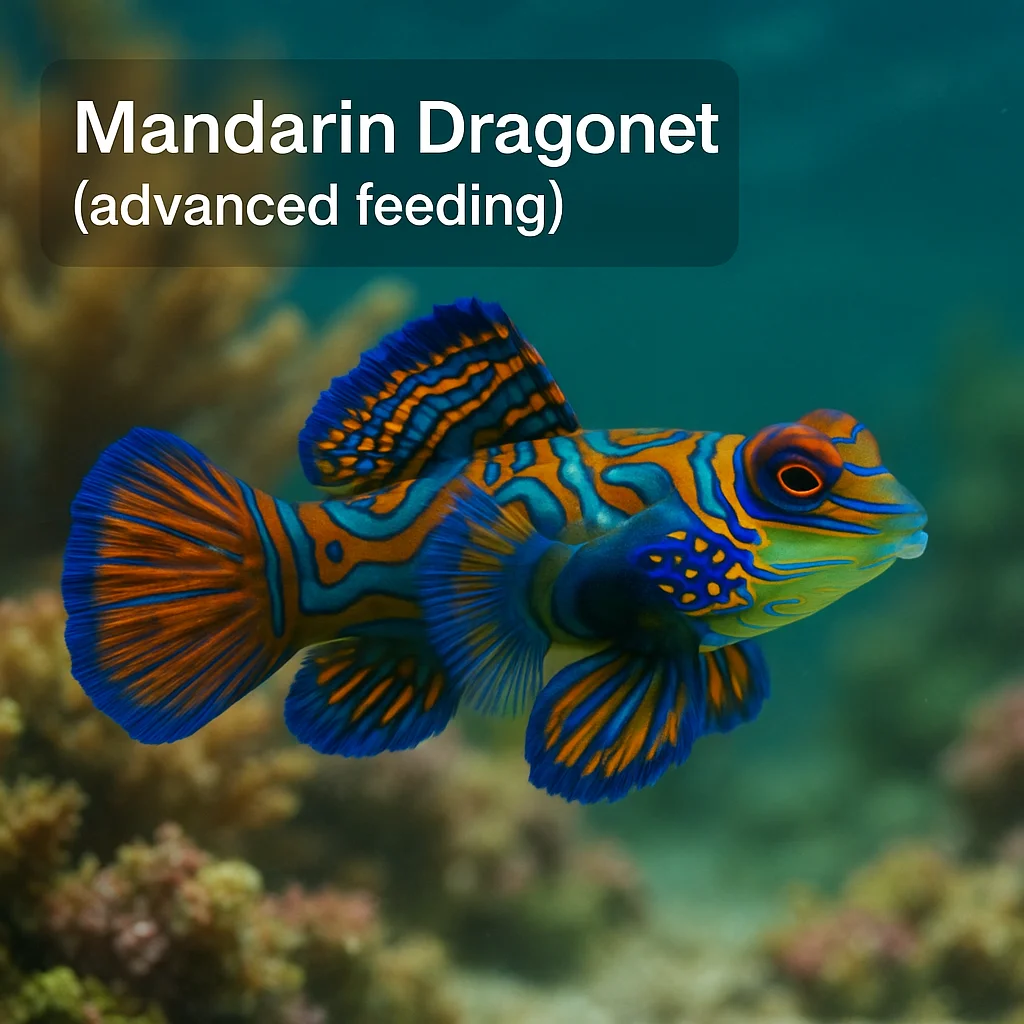
The Mandarin Dragonet is unmistakable due to its distinctive body and patterns. It has an elongated body with a broad head and a rounded snout.
- Body coloration ranges from bright green to blue, with psychedelic patterns of orange and red stripes.
- Its fins are beautifully ornate with rounded edges and vibrant striping.
- Males are often more colorful and have extended first dorsal fins compared to females.
- Look-alikes include the Spotted Mandarin (Synchiropus picturatus), which can be differentiated by its spotted patterns instead of stripes.
- Top ID Tips:
- Observe body shape and snout length.
- Examine vibrant coloration and patterns.
- Check fin shapes and extensions in males.
- Distinguish from the Spotted Mandarin by patterns.
- Note behavior; Mandarin Dragonets are slow, deliberate swimmers.
- Whole fish in frame, especially during display swims.
🌍 Origin & Natural Habitat
The Mandarin Dragonet is native to the Western Pacific, commonly found in the coral reef environments of coastal waters. It inhabits regions such as the Philippines, Indonesia, and Japan.
In the wild, these fish thrive in shallow lagoons and inshore reefs with plenty of live rock and coral, where they hunt for small prey among crevices. These environments usually have moderate water flow and a rich supply of copepods, which forms a crucial part of their diet.
Understanding their natural habitat assists in replicating conditions for optimum health in home aquariums, emphasizing the need for live rock, proper water flow, and stable temperatures.
🧪 Tank Setup & Water Parameters
Proper tank setup is essential for keeping Mandarin Dragonets healthy and vibrant. A tank should ideally reflect their natural habitat to ensure well-being.
- Tank size considerations: A minimum of 30 gallons is recommended, with ample floor area for roaming.
- Filtration and flow preferences: Moderate water flow with efficient biological filtration systems.
- Heating needs: Maintain temperature between 72 - 82°F with a reliable heater.
- Substrate and decor: Fine sand substrate, live rock for hunting grounds, and cave-like structures.
- Lighting and hiding spots: Moderate lighting with plenty of nooks and crannies for sheltering.
- Setup Checklist:
- Adequate live rock for copepod culture.
- Maintain pristine water quality through regular filtration.
- Include caves and hiding spaces for security.
- Ensure consistent tank temperature with a heater.
- Introduce slowly to avoid stress from new tank syndrome.
- Use a refugium to cultivate copepods if possible.
🤝 Temperament & Compatibility
Mandarin Dragonets are peaceful fish known for their calm demeanor. They are often kept either alone or with a compatible pair due to their solitary nature.
These fish are best housed with other non-aggressive species, particularly those that won't outcompete them for food. They're generally reef safe and can coexist with other peaceful reef inhabitants.
- Compatibility Notes:
- Compatible with other peaceful reef fish.
- Avoid aggressive or fast-feeding species.
- Pairs best when introduced into the tank simultaneously.
- Can be territorial if space is limited.
- Pairs bond closely and exhibit courtship behaviors.
- Behavioral variations noted with individual temperaments.
🍽️ Diet & Feeding
The Mandarin Dragonet's diet is specific and requires attention to maintain health. In the wild, they primarily feed on small crustaceans, worms, and other invertebrates found on live rock.
In captivity, their diet should include live foods such as copepods, enriched brine shrimp, and occasionally live black worms. Feeding frequency is generally once or twice daily.
- Feeding Tips:
- Ensure a supply of live copepods within the tank.
- Supplement with live brine shrimp enriched with vitamins.
- Introduce food directly near the bottom to mimic natural feeding.
- Avoid overfeeding as it can lead to water quality degradation.
- Consider using a refugium to cultivate a steady copepod population.
- Monitor appetite changes and adjust feeding accordingly.
- Ensure all food is consumed to avoid decomposition.
🧬 Growth, Color Changes & Lifespan
Mandarin Dragonets undergo few physical changes as they mature, with juveniles resembling smaller versions of adults. They maintain their vibrant color through adulthood, although stress can cause temporary fading or clamped fins.
Healthy Mandarins typically live between 3 to 5 years, with diet, tank conditions, and stress levels being significant factors affecting their lifespan.
🪺 Breeding & Reproduction
Mandarin Dragonets are egg layers, with breeding often prompted by optimal tank conditions and well-fed individuals. Courtship involves a beautiful display where males fan their extended dorsal fins to attract females.
The female deposits her eggs, which are then fertilized by the male. In home aquariums, breeding is challenging due to the specific diet and care young require, which includes tiny live foods for developing fry.
🩺 Common Health Issues & Prevention
Mandarin Dragonets face few health issues if kept in optimal conditions. Common ailments include parasitic infections and ich, but these are often mitigated via effective quarantine procedures and stable tank conditions.
- Prevention Basics:
- Quarantine new additions before introducing them to the display tank.
- Maintain stable water parameters with regular testing.
- Provide a varied diet to ensure nutritional needs are met.
- Avoid overstocking and maintain a peaceful environment.
- Implement a regular cleaning and filtration schedule.
- Monitor fish behavior for signs of stress or illness.
🌱 Role in the Aquarium
Mandarin Dragonets bring a sense of vibrancy and activity into marine aquariums with their striking appearance and unique foraging behavior. Due to their peaceful nature, they're ideal for marine communities, contributing to the tank's biodiversity and aesthetic appeal.
Ethically sourced dragonets often come from breeders committed to sustainable practices. Always choose captive-bred over wild-caught when possible to preserve wild populations and their habitats.
📉 Conservation & Responsible Keeping
Understanding the ecological impact and sourcing background of aquarium fish is crucial. Mandarin Dragonets are best sourced from reputable breeders, contributing to conservation while ensuring the health of the fish.
Owners should never release aquarium fish into the wild, as this can disturb local ecosystems. If rehoming is necessary, seek proper channels to ensure the fish's safety and continued care.
- Responsible Keeping Tips:
- Favor captive-bred specimens for sustainability.
- Rehome fish responsibly; never release into rivers or oceans.
- Research breeders and aquaculturists to support best practices.
- Provide an informed and loving home to all inhabitants.
- Advocate for and educate others about sustainable fishkeeping.
📌 Summary
- Remarkably colorful, the Mandarin Dragonet is a specialized marine inhabitant.
- Originates from Western Pacific reefs, promoting conservation education.
- Advanced care level due to specific dietary needs; appropriate for experienced aquarists.
- Best kept in calm, reef-like environments with ample live rock.
- Occasionally breeds in captivity; challenging without advanced preparations.
- Vibrant display qualities add aesthetic appeal and interest.
- Favor captive-bred to discourage harmful wild-capture practices.
- Knowledge about their needs and habitat promotes ethical and successful keeping.
- Ensure steady live food supply to meet dietary preferences.
- Compatible with peaceful, similarly non-aggressive tank mates.
- Life span of 3–5 years; influenced by diet, tank conditions, and stress management.