🐠 Kole Tang
The Kole Tang, known for its vibrant colors and energetic personality, is a favorite among marine aquarium enthusiasts. With its widespread appeal and manageable care requirements, this species offers a vivid splash of life to saltwater tanks. While its beauty is undeniable, successful Kole Tang keeping relies on understanding its specific needs and behaviors.
🧾 Quick Facts
Here are some key details about the Kole Tang to consider before adding it to your aquarium:
- Common names: Kole Tang, Bristletooth Tang, Yelloweye Tang
- Scientific name: Ctenochaetus strigosus
- Water type: Marine
- Origin: Central Pacific Ocean, primarily around Hawaii and Johnston Atoll
- Typical adult size: 5 to 7 inches
- Lifespan: 5 to 7 years, varies
- Temperament: Semi-aggressive
- Recommended tank size: Minimum 70 gallons; larger always better
- Water temperature range: 72°F to 78°F
- Water salinity: 1.020 to 1.025 SG
- Diet type: Herbivore
- Activity zone: Reef and rocky areas, mid to bottom zones
- Social needs: Can be solitary or kept with other peaceful species
- Beginner suitability: Medium
🔍 Identification
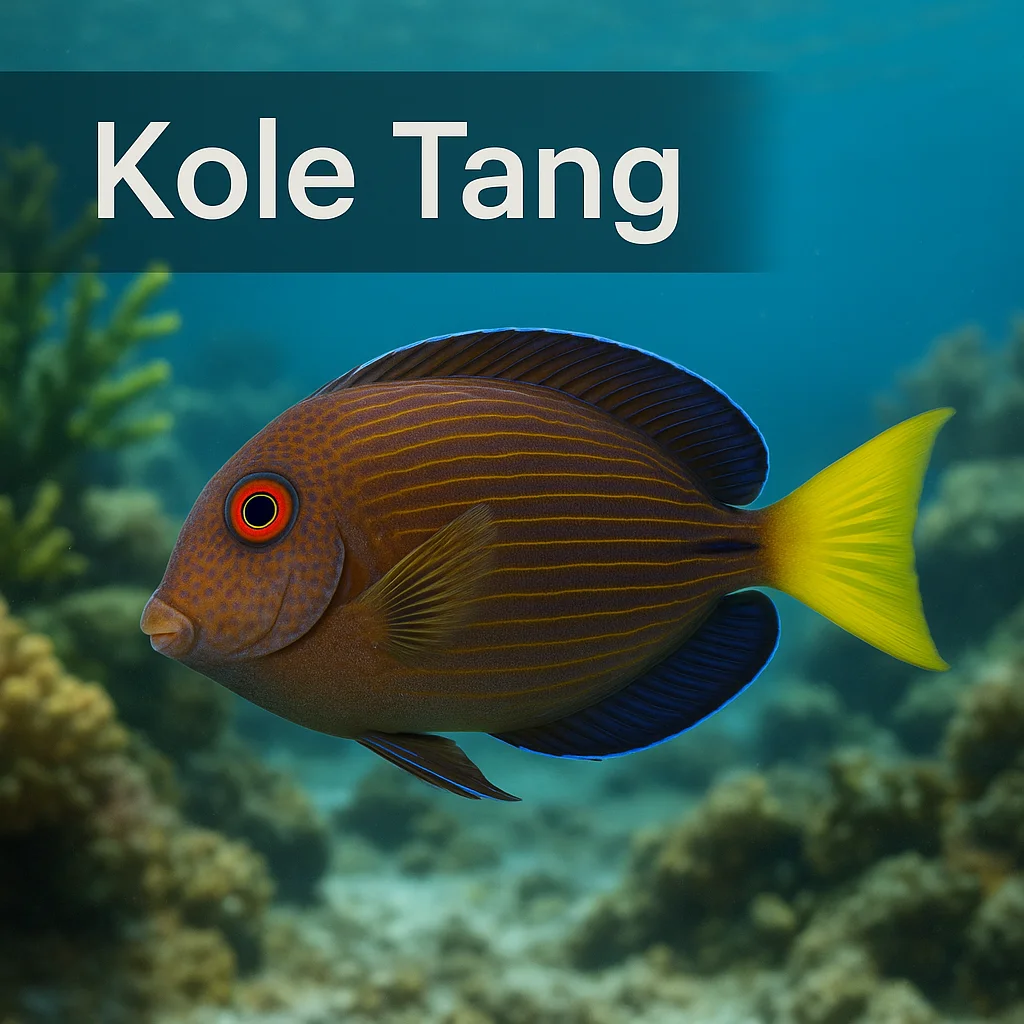
The Kole Tang is easily recognizable by its oval body and stunning colors. This fish displays a range of features that set it apart from other tangs.
- Body shape: Oval with a sleek silhouette
- Color pattern: Dark brown with electric blue and yellow eye rims
- Fin shapes: Long dorsal and anal fins characteristic of tangs
- Differences between males and females: Subtle; often indistinguishable
- Common look-alikes: Often confused with the Tomini Tang and Chevron Tang
- Top ID Tips
- Look for the striking yellow ring around the eyes
- Note the bristle-like teeth visible when they graze
- Distinguish the dark body contrast with blue spines
- Check for distinctive eye spots
- Watch for color variations based on mood or health
- Glossy skin texture
🌍 Origin & Natural Habitat
The Kole Tang is native to the tropical waters of the Central Pacific Ocean, primarily around Hawaii. In its natural habitat, this fish is typically found in reefs and rocky coastal areas. The water flow is moderate to high, offering the fish ample opportunities to graze on algae present on the substrate and rocks.
Understanding its habitat can enhance your aquarium settings by ensuring stable water conditions and appropriate algae growth for grazing. Knowledge about seasonal changes is crucial for simulating natural water conditions, enhancing the Kole Tang's comfort and well-being.
🧪 Tank Setup & Water Parameters
When setting up a tank for the Kole Tang, aim for a stable marine environment with plenty of open swimming space and secure hiding spots. A well-filtered, algae-rich tank closely mimics its natural environment.
- Setup Checklist
- Choose a tank of at least 70 gallons
- Ensure effective filtration with live rock arrangement
- Maintain water temperatures between 72 and 78°F
- Create moderate currents with powerheads
- Include ample live rock for grazing
- Install high-quality lighting to support healthy algae growth
- Provide shaded areas with rocks or caves for hiding
🤝 Temperament & Compatibility
The Kole Tang's semi-aggressive nature means it's important to choose tankmates wisely. While relatively peaceful, especially when introduced last to an established tank, the Kole Tang can show aggression towards similar species and those with similar diets.
- Compatibility Notes
- Best kept with other peaceful marine species
- Monitor interactions with other tangs
- Introduce to community tanks with caution
- Potential to be territorial, especially in smaller spaces
- Can adapt to group settings if socialized properly
Always be prepared for personality variations among individuals, as temperamental differences are not uncommon.
🍽️ Diet & Feeding
In the wild, Kole Tangs spend much time graze on algae and detritus. In an aquarium setting, a varied herbivorous diet is essential to mimic their natural eating habits and ensure their nutritional needs are met.
- Feeding Tips
- Provide a base diet of algae and spirulina flakes
- Supplement with blanched vegetables (e.g., zucchini, seaweed)
- Ensure regular access to live or frozen marine algae
- Feed small amounts several times a day
- Use balanced herbivore-specific pellets as needed
- Ensure they have access to grazing spots within the tank
🧬 Growth, Color Changes & Lifespan
Kole Tangs display some differences as they mature, such as enhanced coloration and size variability. Although primarily brown with unique markings, stress and mood can influence their visual appearance leading to slight color changes.
Creating a stable environment with high water quality and a balanced diet can extend their typical lifespan of 5 to 7 years. Stress indicators include clamped fins and color fading; providing a secure and healthy tank environment can minimize such occurrences.
🪺 Breeding & Reproduction
In home aquariums, breeding Kole Tangs is uncommon due to their specific reproductive needs. Like many marine species, they are egg layers that release eggs into the water. Successfully breeding these fish requires specialized equipment and conditions typically not found in general marine aquaria.
Ensuring a balanced and low-stress environment can lay the groundwork for potential breeding, though professional setups are recommended for breeders wishing to pursue this path.
🩺 Common Health Issues & Prevention
The Kole Tang is susceptible to common marine fish issues such as ich (white spot disease), fin damage, and parasites. Prevention through regular water changes, proper quarantine practices, and maintaining stable water parameters is key to healthy fish.
- Prevention Basics
- Quarantine new fish before introducing them to the tank
- Maintain optimal water quality with regular monitoring
- Avoid overstocking the tank to reduce stress
- Provide a varied and nutrient-rich diet
- Practice good tank hygiene with regular cleanings
- Recognize early signs of illness for timely action
🌱 Role in the Aquarium
The Kole Tang contributes significantly to reef aquariums, aiding algae control while adding diversely vivid activity. Its penchant for algae-grazing makes it a valuable member of the tank community. However, it's vital to ethically source Kole Tangs from captive-bred stocks, maintaining balance within natural ecosystems.
When properly integrated, Kole Tangs can serve as effective cleaners without the risks of damaging corals, underlining their role as reef-safe companions.
📉 Conservation & Responsible Keeping
The practice of purchasing captive-bred Kole Tangs is a responsible choice that supports sustainability over wild capture. Releasing aquarium fish into local ecosystems is also discouraged as it threatens both the fish and the native wildlife.
- Responsible Keeping Tips
- Research suppliers to choose reputable, captive-bred sources
- Plan tank size growth to accommodate adult fish size
- Explore rehoming via aquarist communities if necessary
- Avoid impulse purchases; plan for long-term commitments
- Continue education on sustainable fishkeeping practices
📌 Summary
- Identification: Oval body, yellow eye rings, electric blue spines
- Origin: Central Pacific region, primarily Hawaii
- Tank Setup: Minimum 70 gallons, with ample algae for grazing
- Compatibility: Best with peaceful species, avoid tang aggressives
- Diet: Herbivore, mostly algae and spirulina flakes
- Difficulty: Medium, with attention to dietary needs and temper
- Main Cautions: Needs large space, be wary of aggression
The Kole Tang is a captivating addition to well-managed reef aquariums, providing color and activity while ensuring cleanliness and balance. With responsible care, it thrives, making it both a rewarding and visually striking choice for marine enthusiasts.