🐠 Hermit Crab
🧾 Quick Facts
The Hermit Crab is a fascinating group of crustaceans known for their unique behavior and adaptability. They are popular in marine aquariums for their interesting lifestyle and algae-eating habits. While not a single species, hermit crabs are available in various types, each with specific care needs. They bring diversity and functionality to home aquariums.
- Common names: Hermit Crab, Marine Hermit Crab, Land Hermit Crab
- Scientific name: Varies by species
- Freshwater / Marine / Brackish: Mostly Marine
- Origin: Widely distributed in tropical and subtropical oceans; some in nearby land habitats
- Typical adult size range: 1 - 12 cm depending on species
- Lifespan: 5 - 15 years; varies greatly by species and care
- Temperament: Peaceful but can be territorial over shells
- Recommended tank size: Minimum 20 liters (5 gallons) with ample space for larger species
- Water temperature range: 22 - 28°C (72 - 82°F)
- pH / hardness / salinity guidance: Marine-specific salinity (1.023 - 1.025 SG)
- Diet type: Omnivore
- Activity zone: Bottom/reef zone
- Social needs: Solitary with occasional group interactions
- Beginner suitability: Medium; suitable for those with some marine experience
🔍 Identification
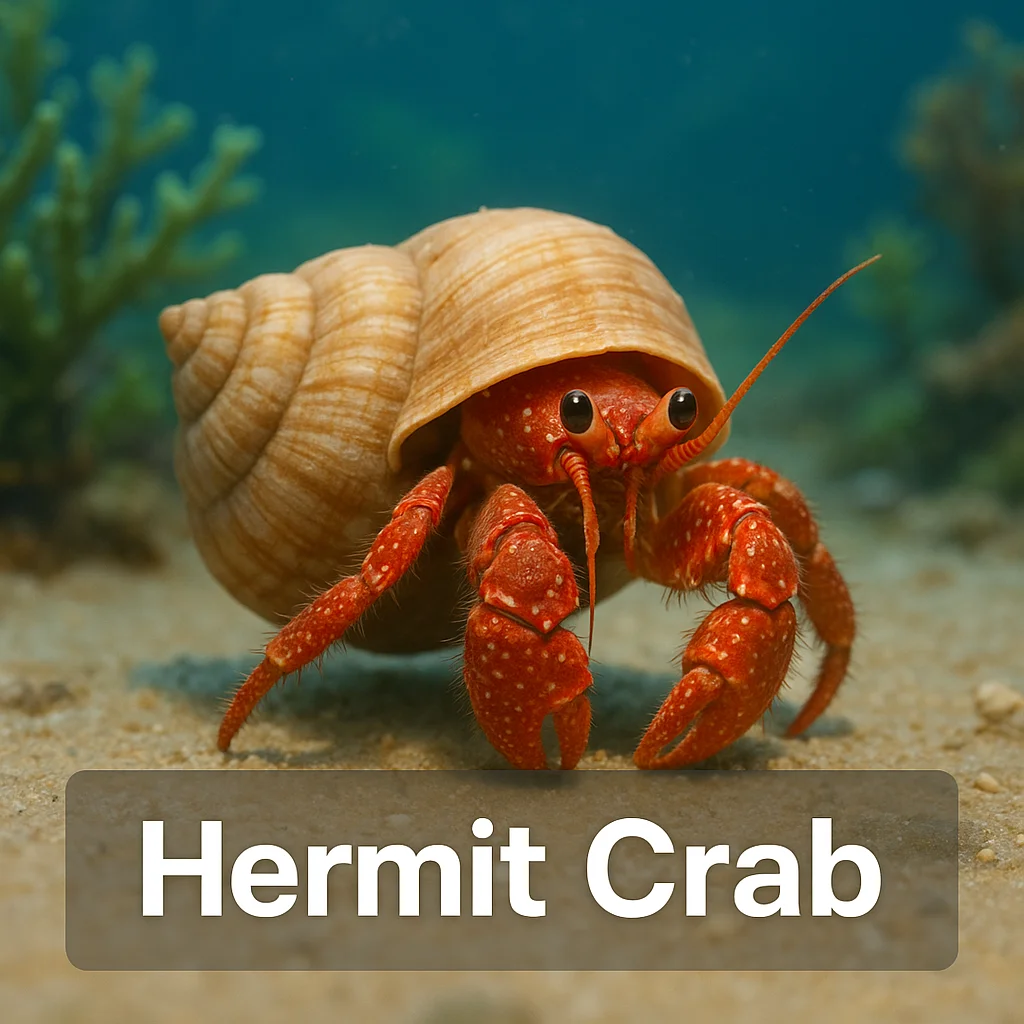
Hermit crabs are distinguished by their asymmetrical, soft abdomens, which they protect by inhabiting empty snail shells. Their overall silhouette features a forward-focused head and thorax, with two prominent claws (chelae) and several pairs of walking legs. Coloration can vary drastically, with some species exhibiting vibrant reds, oranges, or blues that can change with age or environmental factors. Fin shapes are irrelevant, as hermit crabs depend on their walking legs for movement. Gender differences are subtle, often requiring a closer look at claw and body shape.
- Top ID Tips:
- Soft abdomen concealed in a shell
- Colorful legs and eyestalks
- Prominent, unequal-sized claws
- Body size adaptable to available shell size
- Complexion changes based on shell type and age
- Highly adaptive to different environments
- Distinctive gait using claw-toe locomotion
- Varying shell types for camouflage and protection
- Peaceful but shell-protective nature
- Overall resilient, enduring species
🌍 Origin & Natural Habitat
Hermit crabs are spread extensively across global marine environments, often found in reefs, coastal areas, and tidal zones. They thrive in environments with sandy or rocky substrates and ample hiding spots, such as crevices and coral rubble. These crabs are used to varied water flow conditions and often benefit from having algae and detritus as natural food sources. Seasonal tidal changes and environmental shifts in their native habitats encourage adaptability, a trait seen in their aquarium care.
Understanding their natural habitat helps aquarium keepers to mimic similar conditions, ensuring a comfortable and stress-free environment in captivity. Proper replication of their preferred substrates and hiding spots can aid in their overall well-being.
🧪 Tank Setup & Water Parameters
A proper tank setup for hermit crabs should include ample open substrate space for scavenging, along with various rocky or coral structures to facilitate shell exchanges and shelter. A tank size of at least 20 liters is recommended, especially if housing multiple crabs or larger individuals. Efficient filtration and moderate water flow replicate their natural habitats, while stable, warm temperatures are crucial for their health. Providing plentiful hideouts mimics natural conditions, offering a sense of security.
- Setup Checklist:
- Minimum 20-liter tank for basic setups
- Marine-specific filter for water quality
- Moderate flow to simulate natural currents
- Substrate of sand or fine coral gravel
- Diverse shell sizes for all inhabitants
- Natural decor: rocks, corals, and caves
- Heating components to maintain warmth
- Frequent monitoring of salinity levels
- Consistent aquarium cleaning routine
- Regular water parameter checks
🤝 Temperament & Compatibility
Hermit crabs are generally peaceful, though their territorial nature over resources like shells can lead to occasional disputes. They often coexist peacefully with other non-aggressive marine life like snails and fish that don't threaten or compete for their shells. During feeding, these crabs exhibit industrious scavenging behavior, picking away algae and uneaten food particles. They display intricate social interactions, though prolonged aggression or stress usually signals inadequate space or poorly-sized shells.
- Compatibility Notes:
- Compatible with other crabs if space allows
- Peaceful snail and marine life are good companions
- Avoid abrasive fish species
- Provide multiple shell sizes for housing
- Adequate tank space reduces resource competition
- Behavior varies with individual personality
- Long periods of stress might indicate environmental issues
- Monitor for territorial disputes over shells
- Offer hiding spots to reduce conflict
🍽️ Diet & Feeding
In the wild, hermit crabs feed on a varied diet, ranging from scavenged detritus to algae and small carrion. Within aquariums, their diet can comprise algae wafers, marine-specific pellets, freeze-dried krill, and finely chopped seafood, ensuring a balanced nutritional intake. Regular, varied feedings with small portions encourage natural foraging behaviors, while overfeeding and resulting water quality decline are to be avoided.
- Feeding Tips:
- Feed small quantities to mimic natural diet
- Algae wafers as a staple food source
- Variety helps prevent nutritional deficiencies
- Avoid overfeeding to maintain water quality
- Supplement with marine-specific foods
- Observe behavior for feeding needs indication
- Balance between meal size and frequency
- Safeguard sensitivity to high protein feeds
- Offer occasional live food for enrichment
🧬 Growth, Color Changes & Lifespan
As hermit crabs mature, they typically require increasingly large shells, accommodating their growth. Juveniles often exhibit vibrant colors, setting them apart from adults, who may have more subdued tones. These colorations can fluctuate with health, stress, molting, and environmental factors. Their lifespan widely varies, hinging on dietary care, quality of habitat, and overall tank maintenance. When stressed, crabs may retract into their shells or dull in color, signaling the need for environmental checks and adjustments.
🪺 Breeding & Reproduction
Aquarium breeding of hermit crabs can be challenging due to their complex larval stages, which often require precise conditions not easily replicated in a home setup. In the wild, hermit crabs release their larvae into tidal waters. Captive attempts at breeding can involve encouraging the transfer from egg to juvenile during specific salinity and temperature conditions, though such efforts are generally rare and difficult outside of specialized breeding programs.
🩺 Common Health Issues & Prevention
Like many aquatic creatures, hermit crabs are vulnerable to stress-induced issues such as molting complications, shell disease, and parasitic infections. Regular tank maintenance, emphasizing stable water parameters, proper diet adherence, and sufficient space, can prevent common health challenges. Using quarantine measures for new additions and maintaining clean water are integral steps in avoiding outbreaks.
- Prevention Basics:
- Maintain regular tank hygiene
- Observe for unusual behavior
- Prevent overpopulation
- Quarantine new tank additions
- Ensure shell availability and variety
- Regular water parameter monitoring
- Balanced diet reduces stress and illness
- Minimize rapid environmental changes
- Provide adequate hiding spaces
🌱 Role in the Aquarium
In their aquarium role, hermit crabs contribute significantly to ecological balance by consuming algae and detritus, thus maintaining tank cleanliness. They add lively, interactive behavior, providing aesthetic and functional value as they traverse the substrate and structures. In marine tanks, they are considered reef-safe, posing minimal risk to corals and other sensitive marine life. Responsible sourcing, prioritizing captive-bred crabs, ensures ethical aquarium practices.
📉 Conservation & Responsible Keeping
Sustainable aquarium practices prioritize captivity-bred hermit crabs, reducing stress on wild populations. Home aquarists should never release them into local waters, as this poses risks to native ecosystems. Instead, providing larger habitats or considering rehoming with advanced hobbyists ensures their wellbeing as they grow and thrive.
- Responsible Keeping Tips:
- Opt for captivity-bred when available
- Monitor individual growth and needs
- Assess habitat space and resources
- Promote community awareness
- Consider specialized care options
- Contribute to conservation efforts
- Avoid wild capture for home setups
- Engage in ethical rehoming if necessary
- Balance ecological and aquarium interests
📌 Summary
- Hermit crabs exhibit colorful exoskeletons and unique shell-dwelling behavior.
- Habitat preferences include marine reefs and tidal zones.
- Keen awareness of shell requirements ensures compatibility.
- A varied omnivorous diet caters to their nutritional needs.
- Tank setups require ample space and environmental stability.
- Mature crabs provide aesthetic and ecological balance.
- Suitability levels range from intermediate to advanced aquarists.
- Breeders face challenges replicating natural reproductive cycles.
- Caution with environmental shifts mitigates health risks.
- Conservation efforts focus on sustainable aquariums practices.