🐠 Cleaner Shrimp
🧾 Quick Facts
Cleaner shrimp are fascinating marine creatures renowned for their beneficial cleaning behaviors, often observed in both the wild and home aquariums. While "Cleaner Shrimp" refers to several species, the most common aquarium species includes the Scarlet Skunk Cleaner Shrimp. They play a vital ecological role on coral reefs and can also contribute uniquely to maintaining a healthy aquarium environment.
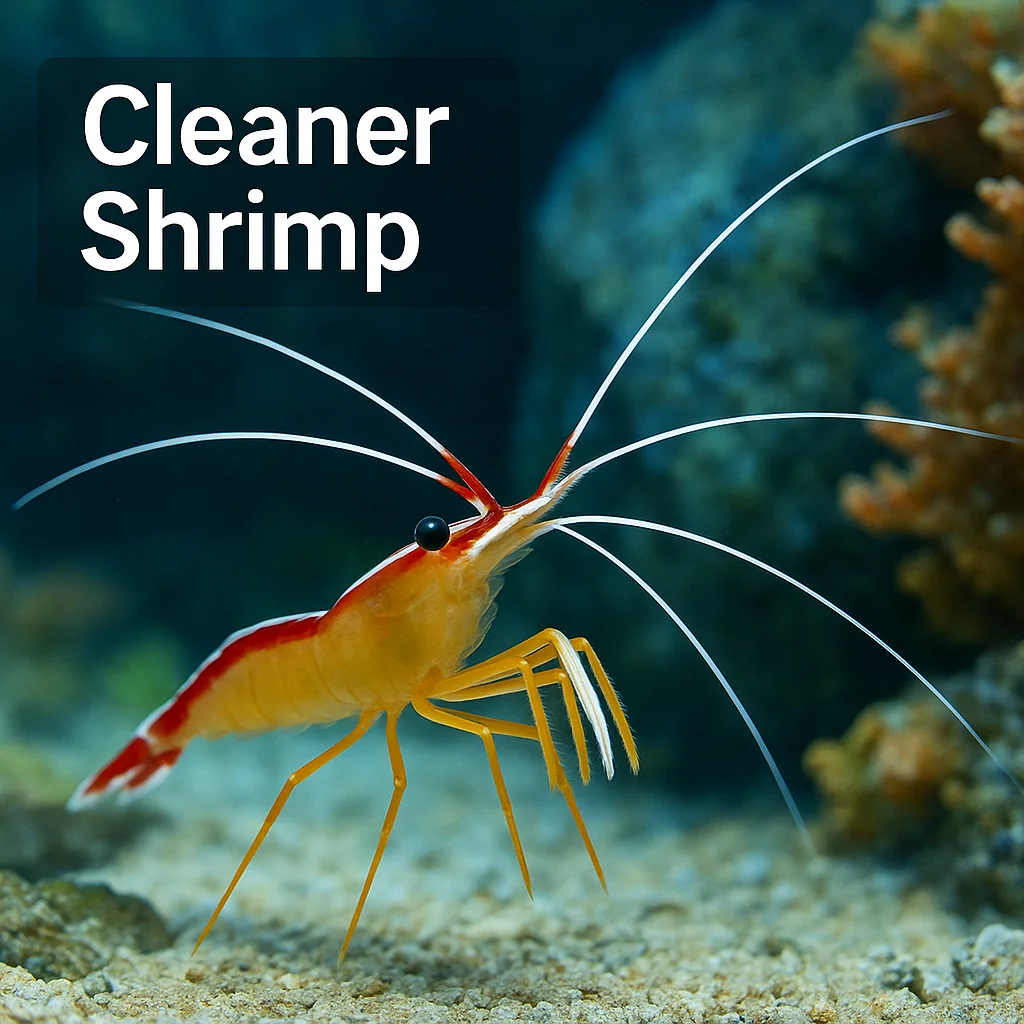
- Common names: Cleaner Shrimp, Scarlet Skunk Cleaner Shrimp, Common Cleaner Shrimp
- Scientific name: Lysmata amboinensis (most common), varies
- Type: Marine
- Origin: Indo-Pacific region, coral reefs
- Typical adult size range: 3–5 cm (1.2–2 inches)
- Lifespan: 2–3 years (varies with care)
- Temperament: Peaceful
- Recommended tank size: Minimum 20 gallons (bigger is better)
- Water temperature range: 24–27°C (75–81°F)
- Salinity guidance: 1.023–1.025 SG
- Diet type: Omnivore
- Activity zone: Mid-reef and bottom zones
- Social needs: Pairs or small groups
- Beginner suitability: Easy to medium
🔍 Identification
Cleaner shrimp are easily recognized by their slender bodies and long white antennae, which they use for detection and communication. The Scarlet Skunk Cleaner Shrimp is famous for its vivid red and white coloration, with a distinct white stripe running along its back. Their legs are dotted with red, complementing a striking appearance. The male and female shrimp appear almost identical, and sex identification is subtle or varies among species. They are often confused with other shrimp species; however, their unique coloration and behavior help distinguish them.
- Long, slender body with extended antennae
- Red bands combined with white stripes
- White stripe down the back is a key feature
- Red legs and feelers are easily noticeable
- Males and females appear similar
- Close examination reveals clear eyes and segmented tails
- Easier to spot at cleaning stations where fish gather
- Presence of red and white makes them distinct in a tank
🌍 Origin & Natural Habitat
Cleaner shrimp are commonly found in the Indo-Pacific region, thriving on coral reefs, which are known for their biodiversity and complex ecosystems. These shrimp prefer areas of the reef with plenty of hiding spaces created by coral structures and rocks. They choose cleaning stations, or specific spots on the reef, where fish can visit to get cleaned. Seasonal changes include shifts in tides and water temperature, affecting their availability of food and cleaning opportunities. Knowing their habitat helps recreate a suitable aquarium environment, ensuring their well-being.
🧪 Tank Setup & Water Parameters
A well-maintained marine aquarium supports the health and activity of cleaner shrimp. Considering their natural reef habitat, providing ample space with clean, stable water is crucial. A tank should have appropriate live rock structures to mimic their natural environment, offering hiding spots and cleaning areas.
- Minimum 20-gallon tank recommended; bigger tanks offer more stability
- Good filtration to maintain clean and healthy water conditions
- Moderate water flow similar to their natural reef environment
- Stable temperature around 24–27°C (75–81°F)
- Live rocks mimic their natural habitat and provide hiding spaces
- Consistent lighting, considering their activity in the day
- Avoid copper-based medications as they are sensitive
- Regular water changes to maintain biological balance
🤝 Temperament & Compatibility
Cleaner shrimp are peaceful and known for their symbiotic relationship with fish, providing a "cleaning service" by removing parasites. They perform this service without aggression, making them suitable for community reef tanks. However, ensure that tankmates are compatible and not aggressive towards the shrimp, especially predatory fish like some larger wrasses or groupers.
- Peaceful behavior, with a focus on cleaning interactions
- Forms pairs or small groups; solitary if needed
- Compatible with most peaceful reef fish
- Avoid aggressive or predatory species as tankmates
- Observes caution during feeding, ensuring it gets enough food
- Can become shy if bullied, so monitor behavior
🍽️ Diet & Feeding
In the wild, cleaner shrimp feed on parasites and dead tissue from fish skin, complementing their diet with detritus and small particles. In captivity, provide a varied diet including high-quality dried shrimp pellets, frozen mysis shrimp, and occasional shellfish. They need regular feeding to maintain their activity and health.
- Offer small portions suitable for shrimp to consume
- Feed regularly, ideally daily, to ensure they are well-nourished
- Supplement natural behavior with fresh or frozen foods
- Monitor feeding to ensure shrimp are getting sufficient food
- Balanced diet includes a mix of protein-rich and plant ingredients
- Observe if cleaner shrimp are actively cleaning and feeding
🧬 Growth, Color Changes & Lifespan
Cleaner shrimp exhibit minimal changes from juveniles to adults, primarily growing in size. Their vibrant red and white coloration remains consistent, though stress may result in color fading. Signs of stress include reduced activity, hiding more than usual, or losing their bold coloration. Cleaner shrimp typically live between 2 to 3 years, influenced by factors like water quality, nutrition, and environmental conditions.
🪺 Breeding & Reproduction
While breeding cleaner shrimp in captivity can be challenging, it's not entirely uncommon. These shrimp are egg layers, releasing clusters of green eggs carried under the abdomen until hatching. Breeding triggers require stable tank conditions and an abundance of food. Freshly hatched larvae typically need specialized care and feeding, including infusoria or brine shrimp nauplii.
🩺 Common Health Issues & Prevention
Cleaner shrimp are generally hardy if provided with quality care, but they can be susceptible to parasitic infections and stress from poor water quality. Regular maintenance, including water changes and filtration, helps prevent most issues. Copper and other metals in medications can be harmful to these shrimp, so knowing their sensitivity is crucial.
- Quarantine new tank additions to prevent disease
- Ensure stable water parameters to prevent stress
- Avoid copper-based treatments as they are harmful
- Regular observation for changes in behavior or color
- Maintain good filtration and regular water changes
- Observe feeding and cleaning behavior regularly
🌱 Role in the Aquarium
Cleaner shrimp play a vital role in controlling parasites in marine aquariums, benefiting the health of fish and maintaining ecological balance. They are considered reef-safe, causing no harm to coral or plants, and contribute to the tank's diversity. Selecting captive-bred individuals supports responsible keeping and reduces impacts on wild populations, aligning with ethical aquarium practices.
📉 Conservation & Responsible Keeping
When keeping cleaner shrimp, choose captive-bred specimens to reduce the demand for wild capture. Never release them into local waters as they can disrupt ecosystems. If a cleaner shrimp outgrows its intended setup, consider rehoming with local aquarium clubs or suitable enthusiasts.
- Favor captive-bred over wild-caught specimens
- Ensure tank size and setup suits long-term health
- Consider rehoming options if changes are needed
- Avoid releasing aquarium inhabitants into wild environments
- Encourage responsible buying and conservation awareness
- Support sustainable aquarium trade practices
📌 Summary
- Distinctive appearance with red and white coloration
- Native to Indo-Pacific coral reef environments
- Suitable for peaceful marine community tanks
- Requires stable, clean water and appropriate feeding
- Contributes by cleaning fish and maintaining environment
- Prefers pairs or small groups; peaceful temperament
- Breeding possible with care; egg layers with specific needs
- Opt for captive-bred, responsible practices to protect reefs
- Lifespan around 2-3 years; provide quality care
- Role in aquariums extends to parasitic control