🐠 Blue/Green Chromis
The Blue/Green Chromis, a popular and vibrant marine fish, is beloved by aquarists for its stunning color and peaceful demeanor. Often seen darting through coral reefs, this fish adds color and activity to any marine aquarium setup. Despite their beauty, they are a great fit for beginners due to their hardy nature and easy-going temperament.
🧾 Quick Facts
Here is a snapshot of the Blue/Green Chromis's essential traits to help you understand this fascinating species:
- Common names: Blue/Green Chromis, Blue Reef Chromis
- Scientific name: Chromis viridis
- Marine (Saltwater)
- Origin: Indo-Pacific region, commonly found in reefs and lagoons
- Typical adult size range: 3–4 inches (7.6–10.2 cm)
- Lifespan: 5–8 years (varies)
- Temperament: Peaceful
- Recommended tank size: Minimum 30 gallons (115 liters)
- Water temperature range: 72–78°F (22–26°C)
- pH / Hardness: 8.1–8.4, moderate hardness
- Diet type: Omnivore
- Activity zone: Upper to middle reef zone
- Social needs: Schooling fish
- Beginner suitability: Easy
🔍 Identification
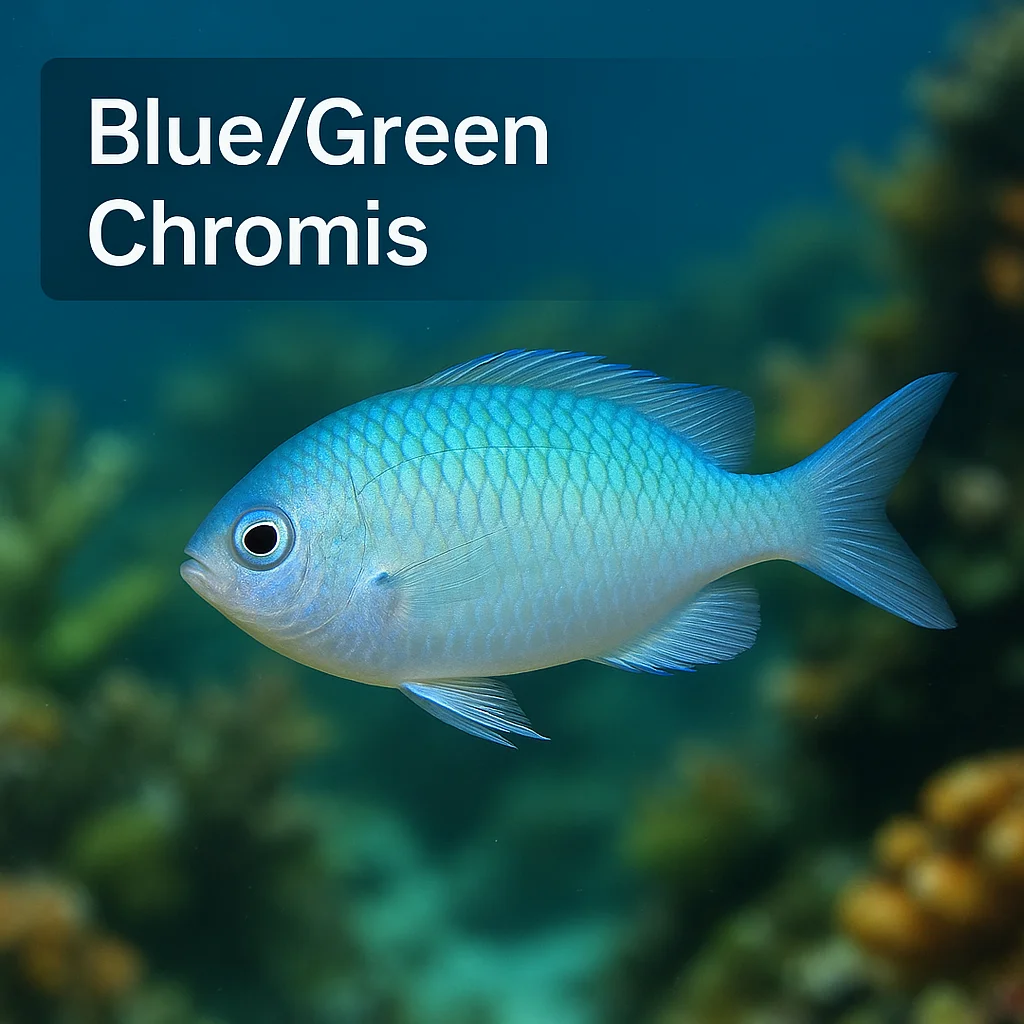
The Blue/Green Chromis is easily recognizable by its sleek, elongated body and vibrant iridescent blue to green coloration that can shift under different lighting and mood conditions. The color change adds an extra layer of fascination, often transitioning between hues during mating displays or when they become excited. They have distinct, forked tails aiding their agile movements. When observing gender differences, male and female Blue/Green Chromis are challenging to distinguish outside of the breeding season when males might develop more vibrant hues.
- Top ID Tips
- Elongated, streamlined body
- Shimmering blue-green color
- Forked tail fin
- Subtle color shifts depending on mood or lighting
- Small, schooling fish
- Fins typically clear to lightly colored
- Similarity to green chromis, but slightly more vivid coloration
- Males may become more vibrant during breeding
🌍 Origin & Natural Habitat
Native to the warm coastal waters of the Indo-Pacific region, the Blue/Green Chromis thrives in shallow, sheltered lagoons and reef slopes. These environments are characterized by gentle water currents and ample hiding spots among corals and rock structures. The water temperatures remain consistently warm, and the aquatic spacers teem with life, providing a balanced ecosystem. The fish's natural habitat knowledge helps aquarists replicate conditions for successful keeping, ensuring these beautiful creatures contribute vibrantly to their new home.
🧪 Tank Setup & Water Parameters
When setting up a tank for Blue/Green Chromis, prioritize space for free swimming and areas for hiding and resting. A tank size of at least 30 gallons is recommended, with more space preferred for larger schools. Ensure a robust filtration system with moderate water flow to mimic their natural habitat. Maintain water temperature between 72–78°F (22–26°C), with pH levels between 8.1 and 8.4. Create environments with live rock and coral structures but avoid overwhelming the swimming space. Lighting should be moderate, allowing the chromis's colors to pop.
- Setup Checklist
- Minimum 30-gallon tank
- Moderate water flow from a reliable filter
- Maintain pH between 8.1–8.4
- Live rock for hiding spots and mimic natural habitat
- Substrate of fine sand or coral rubble
- Adjustable lighting simulates natural day/night cycles
- Consistent water quality with periodic water changes
- Space for schooling behavior
🤝 Temperament & Compatibility
The Blue/Green Chromis is renowned for its peaceful, sociable nature. These fish thrive in schools, best kept in groups of six or more, showing dynamic group behaviors and increased security. They typically coexist harmoniously with other peaceful reef inhabitants like clownfish, gobies, and tangs. Avoid housing them with aggressive or territorial species, which might create stressful environments. Each fish may show individual behavioral variations, so observe tank dynamics regularly.
- Compatibility Notes
- Best kept in groups of six or more
- Peaceful nature complements community tanks
- Avoid aggressive tankmates like large wrasses
- Compatible with other small reef fish
- May be timid if kept singly
- Sociable, often mingling with other species
- Males in a group may display temporary territorial behavior during breeding
🍽️ Diet & Feeding
In the wild, Blue/Green Chromis are omnivores, feeding on a diet of plankton, small crustaceans, and algae. In aquariums, they readily accept a variety of foods, including high-quality flakes, pellets, frozen mysis shrimp, and brine shrimp. Feed them small portions twice daily, ensuring they consume all provided food within a few minutes to avoid wasting and poor water quality. Integrate a balanced diet to maintain vibrant colors and overall health.
- Feeding Tips
- Offer a mix of flakes, pellets, and frozen foods
- Include protein sources like brine and mysis shrimp
- Feed small quantities twice daily
- Ensure proper nutrition to support coloration and health
- Remove uneaten food promptly to prevent water quality degradation
- Introduce variety to prevent picky eating habits
- Monitor feeding patterns for early detection of health issues
🧬 Growth, Color Changes & Lifespan
The Blue/Green Chromis grows to a mature size of 3–4 inches over its lifespan of 5–8 years. Juveniles often show less vibrant colors, developing their full brightness as they grow. Their colors may fluctuate with mood or environmental conditions; healthy individuals maintain bright hues. When stressed, such as during sudden environmental changes, chromis may show muted coloration or clamped fins. Ensuring a stable environment helps promote longevity and well-being.
🪺 Breeding & Reproduction
The Blue/Green Chromis is an egg-layer, with breeding occurring in groups. Males may become more colorful, establishing and defending small territories. Courtship includes intricate swimming displays. After spawning, eggs attach to substrates, and males often guard them until hatching. Although breeding in captivity isn't rare, specialized conditions can improve success. In the aquarium, larvae are tiny and require infusoria or rotifers initially, graduating to larger foods as they grow.
🩺 Common Health Issues & Prevention
Like all marine species, Blue/Green Chromis can face health challenges such as ich (white spot disease), fin damage, or parasites. Prevent health issues through rigorous tank maintenance, including stable water parameters and effective filtration. Avoid overfeeding, keep stress levels low by choosing appropriate tankmates, and use quarantine measures for new introductions.
- Prevention Basics
- Maintain consistent water parameter stability
- Employ quarantine for all new arrivals
- Regularly clean tank and change water
- Use robust filtration systems
- Avoid overfeeding
- Monitor for early signs of disease
- Limit exposure to stressors (e.g., aggressive fish)
🌱 Role in the Aquarium
Blue/Green Chromis contribute vibrantly to community aquariums, adding visual interest with their schooling behavior and bright appearance. They generally coexist peacefully in reef setups and are considered reef-safe, meaning they do not harm corals. Ethically, it's advised to prioritize captive-bred specimens to minimize ecological impact. Acquiring them from reputable sources ensures healthy fish and sustainable collection practices.
📉 Conservation & Responsible Keeping
While populations are not currently threatened, responsible keeping practices are vital for sustaining wild ecosystems. Captive-bred Chromis are widely available and preferable due to less environmental pressure. Never release them into non-native environments, as they can disrupt local ecology. If necessary, rehome chromis responsibly if size or stocking becomes an issue.
- Responsible Keeping Tips
- Choose captive-bred fish when possible
- Avoid releasing fish into local waterways
- Rehome responsibly to ensure proper care
- Support environmentally sustainable practices
- Educate others on responsible aquarium keeping
- Ensure you have the resources for long-term care
- Be mindful of tank capacity and compatibility
📌 Summary
- Streamlined, blue-green fish thriving in groups
- Originates from Indo-Pacific reefs, needing warm water
- Recommended minimum 30-gallon tank with moderate flow
- Best in peaceful community tanks; avoid aggressive species
- Omnivorous diet, including flakes, pellets, and frozen foods
- Considered easy for beginners, hardy and adaptable
- Prioritize captive-bred for sustainability
- Beware of stress signs and maintain stable conditions
- Observe gender-specific cues during breeding times
- Engages in community tanks, adding vibrancy and dynamics