🐠 Zebra Danio
🧾 Quick Facts
The Zebra Danio, a beloved staple in the aquarium hobby, is a hardy and visually striking freshwater fish. Known for its distinctive stripes and active behavior, it is an excellent choice for beginners and experienced aquarists alike.
- Common names: Zebra Danio, Striped Danio
- Scientific name: Danio rerio
- Freshwater / Marine / Brackish: Freshwater
- Origin: South Asia, particularly India and Bangladesh
- Typical adult size range: 5 to 6 cm (2 to 2.5 inches)
- Lifespan: 3 to 5 years
- Temperament: Peaceful
- Recommended tank size: 38 liters (10 gallons) minimum
- Water temperature range: 18-24°C (64-75°F)
- pH / hardness guidance: pH 6.5-7.5; Soft to moderately hard water
- Diet type: Omnivore
- Activity zone: Top to mid-water
- Social needs: Schooling, ideally kept in groups of 5 or more
- Beginner suitability: Easy
🔍 Identification
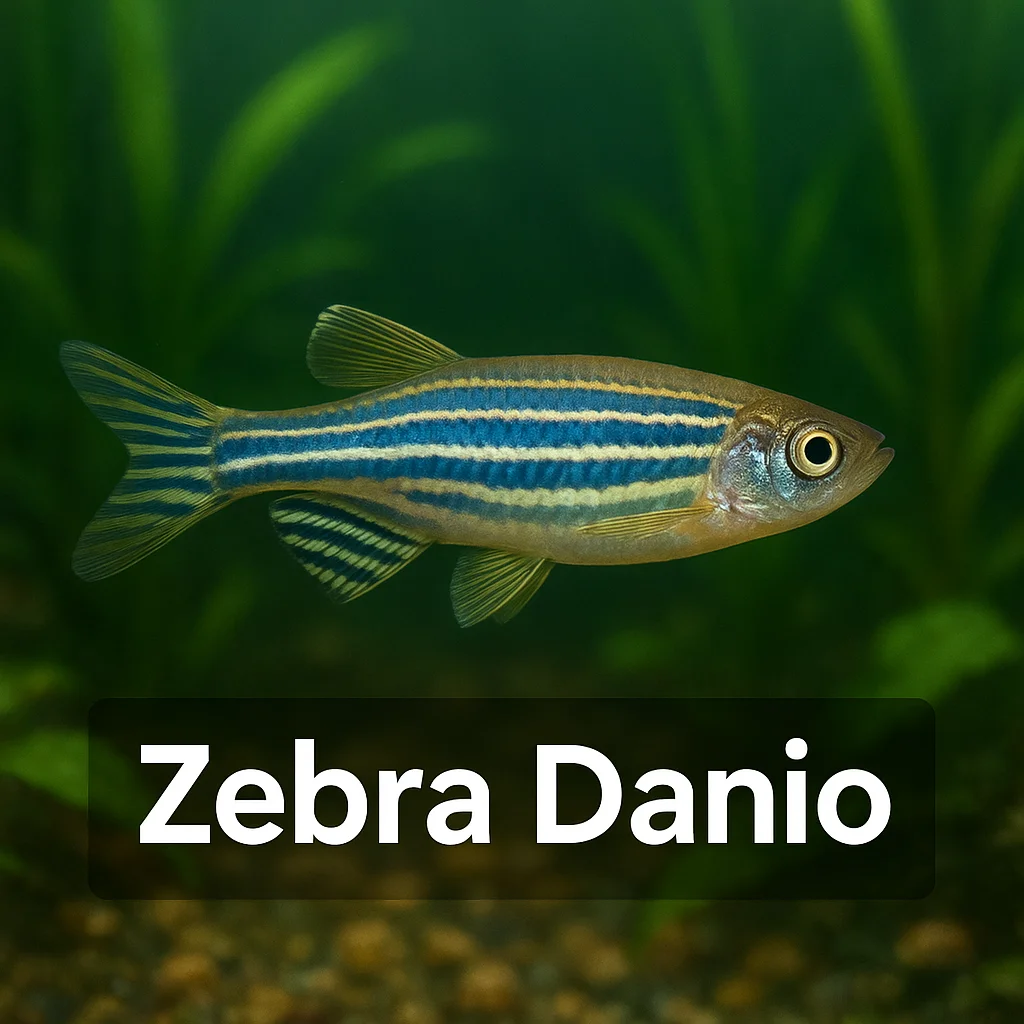
Zebra Danios are easy to identify with their long, slim bodies adorned with horizontal blue and silver stripes, resembling a zebra. These colors are consistent, although stress can sometimes cause color fading. Males are generally slimmer with a more intense coloration, while females are rounder, especially when carrying eggs. Their fins are short and feature the same striped pattern.
- Slender, torpedo-shaped body
- Distinctive horizontal blue and silver stripes
- Short, striped dorsal and anal fins
- Males are slimmer, more colorful
- Females are plumper, especially when gravid
- Look-alike: Leopard Danio; differentiate by dot pattern
🌍 Origin & Natural Habitat
Zebra Danios are native to the Indian subcontinent, thriving in various water types from slow-flowing streams to rice paddies. These environments typically have a sandy or muddy substrate with abundant vegetation. Seasonal changes, such as monsoons, can lead to changes in water volume and nutrients, influencing the fish's natural breeding cycles. Understanding their habitat can help in recreating favorable conditions in the aquarium.
🧪 Tank Setup & Water Parameters
The ideal tank setup for Zebra Danios includes ample swimming space along with moderate water flow, simulating their natural habitat. They thrive in tanks with live plants that offer hiding spots and break up sightlines. Use a fine-grained substrate to mimic their native habitats.
- Minimum tank size: 38 liters (10 gallons)
- Moderate filtration and flow
- Stable temperatures around 18-24°C (64-75°F)
- pH between 6.5 and 7.5
- Fine sand or small gravel substrate
- Aquascaping with live plants for shelter
- Moderate lighting to enhance colors
🤝 Temperament & Compatibility
Zebra Danios are active and playful schooling fish, which makes them great additions to community tanks. They thrive in groups, displaying schooling behaviors that reduce stress. While they are peaceful, overly small or slow-moving tankmates may get stressed by their activity levels. They can cohabit with other peaceful species but avoid housing them with large, aggressive fish.
- Best kept in schools of 5 or more
- Good tankmates: Tetras, small catfish, Rasboras
- Risky tankmates: Large cichlids, aggressive species
- May outcompete slower fish during feeding
- Individual temperaments can vary
🍽️ Diet & Feeding
In the wild, Zebra Danios are opportunistic feeders consuming insects, crustaceans, and plant matter. In aquariums, they are not picky and will accept flake foods, small pellets, and live or frozen foods such as brine shrimp and daphnia. Feeding them small amounts twice a day mimics their natural foraging behavior.
- Offer a variety of food types for balanced nutrition
- Supplement with live or frozen foods for enrichment
- Feed twice daily in small portions
- Ensure food is suitable for their small mouths
- Avoid overfeeding to maintain water quality
🧬 Growth, Color Changes & Lifespan
Juvenile Zebra Danios are smaller but sport the same striped pattern, becoming more defined as they mature. Stress can manifest via faded colors or clamped fins, indicating the need for environmental adjustments. Zebra Danios typically live 3 to 5 years, with their lifespan heavily influenced by water quality, diet, and tank conditions.
🪺 Breeding & Reproduction
Zebra Danios are egg layers, often spawning in the morning. Spawning is triggered by slight increases in temperature and often occurs in a dense plant area or spawning mops. While they don't care for their eggs, providing shallow gravel or a breeding trap helps protect eggs from being eaten. Fry can be fed specialized fry foods or infusoria.
🩺 Common Health Issues & Prevention
Zebra Danios are hardy, but like all fish, can suffer from diseases such as ich or fungal infections, especially if water quality deteriorates. Quarantining new fish, maintaining stable water conditions, and ensuring a balanced diet are key preventative measures to keep them healthy. Address any health changes or physical signs of illness promptly.
- Quarantine new additions before introducing
- Maintain stable, clean water conditions
- Avoid overfeeding to prevent waste buildup
- Regularly monitor fish for health changes
- Act quickly if white spots or clamped fins appear
🌱 Role in the Aquarium
Zebra Danios bring vibrant energy and motion to aquariums. Their activity helps create a dynamic visual in community setups, and they engage in light algae grazing. Ethically sourced from reputable breeders, these fish are environmentally sustainable choices compared to wild-caught options, and they support strong captive breeding practices. Avoid introducing them to non-native water systems.
📉 Conservation & Responsible Keeping
Most Zebra Danios available in the trade are captive-bred, minimizing impact on wild populations. While they can outgrow small tanks, responsibly rehoming them ensures their wellbeing and environmental safety. Always explore responsible keeping practices.
- Opt for captive-bred specimens
- Commit to never releasing into the wild
- Plan ahead for potential tank upgrades
- Consider local fish clubs for rehoming
- Support ethical breeding initiatives
📌 Summary
- Recognizable striped pattern, slender body
- Native to South Asia; thrives in planted tanks
- Pleasantly active and schooling behavior
- Adaptable diet: flake, live, frozen foods
- Easy to care for, well-suited to beginners
- Avoid aggressive tankmates
- Never release into the wild; rehome responsibly
- Captive-bred, eco-aware choice