🐠 Platy
🧾 Quick Facts
The Platy, often known as the Southern Platyfish or simply 'Platy', is a colorful and popular freshwater fish among aquarists. Known for their vibrant colors and ease of care, they are excellent for beginners and add a lively spark to community tanks.
- Common names: Platy, Southern Platyfish
- Scientific name: Xiphophorus maculatus (varies by morph)
- Freshwater/Marine/Brackish: Freshwater
- Origin: Central America (coastal lowlands of Mexico, Belize, and Guatemala)
- Typical adult size: 1.5-2.5 inches (4-6 cm)
- Lifespan: 2-3 years
- Temperament: Peaceful
- Recommended tank size: Minimum 10 gallons
- Water temperature range: 70-78°F (21-26°C)
- pH / hardness: pH 7.0-8.2; moderate hardness
- Diet type: Omnivore
- Activity zone: Mid-Level
- Social needs: Group of 5 or more
- Beginner suitability: Easy
🔍 Identification
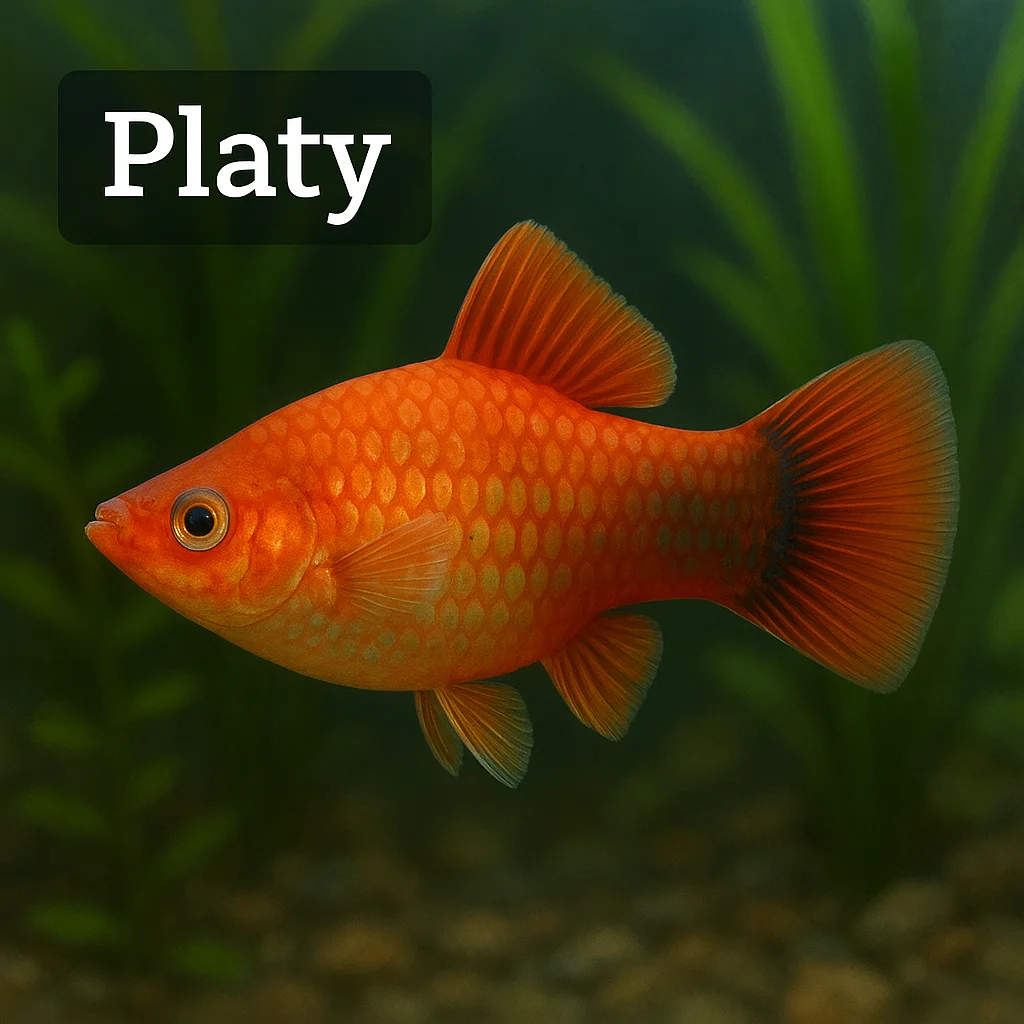
Platys exhibit a wide range of colors and patterns, making them a favorite for any aquarium. They have a streamlined body with a rounded profile and a fan-shaped dorsal fin. Variants include solid colors such as red, yellow, and blue, often mixed with spots or varied patterning.
- Top ID Tips:
- Short, rounded body with bright coloration.
- Fan-shaped dorsal fin and a prominent caudal (tail) fin.
- Color variants include wagtail, tuxedo, and sunburst patterns.
- Males are often smaller with a modified anal fin called a gonopodium.
- Females are larger and more robust.
- Closely resemble swordtails but lack the sword-like tail extension.
🌍 Origin & Natural Habitat
Platys are native to the slow-moving, warm waters of Central America, particularly the freshwaters of Mexico, Belize, and Guatemala. They inhabit rivers, streams, canals, and ditches with dense vegetation and silty substrates. This habitat supports their ability to thrive in diverse water conditions.
Understanding their natural environment aids in recreating similar conditions in aquariums, thus promoting health and vibrancy.
🧪 Tank Setup & Water Parameters
Platys thrive in tanks that provide ample swimming space and natural plant cover. A minimum 10-gallon aquarium is recommended, but larger is always better to ease the social behavior and bioload. Moderate filtration that creates gentle water flow suits their liking, and they require a heater to maintain tropical temperatures.
- Setup Checklist:
- 10-gallon tank minimum
- Moderate filtration with gentle flow
- Stable 70-78°F (21-26°C) temperatures
- Substrate: Sand or small gravel (neutral to slightly alkaline)
- Aquarium plants: Floating or rooted
- Ample lighting for plant growth
- Multiple hiding spaces with rocks or driftwood
🤝 Temperament & Compatibility
Platys are known for their peaceful and social nature, which makes them great community fish. They prefer group settings, which can prevent them from becoming timid or stressed. Although not overly aggressive, they can show mild nipping behavior during feeding and courtship.
- Compatibility Notes:
- Best kept with other peaceful species.
- Suitable tankmates include tetras, guppies, and Corydoras.
- Avoid housing with large, aggressive fish.
- Can be kept with similar livebearers like mollies and swordtails.
- Individual temperament can vary, observe new additions closely.
🍽️ Diet & Feeding
Platys are omnivorous, accepting a varied diet. In the wild, they consume both plant matter and small aquatic organisms. In aquariums, they thrive on quality flakes or pellets supplemented with live or frozen foods like brine shrimp or daphnia.
- Feeding Tips:
- Offer quality flake food daily.
- Supplement with fresh or frozen foods for diversity.
- Feed small portions 2-3 times daily.
- Include blanched vegetables (like lettuce) occasionally.
- Avoid overfeeding to prevent water quality issues.
🧬 Growth, Color Changes & Lifespan
Platys are quick to grow, reaching adult size within months if conditions are optimal. Their colors can intensify with age, good diet, and water quality. Moods or environmental changes may slightly alter color intensity. Stress signs include faded color, clamped fins, and excessive hiding.
With proper care, Platys can live 2-3 years, though lifespan can be shortened by poor conditions or disease.
🪺 Breeding & Reproduction
Platies are livebearers, meaning they give birth to free-swimming young. They breed readily in captivity without specific conditions, with females giving birth approximately every 4-6 weeks. It’s common for fry to be eaten if not separated, so a breeding box or separate tank is suggested for young rearing.
🩺 Common Health Issues & Prevention
Like most fish, Platys can suffer from diseases like ich or bacterial infections. They might show fin damage or parasitic infestations. It's imperative to maintain clean water conditions and quarantine new additions to prevent outbreaks.
- Prevention Basics:
- Quarantine new fish before adding to the main tank.
- Maintain stable water parameters.
- Avoid overcrowding the aquarium.
- Provide a balanced diet to boost immunity.
- Perform regular water changes for optimal quality.
🌱 Role in the Aquarium
Platies bring color and motion to community tanks and are often used as a focal point due to their brilliant hues. They may help control algal growth through their foraging but may nibble at very soft plants. Ethically, it is best to buy platys from reputable breeders to ensure sustainability and animal welfare.
📉 Conservation & Responsible Keeping
Most Platys in the aquarium trade are captive-bred, reducing the impact on wild populations. It's crucial never to release these fish into local waterways as they can disrupt ecosystems. If a Platy outgrows the home setup, consider rehoming through aquarist groups or community forums.
- Responsible Keeping Tips:
- Purchase from ethical, reputable suppliers.
- Do not release fish into the wild.
- Research local aquarist networks for potential rehoming.
- Maintain stable tank conditions to prevent unnecessary losses.
📌 Summary
- Vibrant, peaceful freshwater fish ideal for beginners.
- Native to Central America, favoring warm, slow-moving waters.
- Tank setup should include 10+ gallons, plants, and gentle filtration.
- Cooperates with peaceful, similarly-sized species.
- Omnivorous diet with a variety of flakes, vegetables, and frozen foods.
- Easy to care for with minimal specialized needs.
- Avoid overstocking; maintain consistent water quality for well-being.
- Encourage ethical purchasing and rehoming practices.