🐠 Pearl Gourami
🧾 Quick Facts
The Pearl Gourami (Trichopodus leerii) is a popular freshwater aquarium fish renowned for its striking appearance and peaceful temperament. Ideal for both beginners and experienced aquarists, this species offers a visually captivating addition to community tanks.
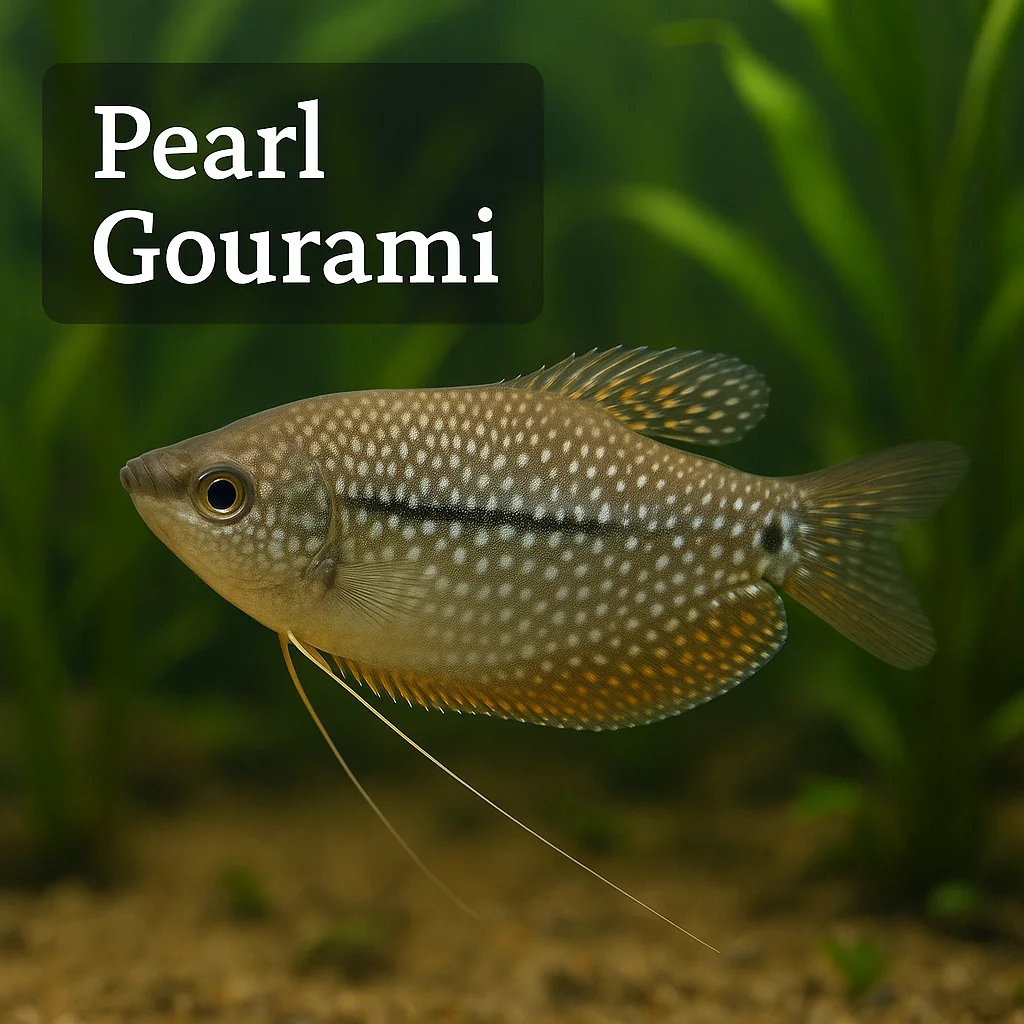
- Common names: Pearl Gourami, Lace Gourami
- Scientific name: Trichopodus leerii
- Freshwater / Marine / Brackish: Freshwater
- Origin: Southeast Asia (Thailand, Malaysia, Indonesia)
- Typical adult size range: 4-5 inches (10-12 cm)
- Lifespan: 4-6 years
- Temperament: Peaceful
- Recommended tank size: Minimum 30 gallons (115 liters)
- Water temperature range: 75-82°F (24-28°C)
- pH / hardness guidance: pH 6.0-8.0; soft to moderately hard
- Diet type: Omnivore
- Activity zone: Mid to top
- Social needs: Preferably kept in pairs or small groups
- Beginner suitability: Easy
🔍 Identification
The Pearl Gourami is easily identified by its unique, pearly iridescent spots that blanket its entire body. These spots, coupled with a distinctively orange to red throat and elongated fins, make it a spectacle in any aquarium. Male Pearl Gouramis typically display brighter coloration and more elongated dorsal fins compared to females.
- Body shape and silhouette: Elongated, compressed body with tapered ends
- Key colors/patterns: Pearly spots; orange/red throat; color intensifies during mating
- Fin shapes: Long, flowing dorsal fin; rounded caudal fin
- Male vs female cues: Males are more colorful with longer dorsal fins
- Common look-alikes: Other gourami species like the Opaline Gourami; distinguishable by spots
🌍 Origin & Natural Habitat
Pearl Gouramis are native to the slow-moving waters of Southeast Asia, predominantly found in Thailand, Malaysia, and Indonesia. They inhabit areas rich in vegetation such as swamps, marshes, and lowland forests. The natural habitat is crucial for Pearl Gouramis as it influences their need for abundant plant life and peaceful waters in captivity.
🧪 Tank Setup & Water Parameters
To mimic their natural environment, Pearl Gouramis thrive in well-planted tanks with gentle filtration systems and minimal flow. Maintaining stable water parameters and providing ample swimming space are key components to their wellbeing.
- Tank size considerations: Horizontal space more important than vertical
- Filtration and flow preferences: Prefers gentle flow; low to moderate filtration
- Heating needs: Maintain stable water temperatures
- Substrate and decor: Fine gravel or sand; dense planting and driftwood
- Lighting and hiding spots: Moderate; provide caverns or heavily planted areas for security
- Setup Checklist:
- Minimum tank size: 30 gallons (115 liters)
- Dense vegetation for cover
- Indoor heater for consistent temperature
- Aquarium-grade filtration system
- Non-intense lighting setup
- Ample swimming spaces in the tank
🤝 Temperament & Compatibility
Pearl Gouramis are generally peaceful and can coexist with other non-aggressive fish. They enjoy forming loose communities and do not require a strict schooling environment. Care should be taken when housing them with fin-nipping species as their long fins make them susceptible targets.
- Behavior: Likes exploring and occasionally resting amongst plants
- Tankmates: Compatible with tetras, rasboras, peaceful barbs, and catfish
- Risky tankmates: Avoid aggressive or fin-nipping species like some cichlids and barbs
- Feeding behavior: Calm, surface-level feeders
- Compatibility Notes:
- Prefers peaceful community settings
- Pairs well with small to medium peaceful species
- Avoid overly active tankmates
- Space for hiding can reduce territorial disputes
- Behavior may vary slightly between individual fish
🍽️ Diet & Feeding
In the wild, Pearl Gouramis feed on insect larvae and small invertebrates. In captivity, they are adaptable and thrive on a diverse diet of high-quality flakes, pellets, and occasional live or frozen foods. Overfeeding should be avoided to maintain optimal health.
- Feeding Tips:
- Offer a balanced diet: flakes and pellets
- Supplement with live or frozen foods weekly
- Feed in moderation; avoid excessive leftovers
- Ensure all surfaces contain food for mid-top level feeding
- Increase variety for a balanced nutritional intake
🧬 Growth, Color Changes & Lifespan
From juvenile to adult, Pearl Gouramis undergo subtle changes with colors becoming more vivid. Males display intensified red underbellies, especially during breeding attempts. Stress in Pearl Gouramis may result in dull color markings and retracted fins.
🪺 Breeding & Reproduction
Pearl Gouramis are bubble nest builders, with males creating foamy nests at the surface composed of air bubbles. Courtship includes the male displaying bright colors and gentle nudging. Spawning usually results in hundreds of eggs that the male guards until hatching. Rearing fry necessitates specialized attention, focusing on micro-fine foods.
🩺 Common Health Issues & Prevention
Common health problems for Pearl Gouramis include ich (white spot disease) and fin infections, often due to stress or poor water quality. Prevention relies heavily on maintaining stable water conditions and quarantining new arrivals to the tank.
- Prevention Basics:
- Regular water quality checks
- Consistent tank maintenance
- Quarantine new purchases
- Ensure diverse, balanced diet
- Monitor for signs of stress or illness
🌱 Role in the Aquarium
Pearl Gouramis contribute to community balance with their peaceful demeanor and visually appealing presence. They are considered plant-safe, tending not to disturb or uproot vegetation. Selection of captivity-bred Pearl Gouramis helps conservation efforts and prevents ecosystem disruption.
📉 Conservation & Responsible Keeping
Historically, wild capture has posed threats to Pearl Gourami populations; however, majority are now captive-bred. Aquarists should avoid releasing any aquarium specimens into local water systems. Ensuring a sustainable and ethical source when acquiring fish supports conservation efforts.
- Responsible Keeping Tips:
- Aim for captive-bred specimens
- Never release into waterways
- Explore ethical rehoming if necessary
- Consult experts for specific conservation tips
- Source from reputable breeders or retailers
📌 Summary
- Striking pearl-like pattern for easy identification
- Originates from Southeast Asia's slow-moving waters
- Easy-care tank setup; prefers densely planted spaces
- Ideal tankmates: peaceful, similarly sized fish
- Diverse omnivorous diet; maintain feeding moderation
- Suitable for beginner aquarists
- Avoid aggressive or fin-nipping species
- Color and behavior may change with breeding activity
- Prevent health issues: stable environment and diet
- Captive-bred preferred for conservation