🐠 Otocinclus
🧾 Quick Facts
The Otocinclus is a beloved genus of small catfish often favored by aquarists for their excellent algae-cleaning abilities in freshwater tanks. Native to South America, these schooling fish are generally peaceful and relatively easy to care for, making them suitable for beginners and experienced fishkeepers alike.
- Common names: Otocinclus, Oto Catfish, Dwarf Suckermouth
- Scientific name: Otocinclus spp. (varies by species)
- Habitat: Freshwater
- Origin: South America, particularly in the Amazon Basin
- Typical adult size: 1–2 inches (2.5–5 cm)
- Lifespan: Typically 3–5 years
- Temperament: Peaceful
- Recommended tank size: Minimum 10 gallons (38 liters)
- Water temperature range: 72–79°F (22–26°C)
- pH and hardness: 6.5–7.5 pH; soft to moderately hard water
- Diet type: Herbivore
- Activity zone: Bottom and lower mid-levels of the tank
- Social needs: Schooling; best kept in groups of 6 or more
- Beginner suitability: Easy to medium
🔍 Identification
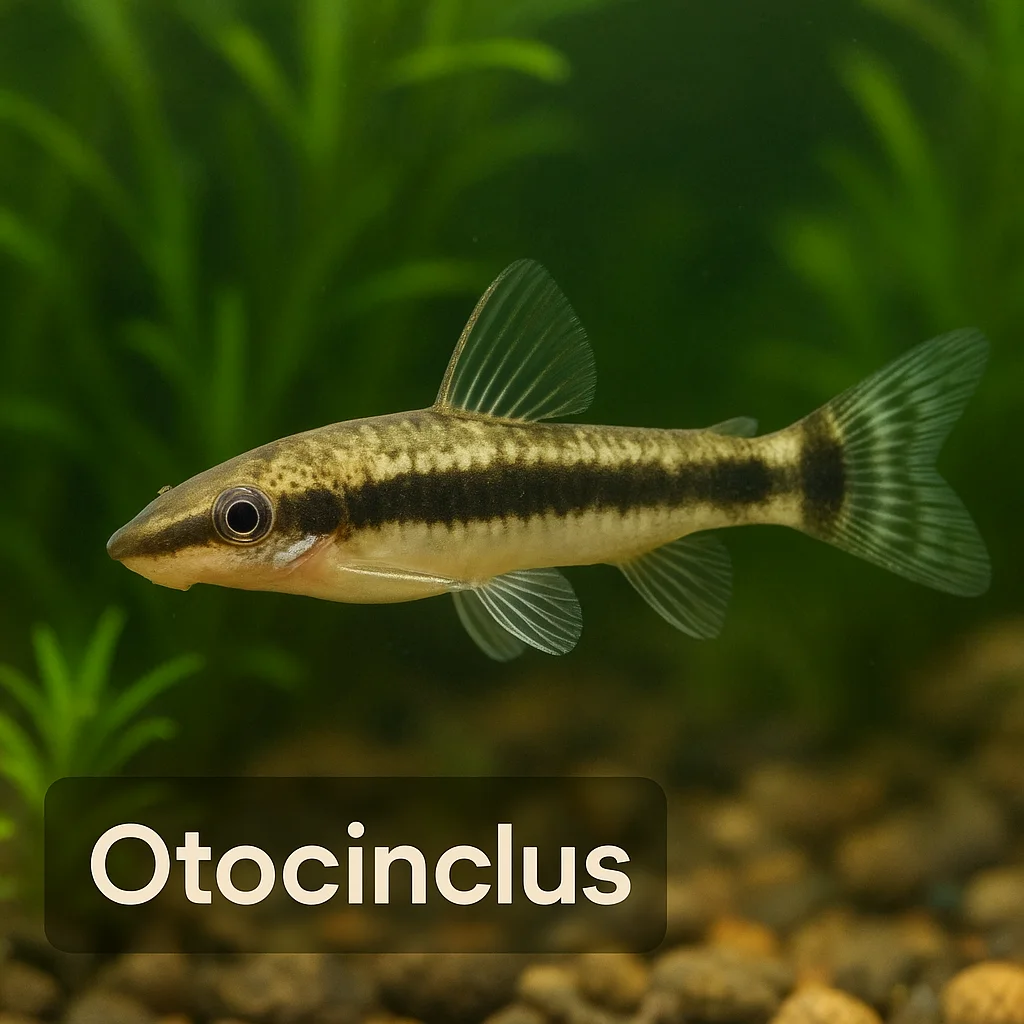
Otocinclus are small, slender catfish that can be identified by their sucker mouths, which they use to cling to surfaces. Their coloration typically includes shades of brown, gray, or black with a lighter underside, and some exhibit patterned stripes running horizontally along their bodies. Their fins are small and minimalistic, aligning with their subtle appearance.
- Top ID Tips:
- Long, slender body with sucker mouth
- Horizontal stripes along the body
- Light underbelly
- Small, unobtrusive fins
- Usually gray to brown coloration with variation among species
- Confused with Chinese Algae Eaters but much smaller and less aggressive
- Males and females look very similar, subtle differences only when breeding
🌍 Origin & Natural Habitat
Otocinclus are native to the slow-moving rivers and streams of South America, particularly within the Amazon Basin. Their natural habitat features dense aquatic vegetation, leaf litter, and submerged wood, providing abundant cover and algae for feeding. Understanding their origin can help simulate similar conditions in an aquarium to ensure their well-being.
🧪 Tank Setup & Water Parameters
A 10-gallon tank is the minimum recommended size to house Otocinclus; however, larger tanks offer more stable environments and better living conditions. Ensure a well-oxygenated tank with moderate filtration and gentle water flow to mimic their natural river habitats. They thrive with soft substrates, leafy plants, driftwood, and dim lighting, which encourages algae growth they feed on.
- Setup Checklist:
- Minimal tank size: 10 gallons
- Soft substrate such as sand or smooth gravel
- Plenty of live plants and driftwood
- Gentle water flow with good filtration
- Maintain a stable temperature between 72–79°F
- Lighting that supports healthy algae growth
🤝 Temperament & Compatibility
Otocinclus are peaceful fish that thrive in the company of their kind, typically forming small schools. They exhibit a placid demeanor during feeding and will not compete aggressively for food, making them ideal companions for other non-aggressive species. Avoid housing them with large or aggressive tankmates that might harass or outcompete them.
- Compatibility Notes:
- Ideal with other peaceful, small community fish
- Best kept in groups of at least six to prevent stress
- Compatible with shrimp and snails
- May suffer in tanks with boisterous or large fish
- Observational: individuals can have unique temperaments
🍽️ Diet & Feeding
In the wild, Otocinclus primarily consume algae and biofilm, and this herbivorous diet translates well to aquarium life. They can be provided with various sinking algae wafers, blanched vegetables such as zucchini or spinach, and occasionally supplemented with high-quality flake foods intended for bottom feeders. Feed small amounts daily to avoid overfeeding.
- Feeding Tips:
- Sinking algae wafers are ideal
- Supplement with blanched vegetables
- Feed small portions 1–2 times a day
- Avoid protein-rich diets
- Ensure access to quality algae in the tank
🧬 Growth, Color Changes & Lifespan
As juveniles, Otocinclus are typically smaller versions of their adult forms, with subdued coloration that becomes more pronounced with age. Stressful conditions may cause them to exhibit faded colors or clamped fins. With proper care, Otocinclus can live up to 3–5 years, and factors such as water quality, diet, and tank conditions play crucial roles in their overall lifespan.
🪺 Breeding & Reproduction
Otocinclus are egg-layers with somewhat challenging breeding requirements in home aquariums. Breeding can be triggered by simulating seasonal changes, such as replicating rainy season conditions with regular water changes and softer water parameters. Females scatter eggs on plants or decor, with no parental care afterward. Feeding fry can be difficult due to their small size and dietary needs.
🩺 Common Health Issues & Prevention
Common health concerns for Otocinclus include stress-related diseases like ich, and they may suffer from fin damage or parasitic infections if tank conditions are inadequate. To mitigate these risks, provide stable water parameters, avoid overstocking, and introduce new inhabitants only after proper quarantine.
- Prevention Basics:
- Quarantine new tankmates
- Maintain excellent water quality
- Do not overfeed
- Provide a varied diet approximating natural foodstuffs
- Regularly monitor for signs of stress or illness
🌱 Role in the Aquarium
Otocinclus play an invaluable role in aquarium settings by helping control algae growth, a natural solution to keep tanks clean and visually appealing without using chemicals. They coexist peacefully with live plants and accentuate a lush, natural aesthetic. Ethical sourcing dictates choosing captive-bred specimens over wild-caught when possible to sustain their populations in nature.
📉 Conservation & Responsible Keeping
Although Otocinclus are not currently endangered, responsible keeping practices are crucial. Prioritize captive-bred specimens over wild-caught ones to prevent natural habitat depletion. Never release them into non-native waters, and if rehoming becomes necessary due to tank upgrades, seek responsible aquarists or fishkeeping communities for assistance.
- Responsible Keeping Tips:
- Choose captive-bred when possible
- Ensure compatible community tank conditions
- Do not release into the wild
- Rehome responsibly if necessary
- Engage with ethical fishkeeping practices
📌 Summary
- Hailing from South America, Otocinclus are ideal for controlling algae
- Easily identified by their suckermouths and horizontal stripes
- Thrives in planted tanks with soft substrates and moderate water flow
- Peaceful nature requires similarly gentle tankmates
- Herbivores requiring a diet rich in algae and blanched vegetables
- Typically easy to care for with the right tank conditions
- Avoid large or aggressive fish as tankmates
- Contribute significantly to a balanced, clean community tank
- Recommend captive-bred options for sustainable keeping
- Regular monitoring and responsible sourcing ensure healthy populations