🐠 Neon Tetra
🧾 Quick Facts
The Neon Tetra, known for its impressive color and schooling behavior, is a popular choice among both novice and experienced aquarists. This small freshwater fish is native to the warm river basins of South America and is easy to care for if tank conditions are maintained appropriately.
- Common names: Neon Tetra
- Scientific name: Paracheirodon innesi
- Freshwater
- Origin: Amazon River Basin, South America
- Typical adult size range: 1-1.5 inches (2.5-4 cm)
- Lifespan: 5-10 years, varies with care
- Temperament: Peaceful
- Recommended tank size: Minimum 10 gallons
- Water temperature range: 70-81°F (21-27°C)
- pH range: 6.0-7.5
- Diet type: Omnivore
- Activity zone: Middle
- Social needs: Schooling
- Beginner suitability: Easy
🔍 Identification
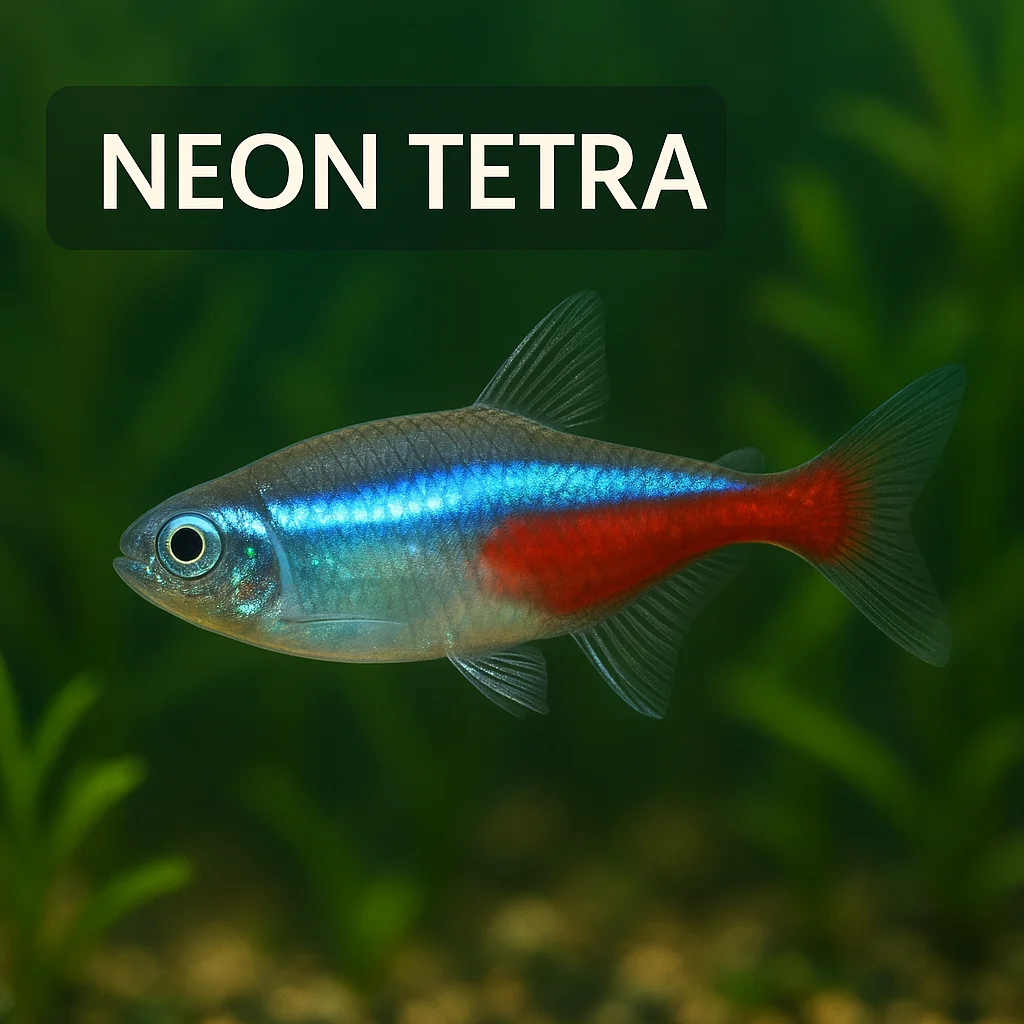
The Neon Tetra is easily identified by its striking colors and distinctive body shape. They have a slender, torpedo-shaped body adorned with a bright blue horizontal stripe stretching from their nose to the adipose fin and a striking red stripe from the middle of the body to the base of the tail.
Neon Tetras have translucent fins and a generally transparent body that allows their vibrant coloration to shine. While males and females are quite similar in appearance, females tend to be slightly larger and more rounded, especially when carrying eggs.
- Top ID Tips:
- Slender, torpedo-shaped body
- Bright blue stripe from nose to adipose fin
- Red stripe from mid-body to tail base
- Translucent fins
- Males are slimmer and more streamlined than females
- Whole fish in frame for complete visibility
- Entire fish visible with natural light reflections
🌍 Origin & Natural Habitat
The Neon Tetra hails from the warm, slow-moving waters of the Amazon Basin, primarily found in Peru, Colombia, and Brazil. These areas are characterized by densely vegetated, soft, and acidic waters with a sandy or muddy substrate. Seasonal flooding influences the habitat, creating variable water levels and offering a rich diversity of foods that the fish have adapted to over time.
Understanding the Neon Tetra’s natural habitat aids aquarists in providing a suitable tank environment, mimicking the surrounding lush plant life and stable water conditions for healthy aquarium life.
🧪 Tank Setup & Water Parameters
To create an optimal environment for Neon Tetras, it’s important to have a well-planted tank with room for swimming. An aquarium of at least 10 gallons is recommended, allowing a school of Neons the space they need to swim freely.
Filtered and gently flowing water recreates their natural habitat. A heater is necessary to maintain a stable temperature between 70-81°F (21-27°C), and soft substrate can mimic the riverbed condition. Utilizing rocks, driftwood, and plant cover offers hiding spots, making fish feel secure and less stressed.
- Setup Checklist:
- Minimum 10-gallon tank
- Good filtration system
- Consistent heating
- Soft substrate
- Ample plants for cover
- Open swimming spaces
- Moderate lighting
- Driftwood and rocks for environment mimicry
🤝 Temperament & Compatibility
Neon Tetras are peaceful, schooling fish that thrive in groups of six or more. Their schooling nature provides a beautiful visual in aquariums and decreases stress. While generally non-aggressive, they fare best with other non-aggressive species.
Compatible tankmates include other small tetras, peaceful bottom dwellers, and gentle species like Corydoras catfish. Larger or aggressive fish should be avoided as they may prey on or outcompete the Neons for food and space.
- Compatibility Notes:
- Best kept in groups of six or more
- Peaceful ambiance contributes to general health
- Great with small peaceful species
- Avoid large or aggressive tankmates
- Behavior can vary with environment changes
🍽️ Diet & Feeding
In their natural habitat, Neon Tetras feed on small invertebrates, plant matter, and algae. In aquariums, they are omnivorous and require a balanced diet consisting of high-quality flakes, micro-pellets, and frozen or live food such as brine shrimp and daphnia.
Feeding twice daily with small portions helps prevent overfeeding, which can pollute the tank water and affect fish health.
- Feeding Tips:
- Supplement flakes with live or frozen foods
- Feed small, regular portions
- Avoid overfeeding to maintain water quality
- Varied diet for best color and health
- Observe feeding to ensure all are thriving
🧬 Growth, Color Changes & Lifespan
Neon Tetras undergo color intensification as they mature, with juveniles gradually developing their vibrant blue and red hues. The intensity varies with mood and health; happy and healthy fish exhibit more vivid colors, while stressed individuals may display faded coloration and clamped fins.
Neon Tetras can live for 5-10 years in optimal care conditions, with water quality and diet being significant factors affecting their lifespan.
🪺 Breeding & Reproduction
The Neon Tetra is an egg layer, and breeding can be challenging in home aquariums due to specific water conditions needed to trigger spawning. Courtship involves the male displaying vibrant colors to attract a female. Eggs are typically laid among dense plants and require soft, slightly acidic water to hatch.
Although breeding is possible, many aquarists find it difficult to replicate the necessary environment outside professional breeding settings, leading to low success in home setups.
🩺 Common Health Issues & Prevention
Neon Tetras are susceptible to common fish ailments such as ich (white spot disease), fin rot, and parasites. Maintaining a stable, clean environment with good filtration and quarantine measures for new additions can significantly reduce these risks.
- Prevention Basics:
- Avoid sudden temperature changes
- Maintain good water quality
- Regular water changes
- Quarantine new fish
- Observe for stress indicators like faded color
🌱 Role in the Aquarium
The Neon Tetra adds vibrant color and graceful movement, enhancing the visual appeal of community tanks. Their peaceful nature makes them excellent additions for community setups, while their propensity for schooling contributes to the natural hierarchy.
Choose captive-bred Neon Tetras to support ethical fishkeeping practices and preserve natural populations.
📉 Conservation & Responsible Keeping
While captive breeding of Neon Tetras is widespread, wild populations are still affected by habitat loss. Always opt for reputable captive-bred specimens and never release aquarium fish into local waters, which can lead to ecological imbalance.
- Responsible Keeping Tips:
- Choose captive-bred fish
- Never release into the wild
- Provide a suitable tank environment
- Consider rehoming if tank becomes too small
- Support sustainable aquaculture practices
📌 Summary
- Neon Tetras are recognizable by their vibrant blue and red stripes.
- Originating from the Amazon Basin, they enjoy warm, soft waters.
- A 10-gallon tank with vegetation mimics their native habitat.
- Peaceful schooling behavior is best with similar non-aggressive species.
- A balanced omnivorous diet maintains their health and coloration.
- Beginner-friendly yet requires attention to tank conditions.
- Never release into the wild to prevent ecological harm.
- Opt for captive-bred specimens to support sustainable practices.