🐠 Molly
🧾 Quick Facts
Mollies are popular aquarium fish known for their adaptability and varied appearances. Here's a quick overview to get you familiar with this delightful group:
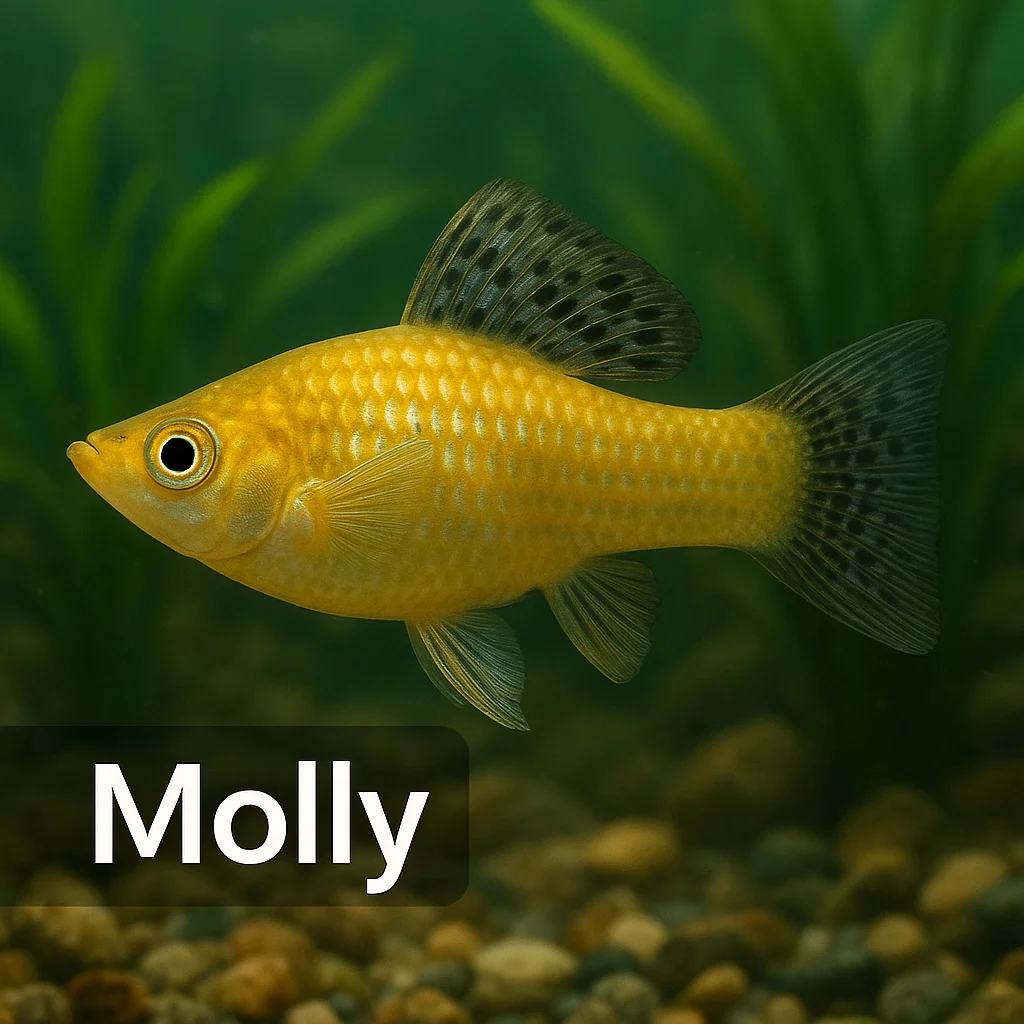
- Common names: Molly, Sailfin Molly, Short-Fin Molly
- Scientific name: Poecilia sphenops and other species (varies)
- Freshwater / Marine / Brackish: Freshwater and Brackish
- Origin: Central and South America
- Typical adult size range: 3–6 inches (7.5–15 cm)
- Lifespan: 3–5 years
- Temperament: Peaceful
- Recommended tank size: 20 gallons (75 liters) minimum
- Water temperature range: 72–82°F (22–28°C)
- pH / Hardness: Slightly alkaline; pH 7.5–8.5
- Diet type: Omnivore
- Activity zone: Middle to upper region of the tank
- Social needs: Schooling
- Beginner suitability: Easy
🔍 Identification
Mollies are small, lively fish. They exhibit various colors, patterns, and fin types, which can sometimes be overwhelming but fascinating.
- Body shape: Streamlined with a slightly flattened body.
- Key colors/patterns: Wide range including black, silver, orange, yellow, and speckled varieties.
- Fin shapes and notable traits: Broad and fan-like fins; dorsal fins can be prominent, especially in males.
- Male vs female cues: Males are often more colorful; females generally have a larger, rounder body.
- Common look-alikes: Guppies and platies; mollies are typically larger and have a distinct body shape.
- Look for a broad dorsal fin to differentiate male mollies.
- Observe body shape; mollies tend to have a more robust build than guppies.
- Patterned varieties might have speckled or marbled appearances.
- Color can vary significantly within the same species.
- Generally larger than similar fish like guppies or platies.
- Observe the mouth shape; mollies have a pointed mouth compared to the rounded mouth of some other fish.
🌍 Origin & Natural Habitat
Mollies are native to the warm tropical and subtropical regions of Central and South America, often found in shallow, slow-moving waters such as streams, ponds, and swamps. These environments typically have dense vegetation, which provides shelter and feeding opportunities.
Understanding their natural habitat helps aquarium enthusiasts provide conditions that mimic their ecological zone, ensuring the fish thrive.
🧪 Tank Setup & Water Parameters
Setting up a habitat mirroring their natural environment promotes healthy and active mollies. Ensure ample swimming space and stable, clean conditions.
- A 20-gallon tank accommodates a small group comfortably, with more space always beneficial.
- A moderate filter ensures good water turnover and maintains clarity without startling fish.
- Heater needed to maintain temperatures between 72–82°F (22–28°C).
- A substrate of fine gravel or sand is ideal.
- Decorate with live plants to provide hiding spots and additional oxygenation.
- Medium lighting replicates natural environments; avoid excessive brightness.
- Ensure adequate surface area for oxygen exchange.
- Include varied heights of plants and decor to allow exploration.
- Opt for hardy plant species that can withstand some salt if added for brackish setups.
- Keep a lid on the tank—mollies can jump!
- Regularly check water parameters for ammonia, nitrite, and nitrate levels.
🤝 Temperament & Compatibility
Mollies are generally peaceful and do well in community tanks. They are active and social, often schooling with their kind or similar species.
- Tend to live in small groups; best kept with conspecifics for social interactions.
- Careful mixing with aggressive species is advisable; mollies can be stressed by fin-nipping or overly territorial fish.
- Usually good with other livebearers like guppies and platies.
- Can coexist with peaceful tetras, corydoras, and small barbs.
- Watch for occasional territorial disputes during feeding.
- They may produce more waste; ensure filtration can handle the bioload.
🍽️ Diet & Feeding
In their natural setting, mollies are omnivorous, grazing on algae and small invertebrates. In aquariums, a balanced diet will keep them healthy and vibrant.
- Provide high-quality flake or pellet food as a staple.
- Supplement with live or frozen brine shrimp, daphnia, and bloodworms.
- Include occasional vegetable matter such as blanched spinach or zucchini.
- Feed small amounts 1–2 times a day to prevent overfeeding.
- A varied diet enhances coloration and vitality.
- Remove uneaten food quickly to maintain water quality.
- Watch for signs of uneven weight gain, which can indicate dietary issues.
- Be mindful of feeding larger particles to smaller molly varieties.
- Monitor juveniles separately to ensure they receive sufficient nutrition.
🧬 Growth, Color Changes & Lifespan
Mollies grow steadily through their first year, with juveniles often demonstrating more vivid coloring than their adult counterparts. Stress can cause color fading, while poor water conditions may show as clamped fins or inactivity.
The typical lifespan of a molly is 3 to 5 years, depending significantly on diet, space, and overall care quality.
Maintain optimal conditions and observe any changes to support their well-being.
🪺 Breeding & Reproduction
Mollies are prolific livebearers, meaning they give birth to live young. Breeding in home aquariums is common, especially with the right conditions.
- A warm and clean environment encourages breeding.
- Females can store sperm and give birth several times from a single mating.
- No parental care is provided beyond birth; fry should be separated if predation risk is present.
- Fry feed on finely crushed flake food or specialized fry mixtures.
- Immature mollies require calm waters and dense plantings for cover.
🩺 Common Health Issues & Prevention
Mollies are generally hardy, but they can be prone to common freshwater issues like ich, fin rot, and parasites. Prevention is key to keeping these issues at bay.
- Quarantine new arrivals to prevent disease introduction.
- Maintain stable water parameters to prevent stress.
- Provide a clean environment with regular water changes.
- Avoid overstocking to reduce stress and disease spread.
- Ensure a balanced diet to support a robust immune system.
🌱 Role in the Aquarium
Mollies contribute to a vibrant and dynamic aquarium setting. Their constant activity and algae-eating habits support a clean and balanced tank environment.
Choose reputable sources for your fish to support sustainable practices and avoid wild-caught individuals that could threaten ecosystems if released.
📉 Conservation & Responsible Keeping
Opt for captive-bred mollies whenever possible to help reduce pressure on wild populations and avoid ecological disruptions.
- Promptly address overpopulation by finding suitable homes for excess fish.
- Never release aquarium fish into the wild.
- Research breeders and suppliers to ensure ethical practices.
- Rehome responsibly if a fish outgrows your tank setup.
- Avoid purchasing wild-caught fish when captive-bred options are available.
📌 Summary
- Mollies are colorful, adaptable fish known for their ease of care and community compatibility.
- They originate from Central and South America, often found in slow-moving, vegetation-rich waters.
- A tank setup with ample swimming space, moderate filtration, and live plants mimics their natural habitat.
- Mollies are peaceful and suitable for community setups but avoid aggressive tankmates.
- Diet consists of high-quality flakes, live/frozen foods, and occasional vegetable matter.
- They are ideal for beginners due to their hardiness and availability.
- Reproduction is straightforward but manage populations to prevent overstocking.
- Choose captive-bred mollies and ensure ethical and responsible handling.