🐠 Honey Gourami
🧾 Quick Facts
The Honey Gourami, a beloved fixture in many freshwater aquariums, is celebrated for its serene demeanor and captivating color transitions. This guide will introduce you to key aspects of this fish, making your aquarium experience rewarding and enjoyable.
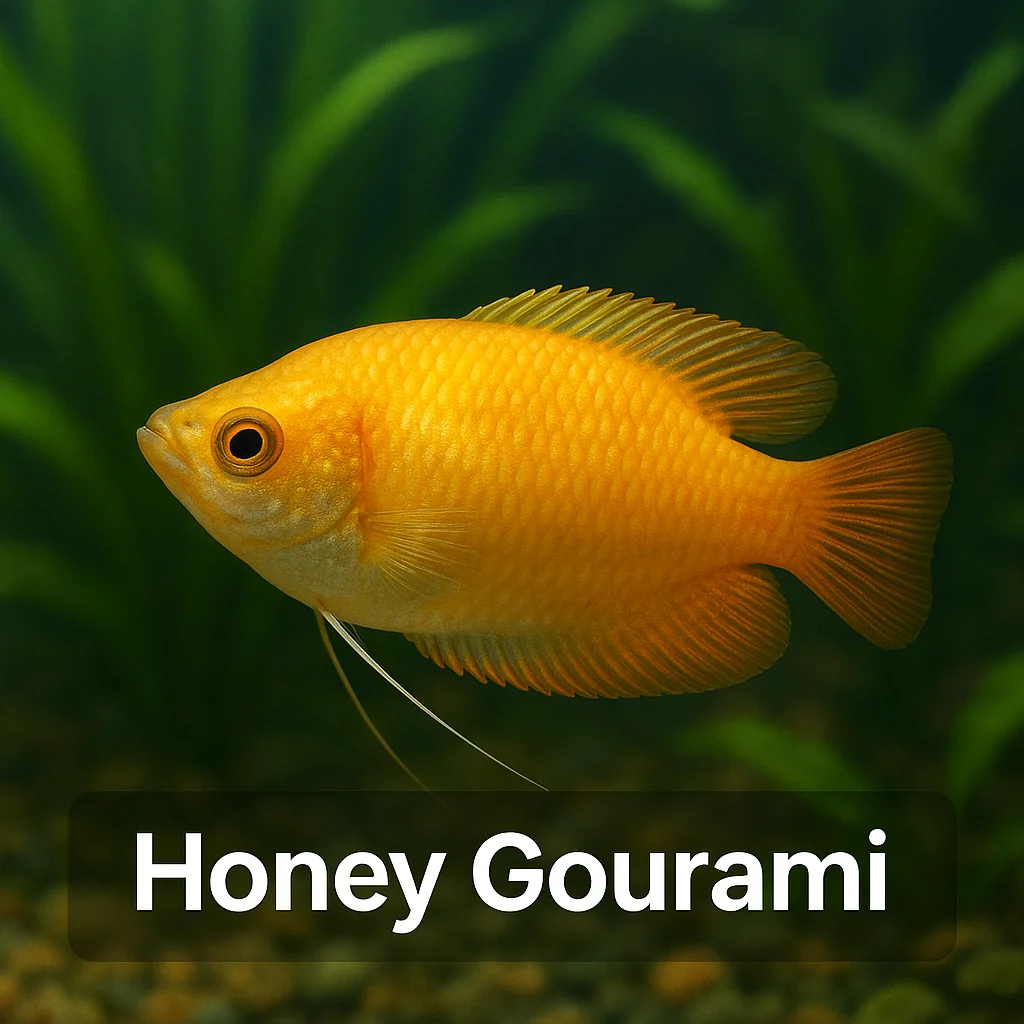
- Common Names: Honey Gourami, Honey Dwarf Gourami
- Scientific Name: Trichogaster chuna
- Type: Freshwater
- Origin: India, Bangladesh
- Typical Adult Size Range: 4–5 cm (1.5–2 inches)
- Lifespan: 4–5 years
- Temperament: Peaceful
- Recommended Tank Size: 20 liters (5 gallons) minimum
- Water Temperature Range: 22–28°C (72–82°F)
- pH: 6.0–7.5
- Diet Type: Omnivore
- Activity Zone: Mid to top
- Social Needs: Best in pairs or small groups
- Beginner Suitability: Easy
🔍 Identification
The Honey Gourami captivates aquarists with its gentle colors that vary with mood and environment. Its slender, oval body is topped with gracefully flowing fins. Males display vibrant orange or honey colors, intensified during breeding. In contrast, females are often more subdued with earthy tones that can shift with age and circumstances.
Key identification traits include expansive dorsal fins and faint horizontal lines along the body. Differentiating males from females can be subtle; males typically exhibit brighter hues and pointed fins, while females display rounder fins and muted colors.
Several species closely resemble the Honey Gourami, including the Dwarf Gourami. The primary distinction lies in color patterns and the Honey Gourami's smaller size.
- Slender, oval-shaped body
- Vivid orange to honey color in males
- Earthy, muted tones in females
- Expansive, flowing dorsal fins
- Subtle horizontal stripes along the flank
- Males have pointed dorsal fins
- More petite than similar gourami species
🌍 Origin & Natural Habitat
Found across the verdant landscapes of India and Bangladesh, the Honey Gourami inhabits calm waters like slow-moving rivers, ponds, and floodplain lakes. These waters are typically warm with lush vegetation, providing ample cover and food resources. Seasonal rains influence these habitats, expanding territories temporarily.
Understanding the Honey Gourami’s natural habitat aids in replicating its needs in aquarium settings. Soft substrate, abundant floating plants, and stable warm temperatures contribute significantly to their health and exhibiting natural behaviors in aquariums.
🧪 Tank Setup & Water Parameters
Creating an optimal environment for Honey Gourami involves emulating their natural habitats. A tank of at least 20 liters (5 gallons) with horizontal swimming space is ideal. Gentle filtration maintains water clarity without disrupting the calm conditions they prefer. A heater ensures consistent temperatures.
Decorate the tank with a soft substrate, and include plants like Java fern. Floating plants help mimic their natural shading and surface-dwelling tendencies. Provide gentle lighting and create hiding spots to reduce stress.
- Tank size: Minimum 20 liters (5 gallons)
- Provide horizontal swimming space
- Moderate filtration with minimal flow
- Consistent water temperature between 22–28°C (72–82°F)
- Abundant plant coverage
- Include hiding spots with rocks or driftwood
- Soft, natural substrate
- Gentle lighting
🤝 Temperament & Compatibility
The Honey Gourami’s peaceful nature makes it an exceptional choice for a community aquarium. They thrive in pairs or small groups but do not require a large shoal. During feeding and breeding, males may become slightly territorial but rarely aggressive.
Ideal tankmates include non-aggressive species such as small tetras, rasboras, and smaller catfish. Avoid larger, boisterous fish that might stress them. Always bear in mind individual temperament can vary.
- Peaceful, suitable for community tanks
- Best kept in pairs or small groups
- Males may display mild territorial behaviors during spawning
- Compatible with species like tetras, rasboras, and small catfish
- Avoid housing with aggressive or much larger species
- Individual personality variability
🍽️ Diet & Feeding
In the wild, Honey Gourami feed on small invertebrates and plant matter. In aquariums, they readily accept a variety of foods. A diet of high-quality flake or pellet food, supplemented with frozen or live foods such as bloodworms, brine shrimp, and daphnia, supports their health and color vibrancy. Feed them twice daily in moderation to prevent leftover food from spoiling.
- Omnivorous diet in the wild
- Accepts high-quality flakes or pellets
- Supplement with frozen/live foods like bloodworms
- Feed twice daily in modest portions
- Avoid overfeeding to maintain water quality
🧬 Growth, Color Changes & Lifespan
Juvenile Honey Gourami often appear less striking, with muted colors emerging as they mature and adapt. Seasonal or mood-based color changes showcase a vibrant spectrum, particularly during breeding periods when males show off enhanced colors.
While general health, diet, and aquarium conditions predominantly influence their 4–5 year lifespan, stress signs, such as hiding, color fading, and clamped fins, should not cause alarm if addressed promptly and calmly.
🪺 Breeding & Reproduction
Honey Gourami are egg-layers known for their unique bubble nest breeding behavior. Males build floating nests, courting females with colorful displays. Upon spawning, the male guards the nest and newly laid eggs, a practice that may require separate care tanks until fry are free-swimming and large enough to feed on infusoria or specialized fry foods.
Breeding can be challenging in community setups due to offspring and nest vulnerabilities, requiring dedicated breeding tanks and care.
🩺 Common Health Issues & Prevention
Common health issues include fin rot, ich, and susceptibility to poor water conditions. Consistent water parameters, a proper quarantine process for new additions, mindful feeding, and good filtration practices minimize the risk.
- Monitor for common parasites and diseases
- Stabilize water conditions regularly
- Quarantine new additions
- Avoid overfeeding; maintain cleanliness
- Provide adequate hiding spaces
🌱 Role in the Aquarium
Honey Gourami greatly contribute to the balance and aesthetic of peaceful community tanks. They coexist well with plants, avoid uprooting, and engage users with charming interactions. Selecting reliable, captive-bred sources helps alleviate ecological impacts associated with wild capture.
Refrain from impulsively acquiring these fish, ensuring proper capacity and readiness for responsible care long-term to protect their well-being.
📉 Conservation & Responsible Keeping
Promotion of captive breeding over wild capture encourages sustainable practices within the aquarium hobby. Never release these fish into local bodies of water due to ecological risks. Responsible options like fish clubs or pet stores offer rehoming opportunities when tanks become inadequate.
- Promote captive breeding sources
- Avoid releasing into non-native environments
- Seek rehoming channels if needed
- Consider community tank dynamics
- Support conservation and ethical choices
📌 Summary
- Peaceful freshwater fish ideal for community tanks
- Native to India and Bangladesh's calm waters
- Compact size of 4–5 cm (1.5–2 inches)
- Setup includes a minimum 20-liter (5-gallon) tank
- Diverse, balanced omnivorous diet
- Several vibrant color phases influenced by mood and breeding
- Breeding involves bubble nest care by males
- Monitor water quality to prevent common health issues
- Offers elegant contributions to tank dynamics and visuals
- Promote sustainability by supporting captive-bred varieties