🐠 Harlequin Rasbora
🧾 Quick Facts
The Harlequin Rasbora is a popular freshwater fish known for its striking colors and ease of care, making it a common choice for community aquariums. Ideal for both novice and experienced aquarists, this species adds vibrancy and activity to any tank setting.
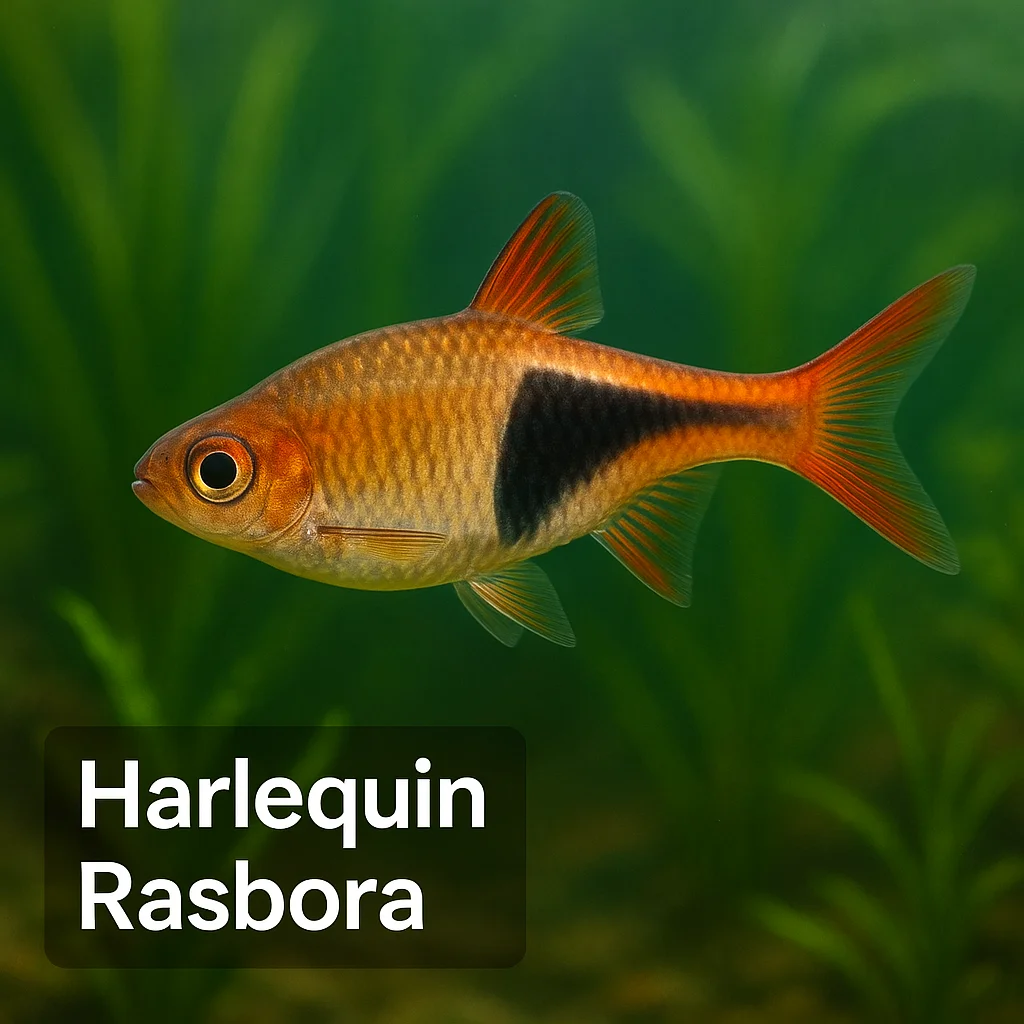
- Common names: Harlequin Rasbora, Red Rasbora
- Scientific name: Trigonostigma heteromorpha
- Freshwater
- Origin: Southeast Asia, particularly in Thailand, Malaysia, and Singapore
- Typical adult size range: 1.5 to 2 inches (4 to 5 cm)
- Lifespan: 5 to 8 years
- Temperament: Peaceful
- Recommended tank size: Minimum 20 gallons
- Water temperature range: 72 to 78°F (22 to 26°C)
- pH level: 6.0 to 7.5
- Diet type: Omnivore
- Activity zone: Mid-level
- Social needs: Schooling; prefers groups of six or more
- Beginner suitability: Easy
🔍 Identification
The Harlequin Rasbora is easily recognized by its distinctive body shape and color pattern, making it a favorite in many community tanks.
- Body shape is distinctly triangular with a small, streamlined profile.
- Vibrant orange-red body color featuring a unique black triangular patch on its rear half.
- Fins are relatively short and transparent with subtle hints of orange in good health.
- Sexual dimorphism is subtle; females appear fuller-bodied, especially when gravid, while males may display slightly brighter colors during breeding.
- The Lambchop Rasbora is a common look-alike but can be differentiated by a more elongated black spot.
- Top ID Tips:
- Look for the unique black triangle marking.
- Note the vibrant orange-red coloration.
- Observe the streamlined triangular body shape.
- Check for health through active swimming and vivid colors.
- Differentiate sexes by fullness in body during breeding season.
- Verify against similar species like Lambchop Rasbora by studying spot shape and size.
- Typically found in slow-moving streams, ponds, and swampy areas.
- Prefers water with dark peat substrates, often tinted with tannins from decaying plant matter.
- Habitats are lush with thick vegetation, providing ample cover and food sources.
- Tropical climate with a consistent warm temperature and seasonal rains that often trigger spawning.
- Ensure a minimum tank size of 20 gallons, providing horizontal swimming space needed for schooling.
- Opt for a high-quality filter with gentle water flow similar to their natural habitat.
- Consistent heating between 72 to 78°F (22 to 26°C) is recommended.
- Use soft, sandy substrate mimicking their natural peat environments.
- Decorate with live plants and driftwood to offer hiding places and mimic natural cover.
- Avoid overly bright lighting and aim for a gentle, subdued aquarium LED.
- Setup Checklist:
- Spacious tank for schooling behavior
- Efficient filter with gentle flow
- Consistent heating within temperature range
- Soft, sandy substrate
- Plentiful live plant cover
- Driftwood decor for naturalistic hiding
- Social and schooling, best kept in groups of six or more.
- Display lively behavior when feeding, darting quickly to gather food.
- Compatible with other peaceful fish, like tetras and guppies.
- Avoid housing with aggressive or much larger species to prevent stress.
- Compatibility Notes:
- Best in schools for socializing
- Mix well with other small, peaceful fish
- Pairs nicely with similarly sized tetras
- Avoid aggressive species that might harass them
- Variable behavior dependent on individual temperament
- In the wild, they feed on small insects, crustaceans, and plant matter.
- In captivity, they do well with high-quality flake food, supplemented with frozen or live foods like brine shrimp.
- Feed them small portions twice daily, ensuring all food is consumed quickly.
- Occasional treats of small, live foods can be offered to mimic their natural diet and enhance activity.
- Feeding Tips:
- Offer a mixture of flakes and small frozen foods
- Feed twice a day in moderation
- Incorporate live foods for dietary enrichment
- Adjust food types to ensure variety and nutritional balance
- Avoid overfeeding as a rule
- Juveniles are smaller with less intense coloration, gradually brightening with maturity.
- Adult color vibrancy can fluctuate with mood or breeding; breeding males typically show the most intense colors.
- Stress indicators include faded colors, hiding behavior, or clamped fins, often reflecting suboptimal conditions.
- They commonly live for five to eight years, with factors like clean water, a varied diet, and space contributing to longevity.
- Egg layers, requiring a separate breeding tank with slightly warmer water to stimulate spawning.
- Soft, acidic water often triggers breeding behavior.
- Females scatter eggs among plants, with no parental care provided afterward.
- Feed newly hatched fry with infusoria or finely ground fry food until they can eat larger offerings.
- Breeding success in home aquariums can vary, often requiring optimal water conditions and patience.
- Susceptible to ich (white spot disease) and fin rot under stress.
- Prevent problems by maintaining a clean, stable tank environment and not overfeeding.
- Quarantine new tank mates to prevent the introduction of parasites or diseases.
- Seek professional advice if severe health issues arise.
- Prevention Basics:
- Regular water changes
- Avoid overstocking the tank
- Monitor water parameters consistently
- Offer a varied, balanced diet
- Quarantine new fish
- Provides a splash of color and dynamic movement, enhancing any tank's visual appeal.
- Contributes to overall community harmony with its peaceful nature.
- Though not a notable algae eater, they assist with keeping small planktonic prey populations in check.
- Ethically, seek captive-bred individuals to avoid impacting wild populations negatively.
- Choose captive-bred over wild-caught individuals to reduce ecological impact.
- Avoid releasing them into non-native waters due to possible ecological disruption.
- If the fish outgrows its environment, look into local aquarium societies or forums for rehoming options.
- Responsible Keeping Tips:
- Always source from reputable breeders
- Consider tank upgrades if needed
- Never release into the wild
- Utilize local networks for rehoming
- Promote knowledge-sharing on ethical keeping
- Distinct black triangular marking on an orange body identifies the Harlequin Rasbora.
- Origins in Southeast Asia, thriving in soft, warm, acidic water.
- Minimum tank size of 20 gallons, best suited for well-planted setups.
- Peaceful and compatible with similarly sized, non-aggressive community fish.
- Omnivorous diet, appreciating a mix of flakes, frozen, and live foods.
- Suits beginner aquarists due to their hardy, easy-care nature.
- Breed through egg-laying with specific water conditions needed.
- Always acquire captive-bred specimens, promoting responsible aquarium practices.
🌍 Origin & Natural Habitat
The Harlequin Rasbora originates from Southeast Asia, inhabiting tropical freshwater environments.
Understanding their natural habitat assists aquarists in replicating these conditions for successful aquarium care.
🧪 Tank Setup & Water Parameters
To keep Harlequin Rasboras healthy and vibrant, a well-considered tank setup is crucial.
🤝 Temperament & Compatibility
Harlequin Rasboras are known for their peaceful temperament and active nature, making them ideal for community tanks.
🍽️ Diet & Feeding
Being omnivorous, Harlequin Rasboras enjoy a varied diet, which contributes to their health and coloration.
🧬 Growth, Color Changes & Lifespan
Harlequin Rasboras display distinct differences in growth and color throughout their lifespan.
🪺 Breeding & Reproduction
Breeding Harlequin Rasboras in aquarium settings is possible, although conditions must be carefully optimized.
🩺 Common Health Issues & Prevention
While generally hardy, Harlequin Rasboras can experience health issues related to poor water quality and diet.
🌱 Role in the Aquarium
The Harlequin Rasbora offers both aesthetic and functional benefits to community aquariums.
📉 Conservation & Responsible Keeping
Being responsible in the keeping of Harlequin Rasboras contributes to their conservation and overall ecosystem health.